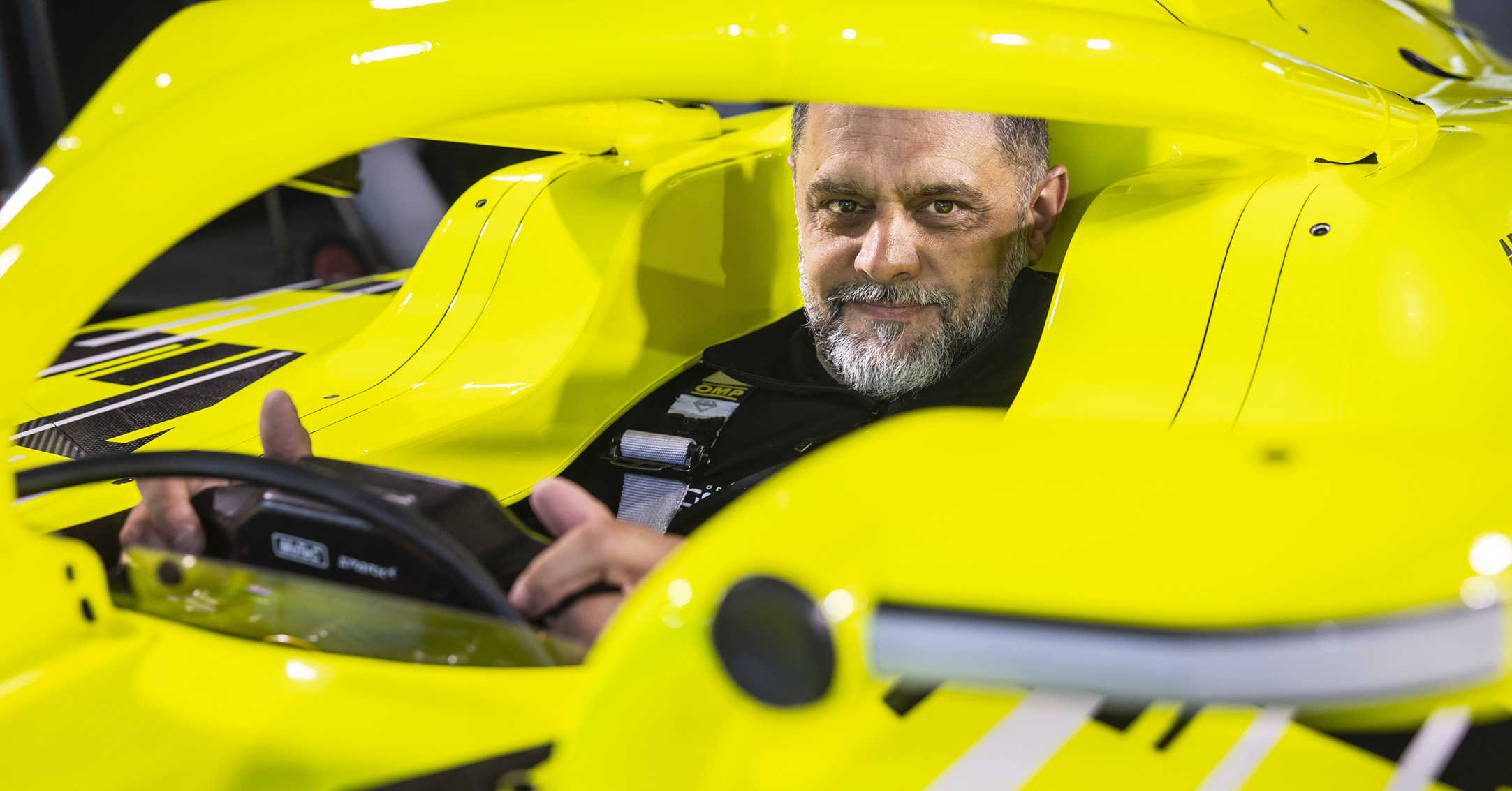
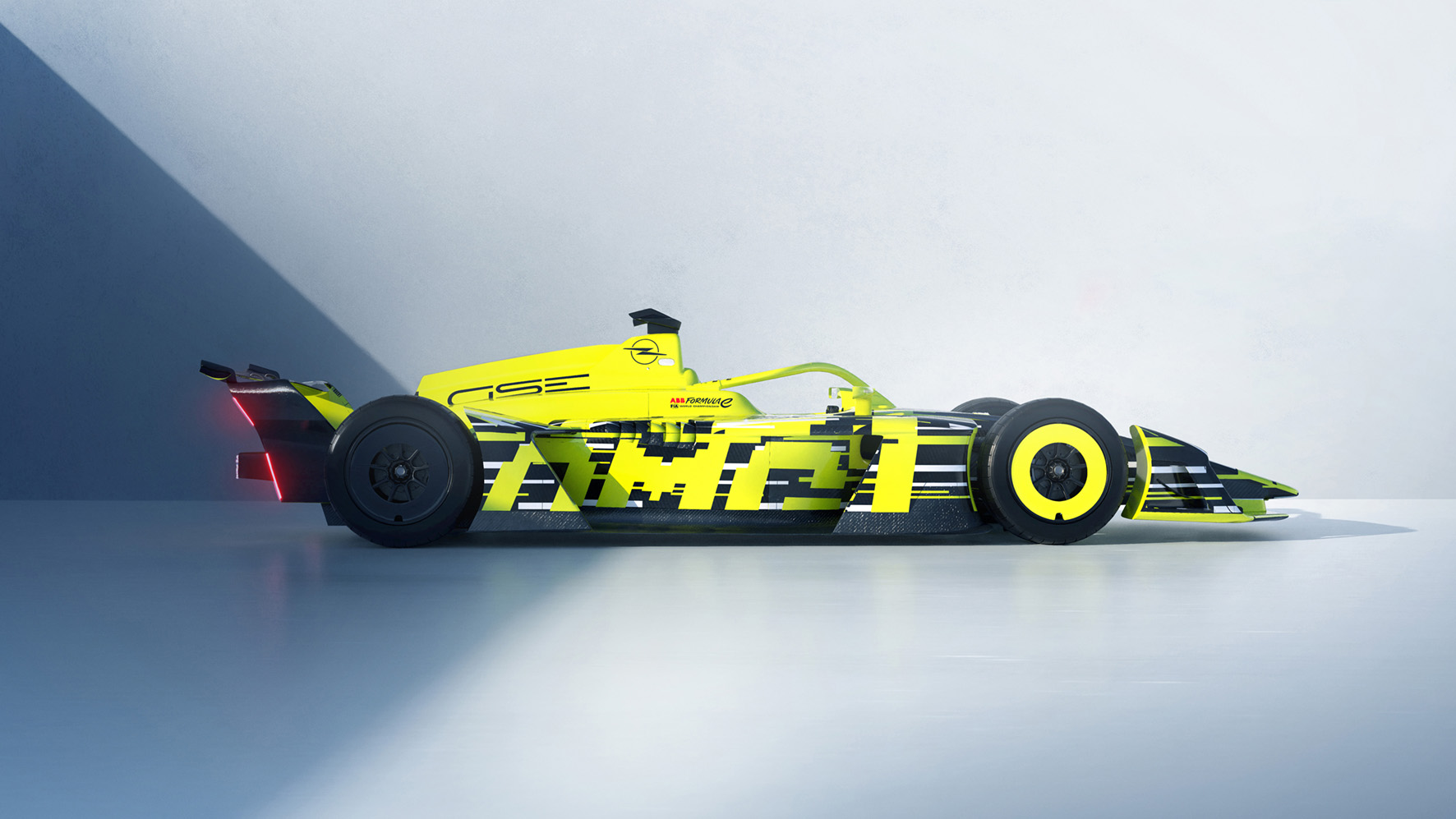
Over 800 hp, permanent all-wheel drive and a recuperation output of up to 700 kW: The Opel GSE 27FE marks the beginning of a new Formula E generation. One of its special features is not hidden under the body. But on it. Because the prototype visualises speed – even before the wheels start turning. As head of the Opel Global Brand Design (GBD), Pierre-Olivier Garcia is responsible for the visual identity of the Opel brand – from products to architecture, motor shows or motorsport. Together with his team in Rüsselsheim, he has translated the ‘Bold and Pure’ design principle into a new discipline: high-performance electric motorsport.
Design begins to tell
For ‘POG’ (his nickname derived from his initials), design does not start with a sketch. But with a story. „It always starts with storytelling,“ he says. In the Mokka GSE Rally, speed was already translated into pixels – small ‘gravel’ fragments of energy that seem to dissolve behind the vehicle. With the Formula E racing car, this idea is developing further into a new motion. Not as a complete break with the old, but as a consistent evolution. “For us, it had to feel like a natural graphical evolution.” German design, according to Garcia, does not think in revolutions, but in precise steps. ‘Bold and Pure’ is more than just a design principle. It is a creative compass that radiates confidence.
“For us, design doesn’t start with a line. It starts with storytelling.”
– Pierre-Olivier Garcia, Opel Global Brand Designer –
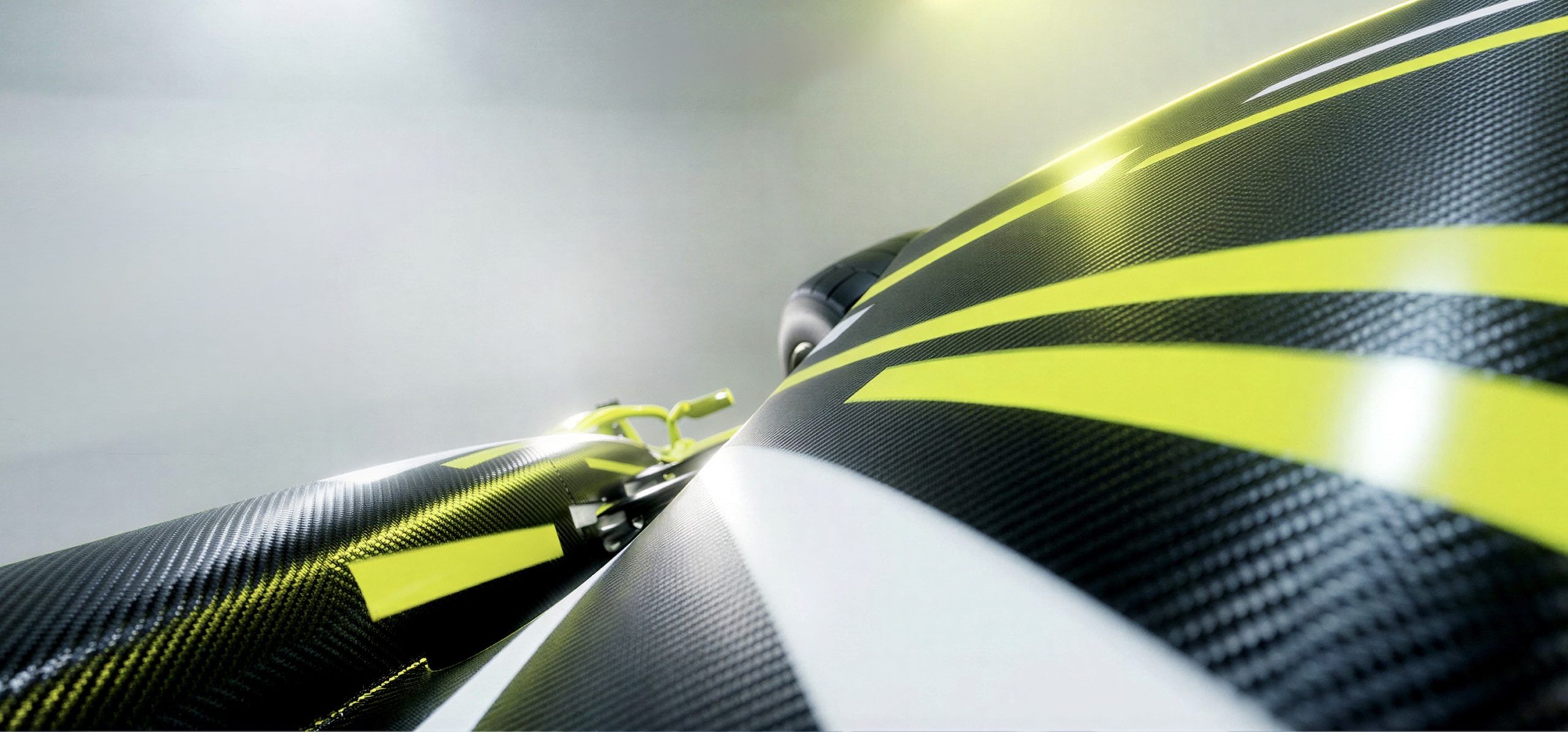
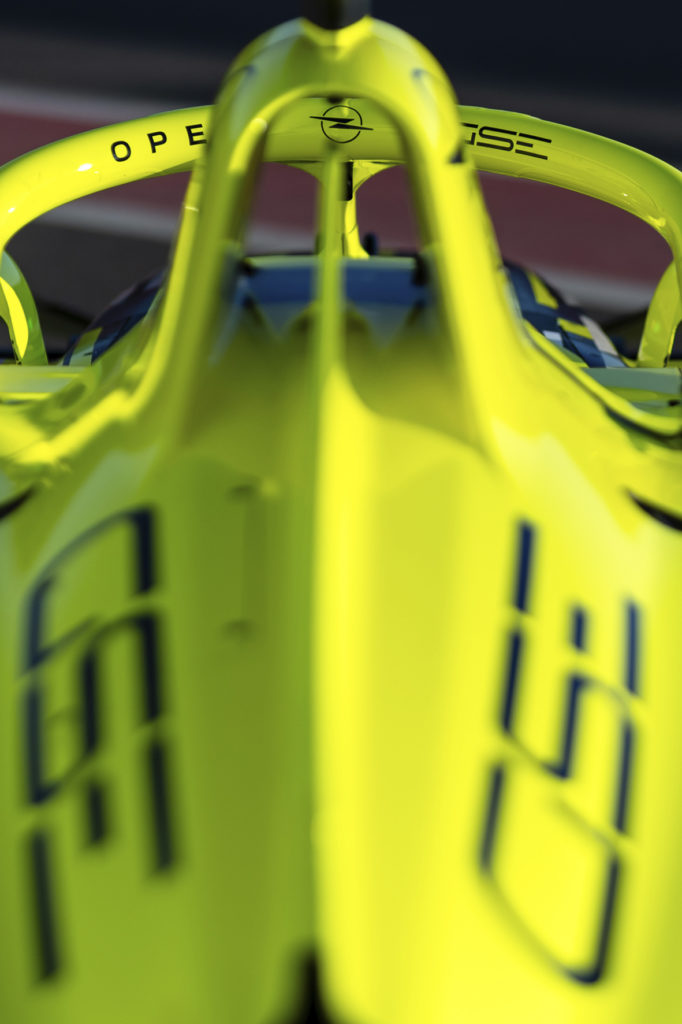
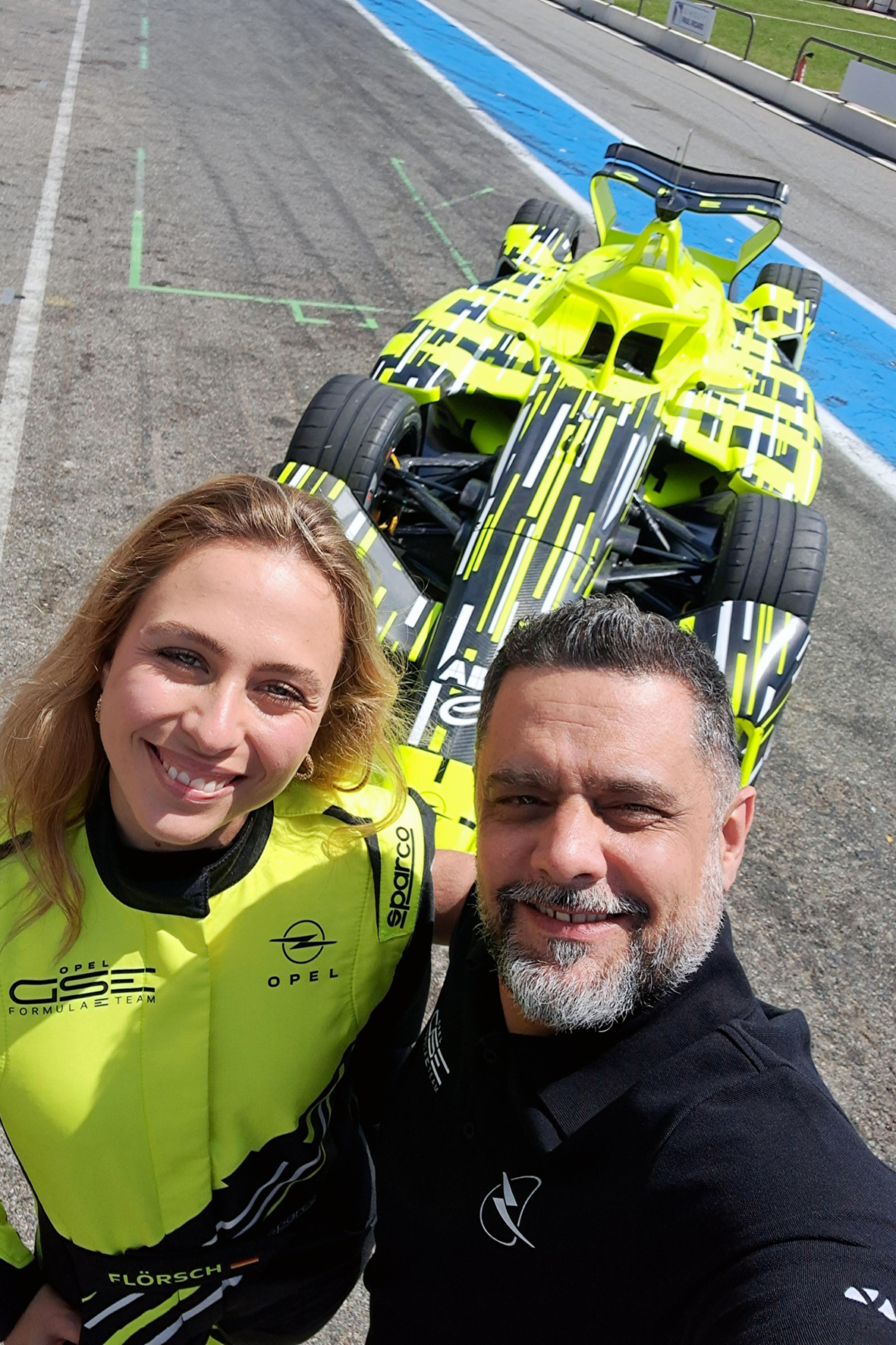
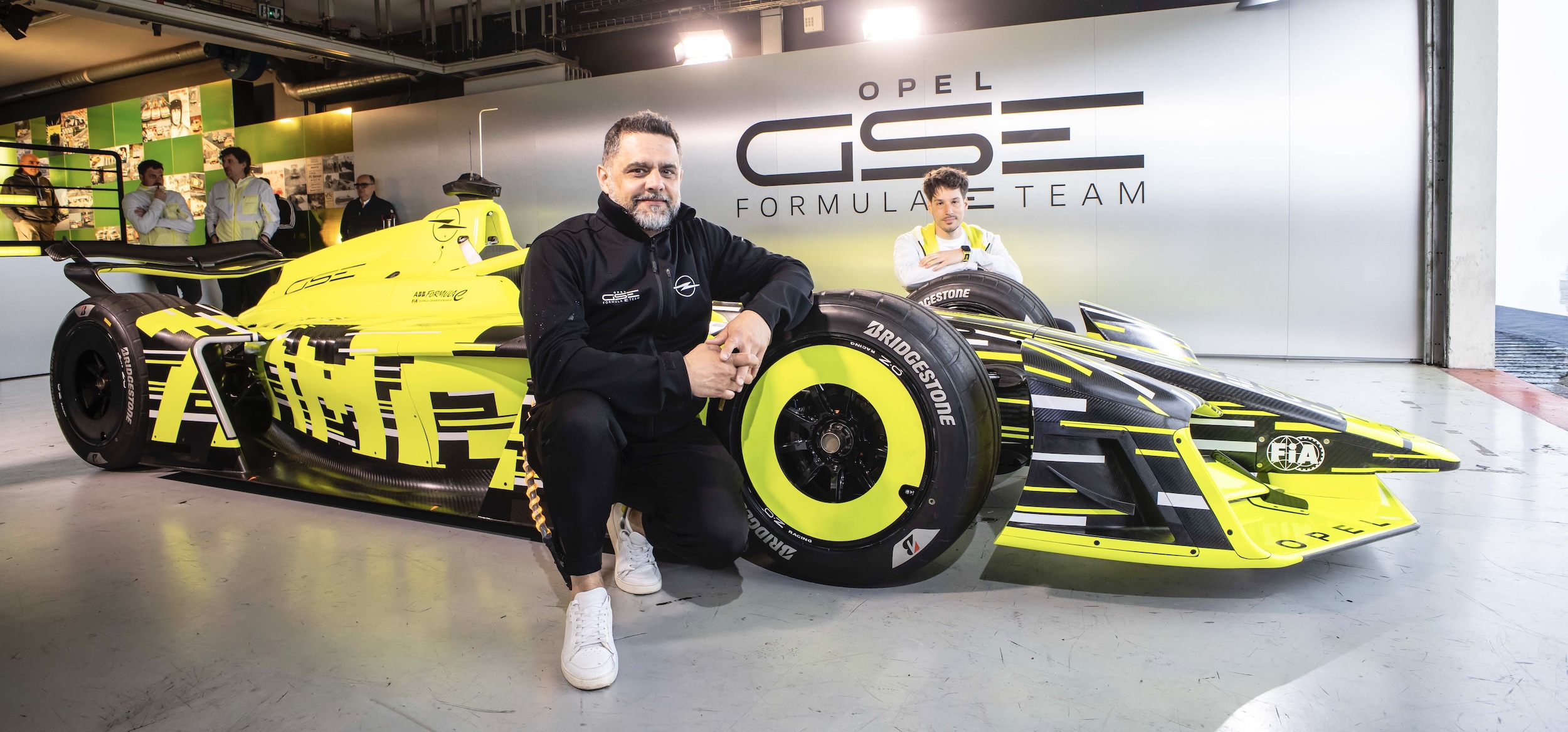
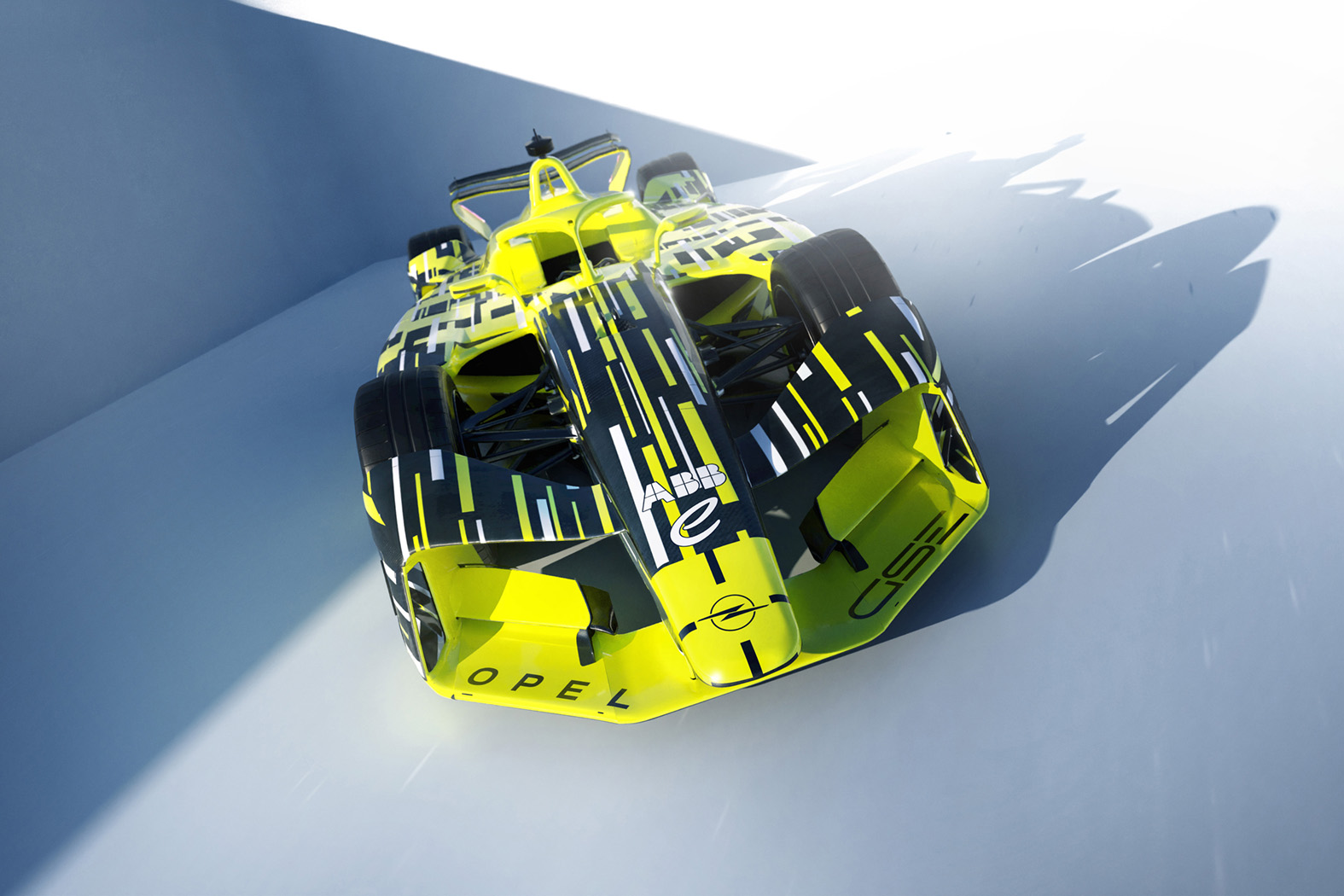
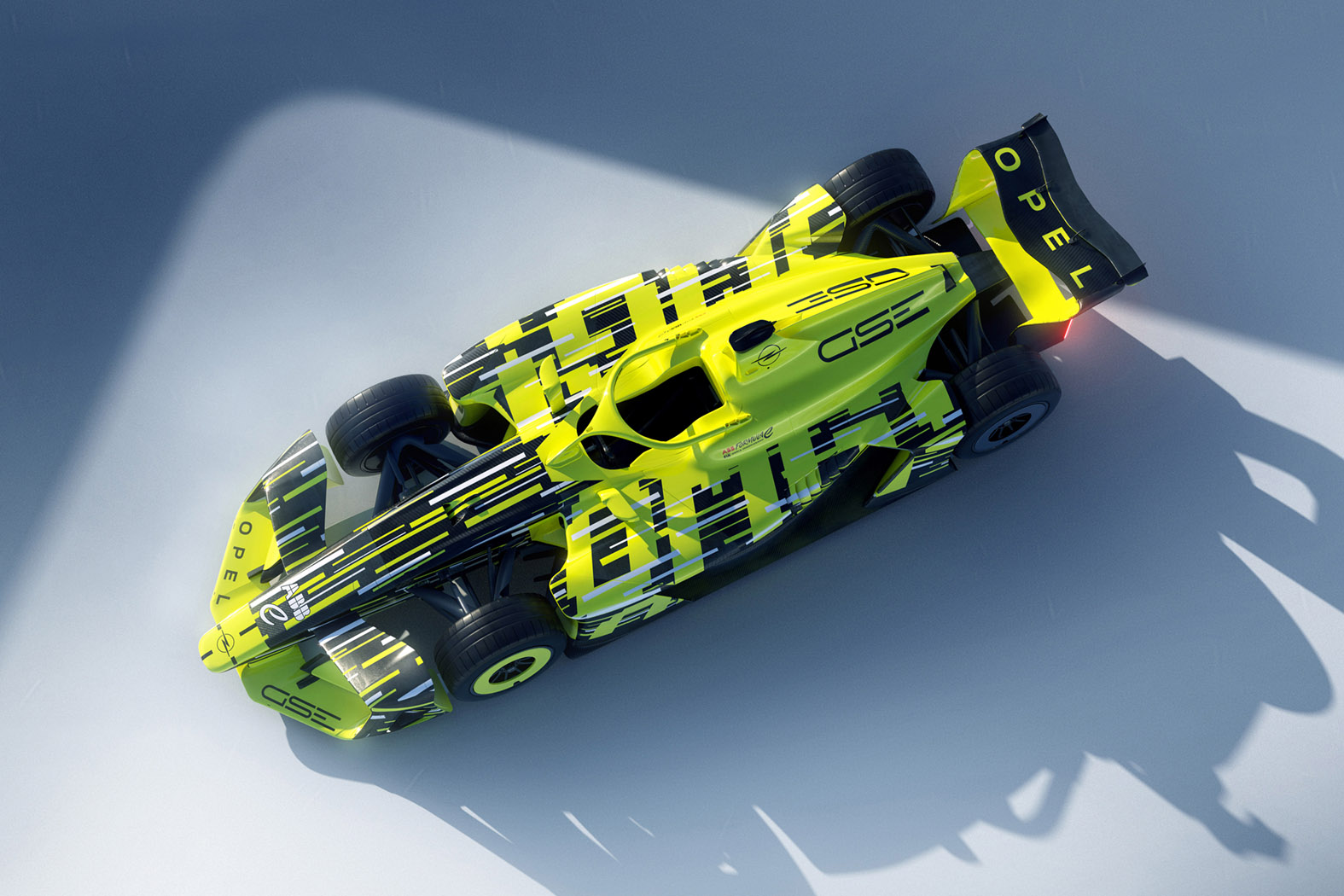
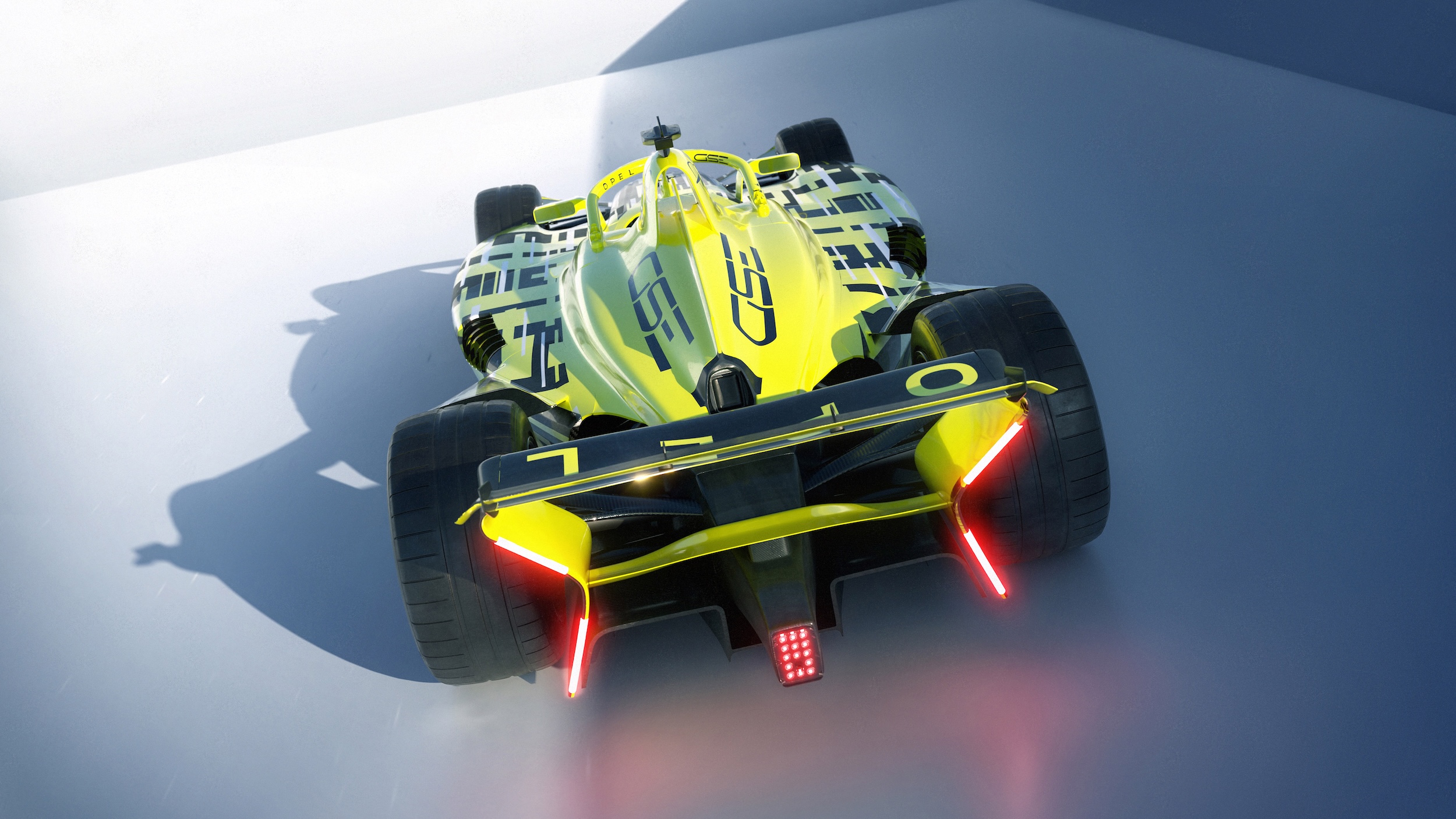
The new generation of GEN4 accelerates with a force that impresses even experienced racers. “It comes out of the corner so fast that you don’t even have time to say ‚OMG!‘,” says Garcia. The link to the OMG! GSE campaign developed together with brand marketing is immediately visible and translated into pure track performance. This results in a sentence that also characterises the entire design: “OMG! In a blink of the eye.” The search for this visual language leads through sketches, 3D models and countless design loops, but always in close alignments with the brand marketing and motorsport teams. Together with his creative partner Daniele Martini, they finally develop the flowing lines that run from the nose of the vehicle to the rear. They are complemented by a bold striking yellow surface – the visual energy core of the vehicle. “At that moment, the Opel GSE 27FE became instantly recognisable and looked fast – even when stationary.”
Speed becomes visible
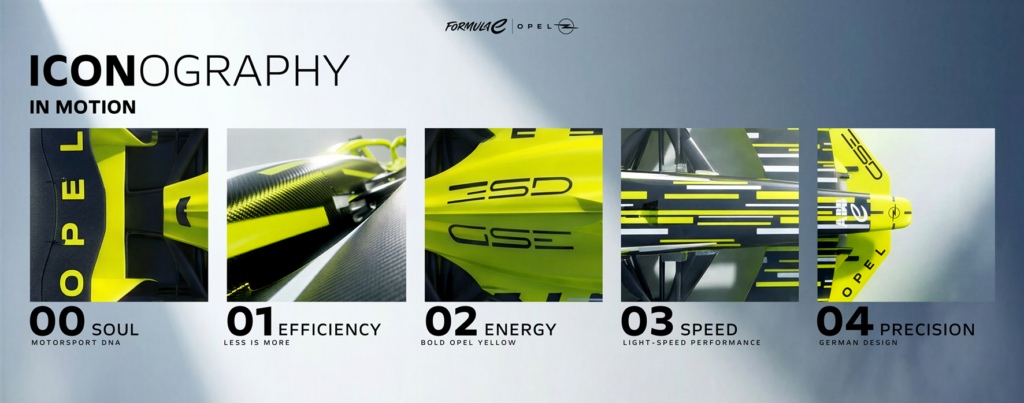
What at first glance looks like a graphic pattern follows a clear idea. The so-called ‘Lightspeed’ graphics give the vehicle dynamism even when stationary. “Imagine icons in motion,” says POG. The path to this goal is fluid. “It’s a dialogue between intuition and performance – never one without the other.” First, the two designers analyse the proportions, posture, surfacing and character of the vehicle. Then the graphic elements and iconography are created. The more organic shapes of the new GEN4 racing car make this task more challenging than ever. “Every line has to work harder and be set absolutely consciously, just like the perfect line on the track towards the apex.”
The GSE 27FE is not only supposed to be fast. It should radiate speed even when stationary.
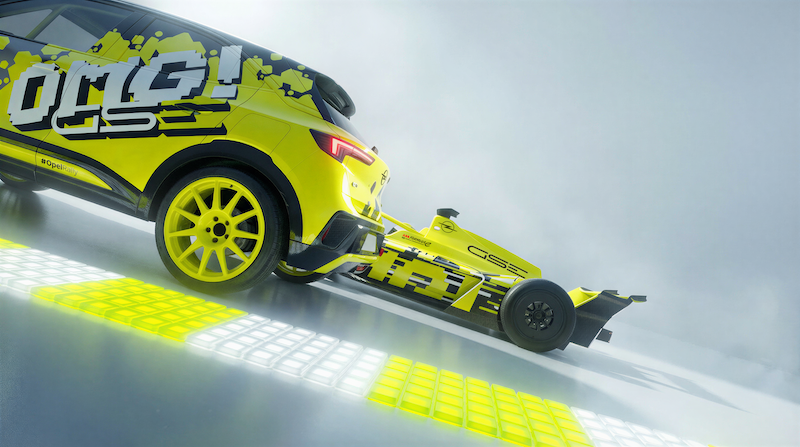
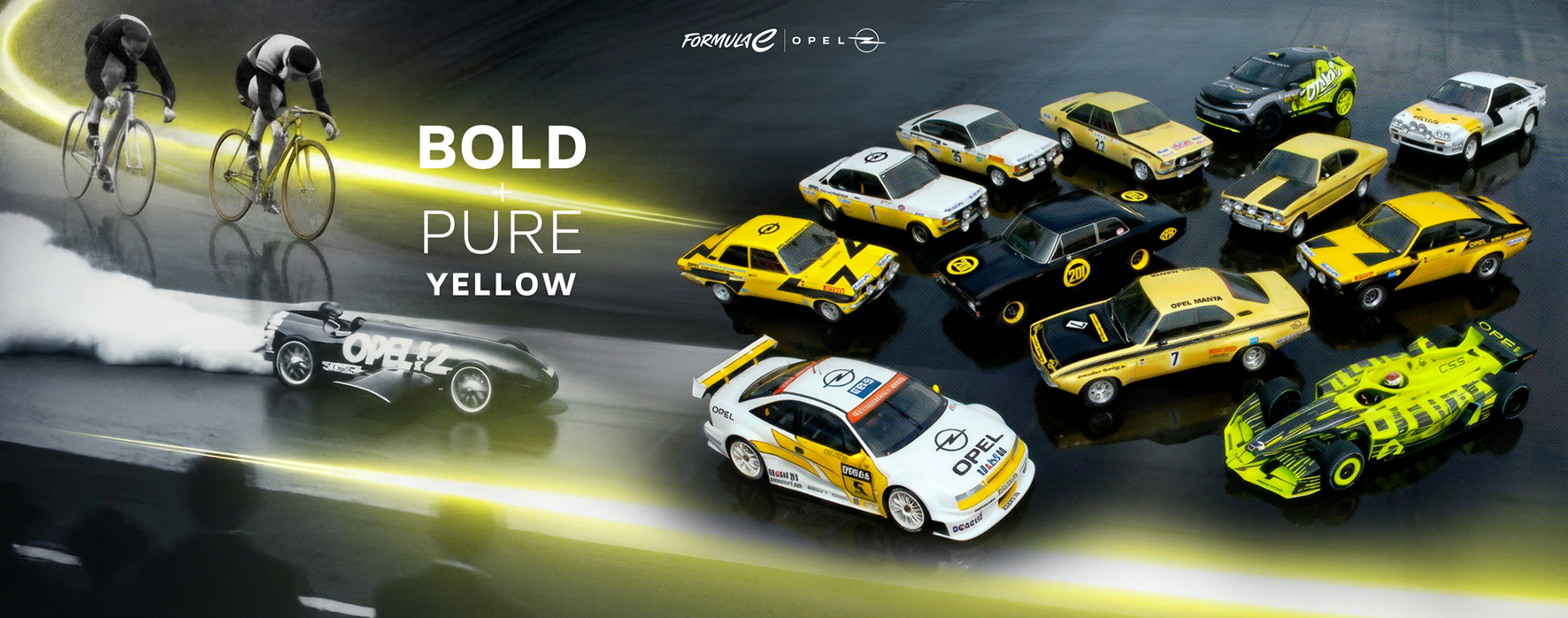
In motorsport, visibility is decisive. Today, however, not only at the track, but also on smartphone or tablet screens, in onboard cameras and in social networks. “Today, colour is about dominating the screen,” says Garcia. This aligns with his role: as head of Global Brand Design, he strives to create a holistic and consistent visual identity, rooted in Opel’s brand values and deployed across all brand touchpoints. Yellow plays a central role for the brand with the Blitz. It is striking. It is memorable. And it ties in with its own history: As early as the 1920s, Opel painted its racing bikes yellow to stand out from the crowd during races. Today, this idea lives on in Formula E.
Colour as a stage
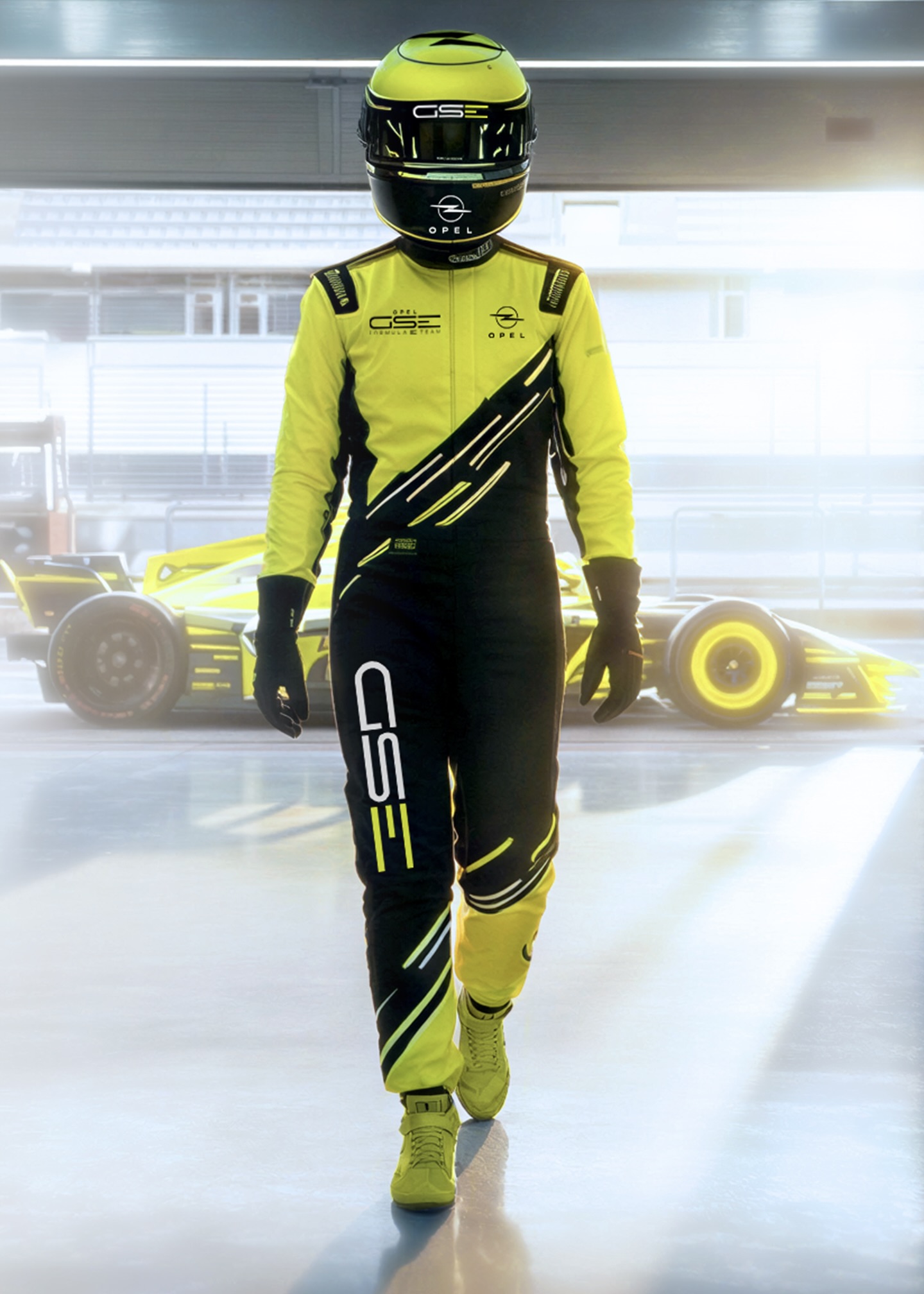
And design does not end with the body. During test drives, Garcia works closely with engineers and test driver Sophia Flörsch. The feedback from the cockpit flows directly into the design concept. “Yellow is distinctive. But for the driver, the visual environment must provide absolute clarity,” says Garcia. That’s why helmets and racing suits are also part of the overall concept. In the cockpit, orientation counts – not distraction.
For a long time, the GSE 27FE only existed as a design, virtual model and computer animation. In fragments. Individual puzzle pieces. Then came the day of the world premiere at the Circuit Paul Ricard in Le Castellet. The racing car rolled out of the truck. Sophia Flörsch got in. “Then suddenly everything clicked,” says Garcia. Vehicle, racing suit, helmet and pit lane merged into an overall harmony. When the GSE 27FE took to the track a little later, the real test followed. “Then people reacted. They said, ‚Wow.‘ Or, ‚Oh my God.’”
When it all comes together
Garcia smiles when he talks about it. For him, this is the best proof that the design is doing its job. However, the Opel GSE 27FE is not finished yet. The prototype is currently completing its test programme. At the same time, the design team is also developing every detail including teamwear, garage design and merchandising. The German brand will not present the final design livery until the 2026 Paris Motor Show. Until then, the GSE 27FE remains exactly what Garcia sees in it: a promise of the next evolutionary step of Opel’s Grand Sport Electric.
July 2026