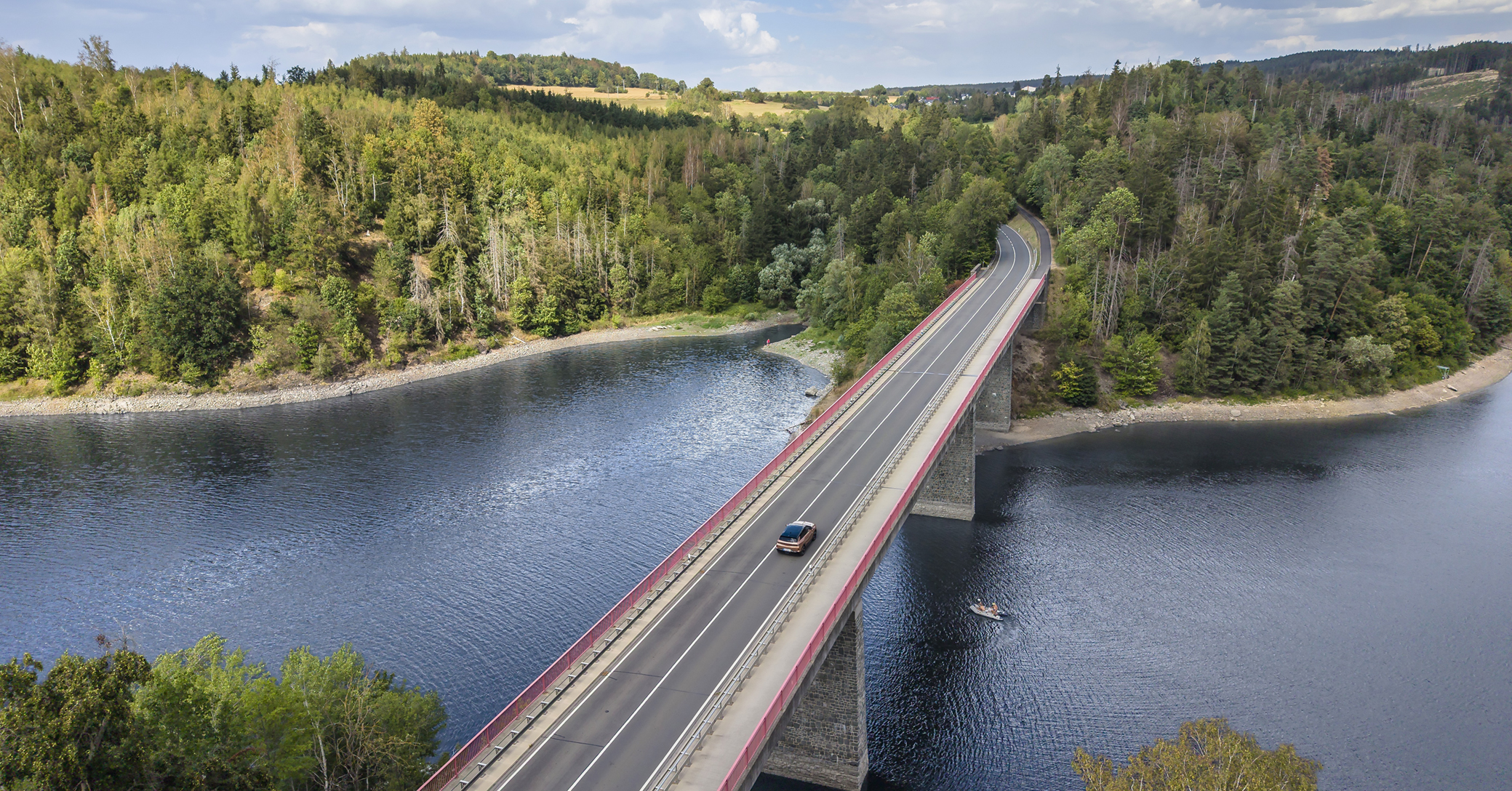
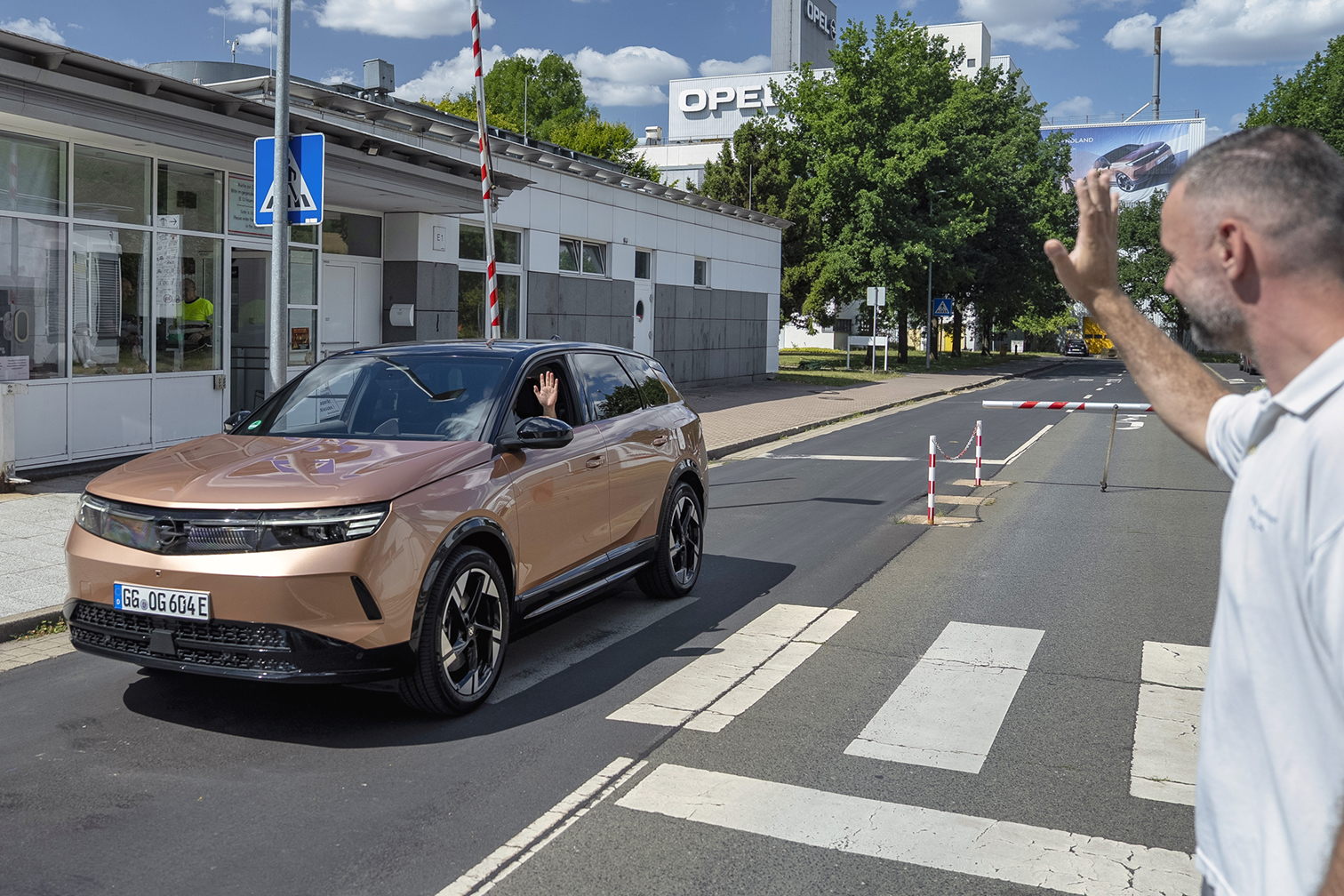
The starting point is perfect: Eisenach. The Grandland is built at the Opel plant here. Made in Germany – and it is precisely this car that will take us across Germany to the highest mountain in the republic. An electric road trip with Thuringian roots and a Bavarian finale.
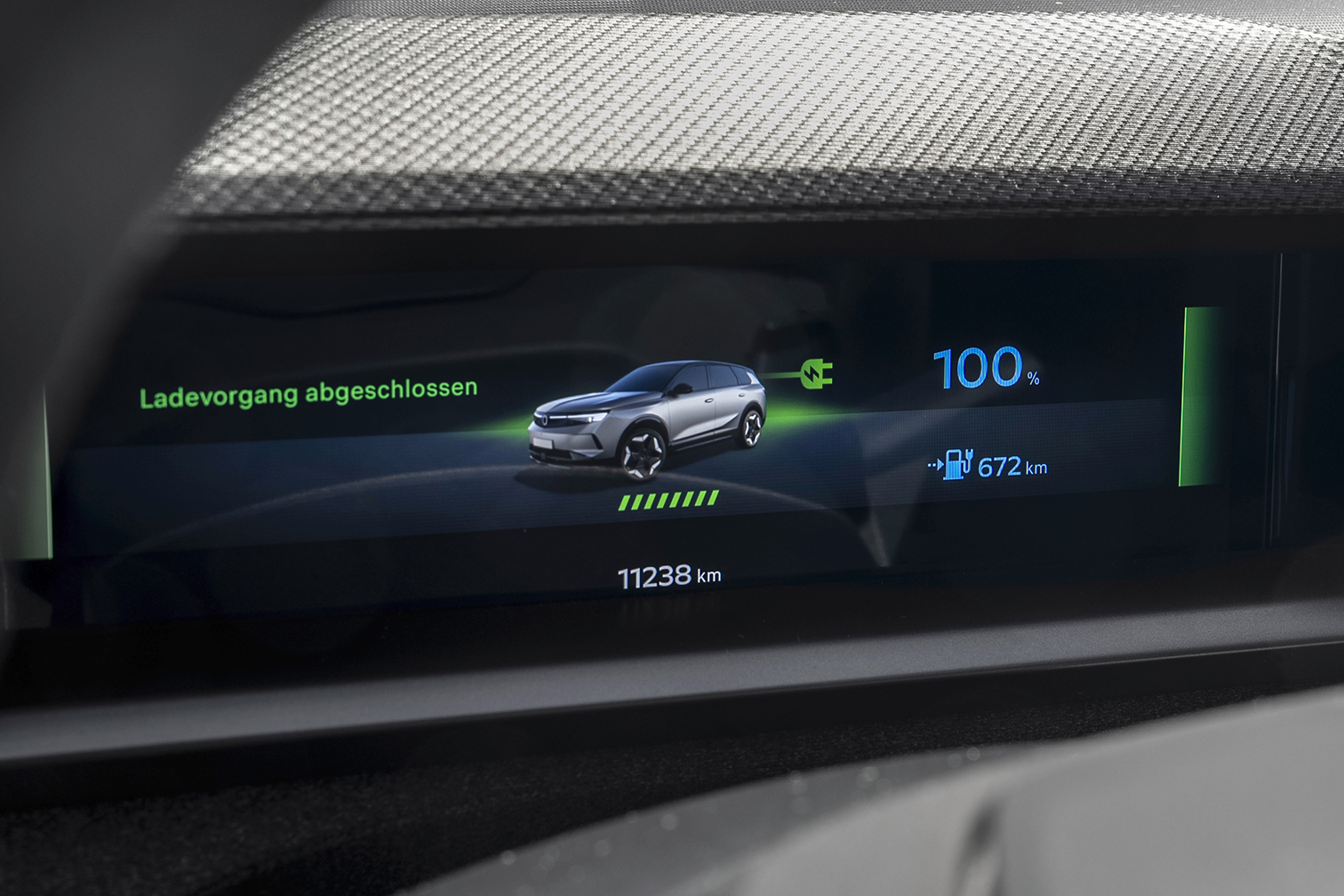
The official WLTP range of the Grandland Electric Long Range is up to 694 kilometres. We want to crack the 700-kilometre mark. And not in the laboratory. Two people get in, three bags are in the boot, the air conditioning is working and, of course, the mobile phones are also being charged. After all, this is not about the world record in hypermiling, but about a relaxed long-distance tour.
The Grandland is fully charged in Eisenach. And first of all, it does what a good touring car should do: it rolls quietly, comfortably and relaxed across the country.
Goethe, Bauhaus and Bratwurst
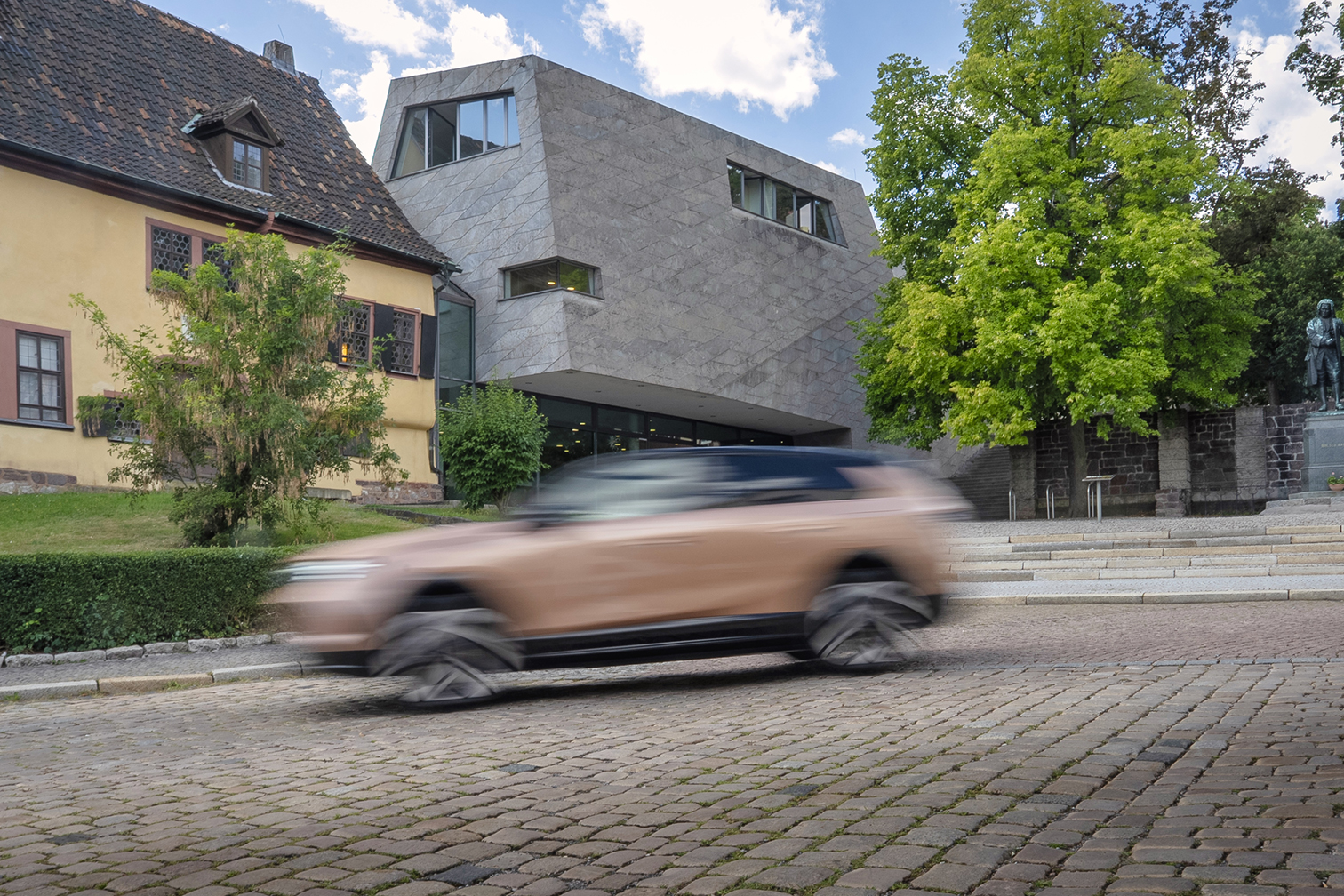
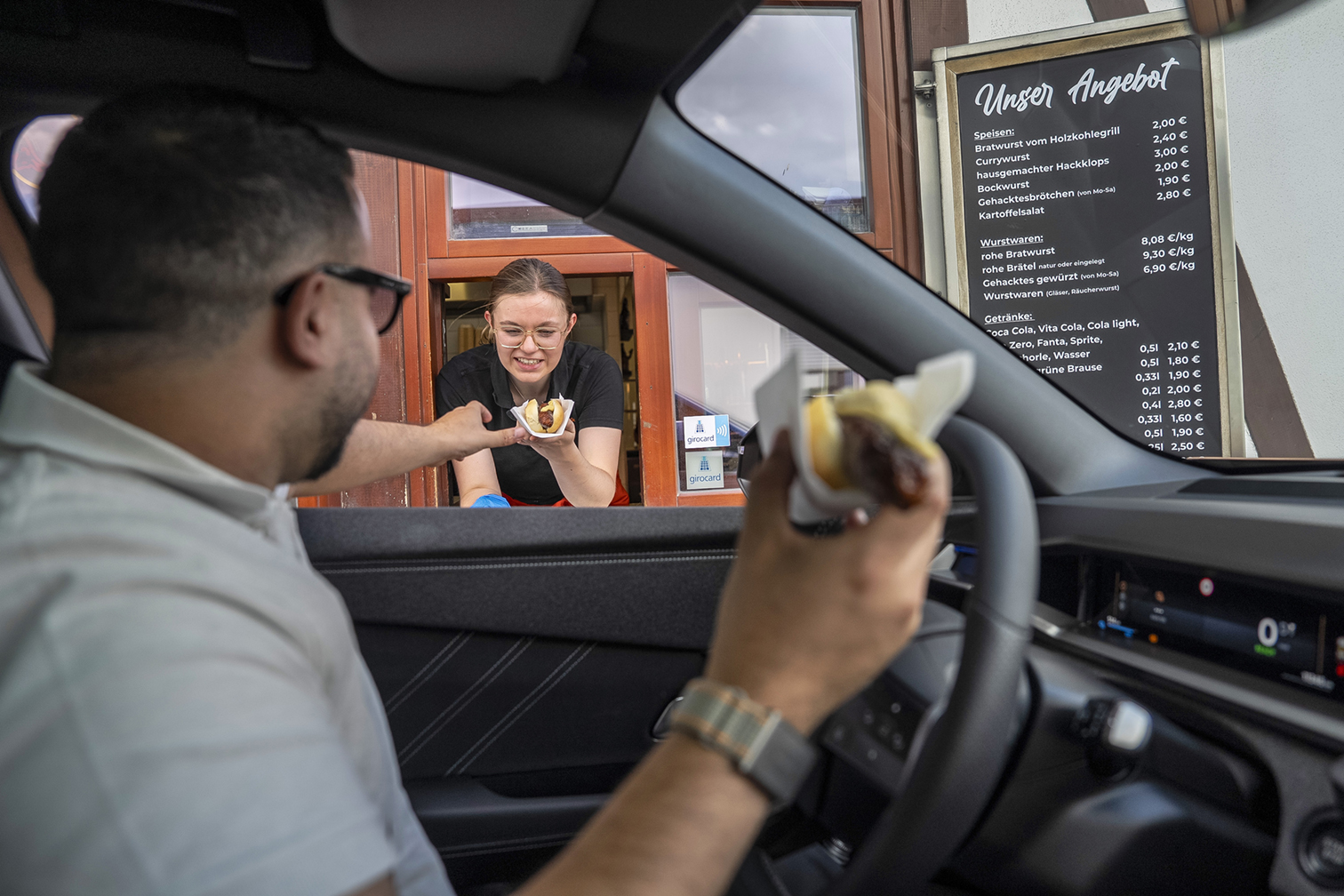
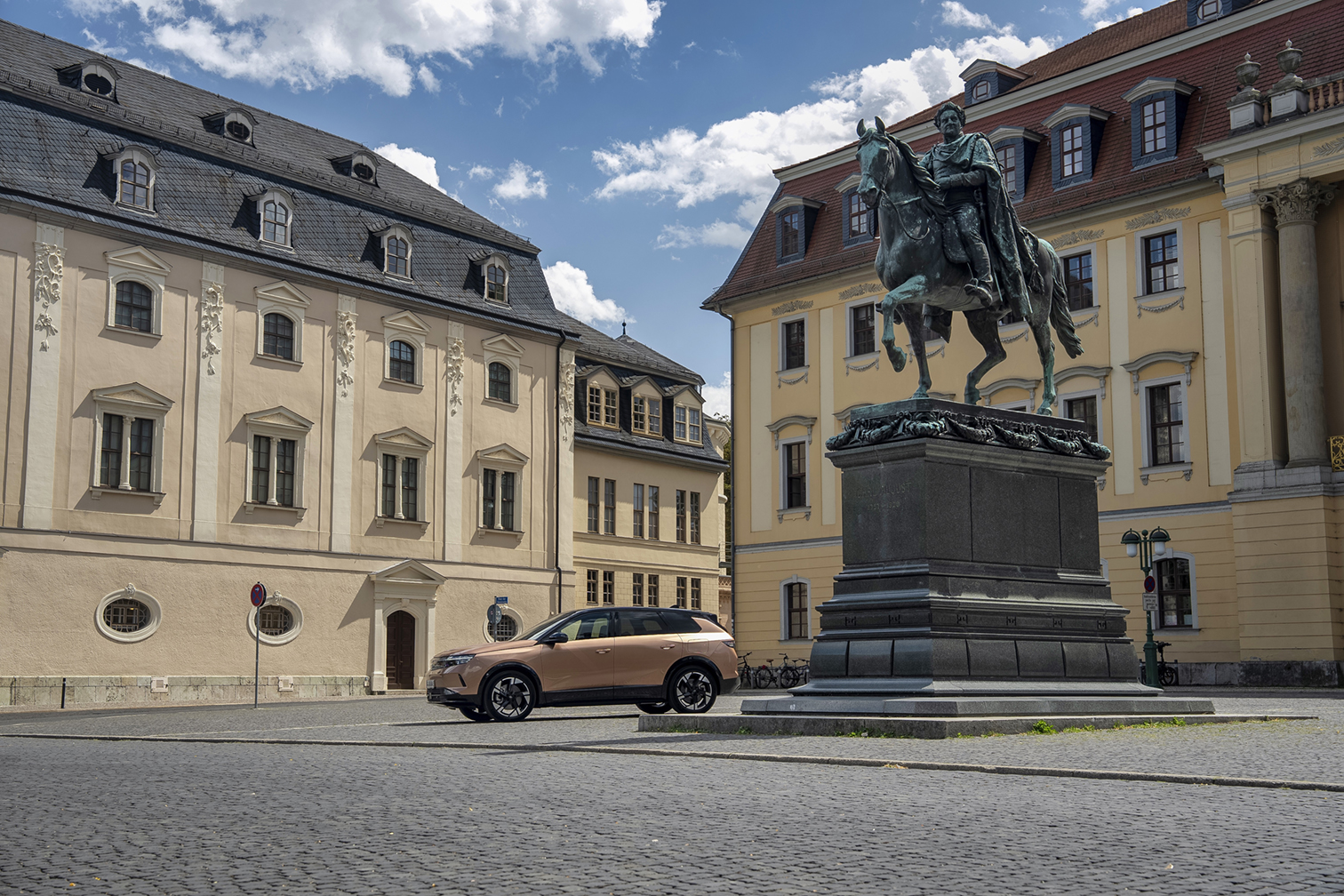
First stop: Weimar. Goethe House, Bauhaus, cultural history on every corner. You could easily spend a whole day here. If it weren’t for the date with the range display. So on to the A4 – to Magdala. There, a Thuringian institution awaits at the snack bar Hase: the bratwurst. And because we don’t shy away from any challenge on this trip, we test the legendary drive-in Bratwurst through the car window. And it is extremely delicious … The nice thing about the electric car: No engine runs while waiting for the sausage. No hum, no vibration. Just us – and the question of how many kilometres are really in the battery.
At the Hermsdorfer Kreuz junction, we head south. Then to Saalburg-Ebersdorf in the Thuringian Vogtland: the Bleiloch reservoir is close, Germany’s largest reservoir in terms of volume. Surrounded by water, forests and winding roads – a beautiful playground. Which the electric SUV from Eisenach knows how to take: set recuperation to the highest level and greet the curves with 231 hp. The Grandland diligently recovers energy before the apexes. This works so smoothly that you quickly adapt your driving style: take your foot off the pedal a little earlier, let it roll, take speed with you – and go again.
From Mariánské Lázně to Valhalla
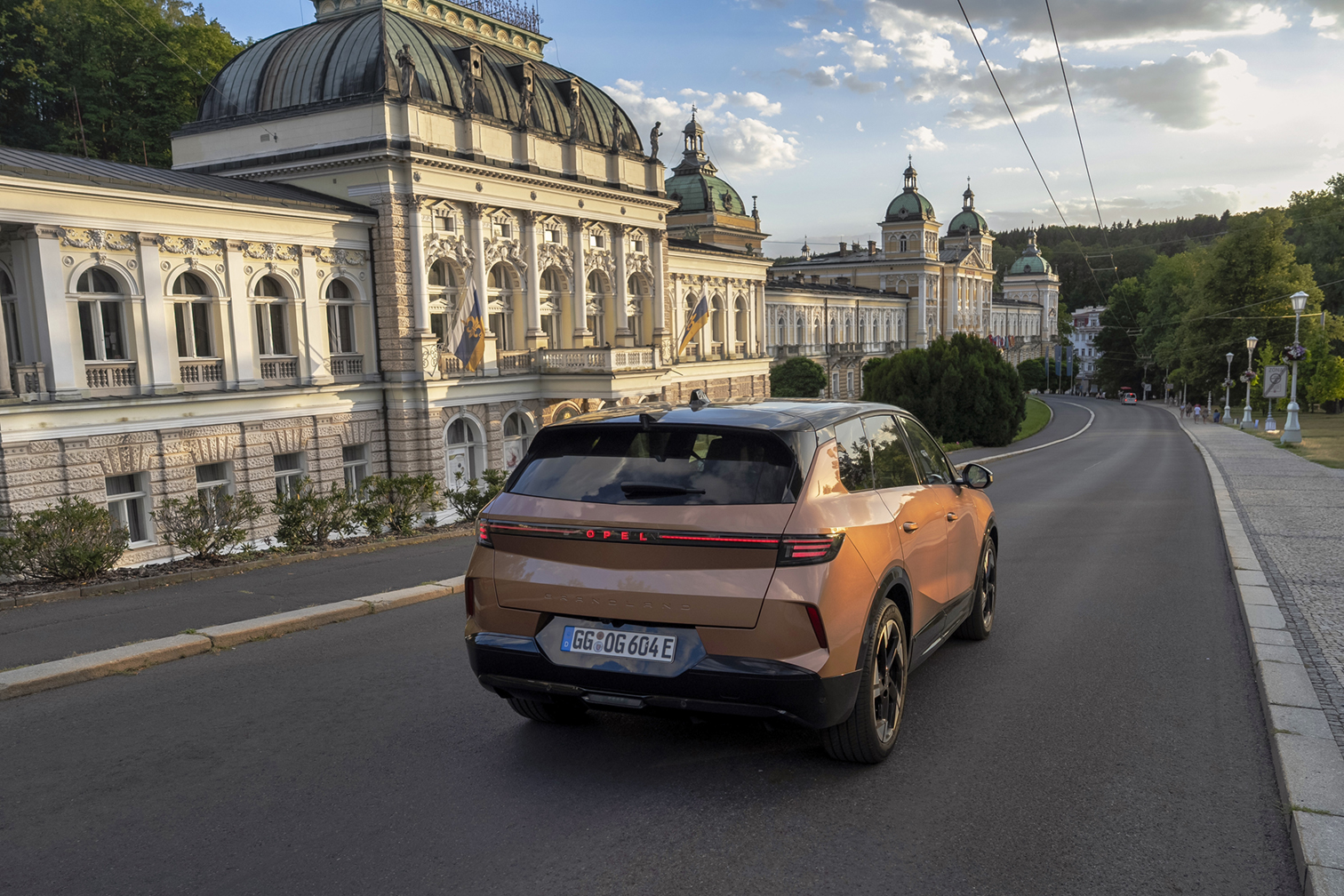
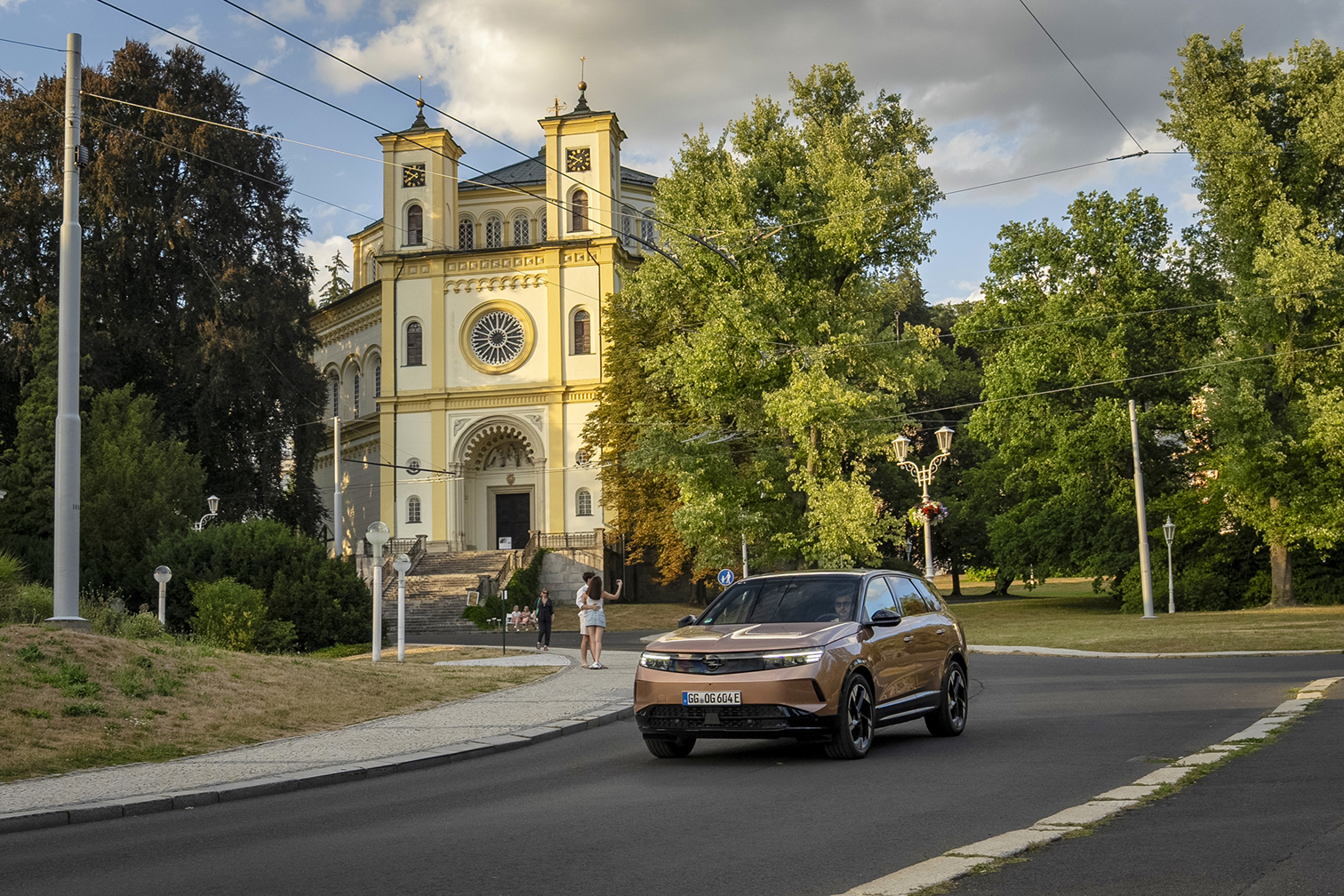
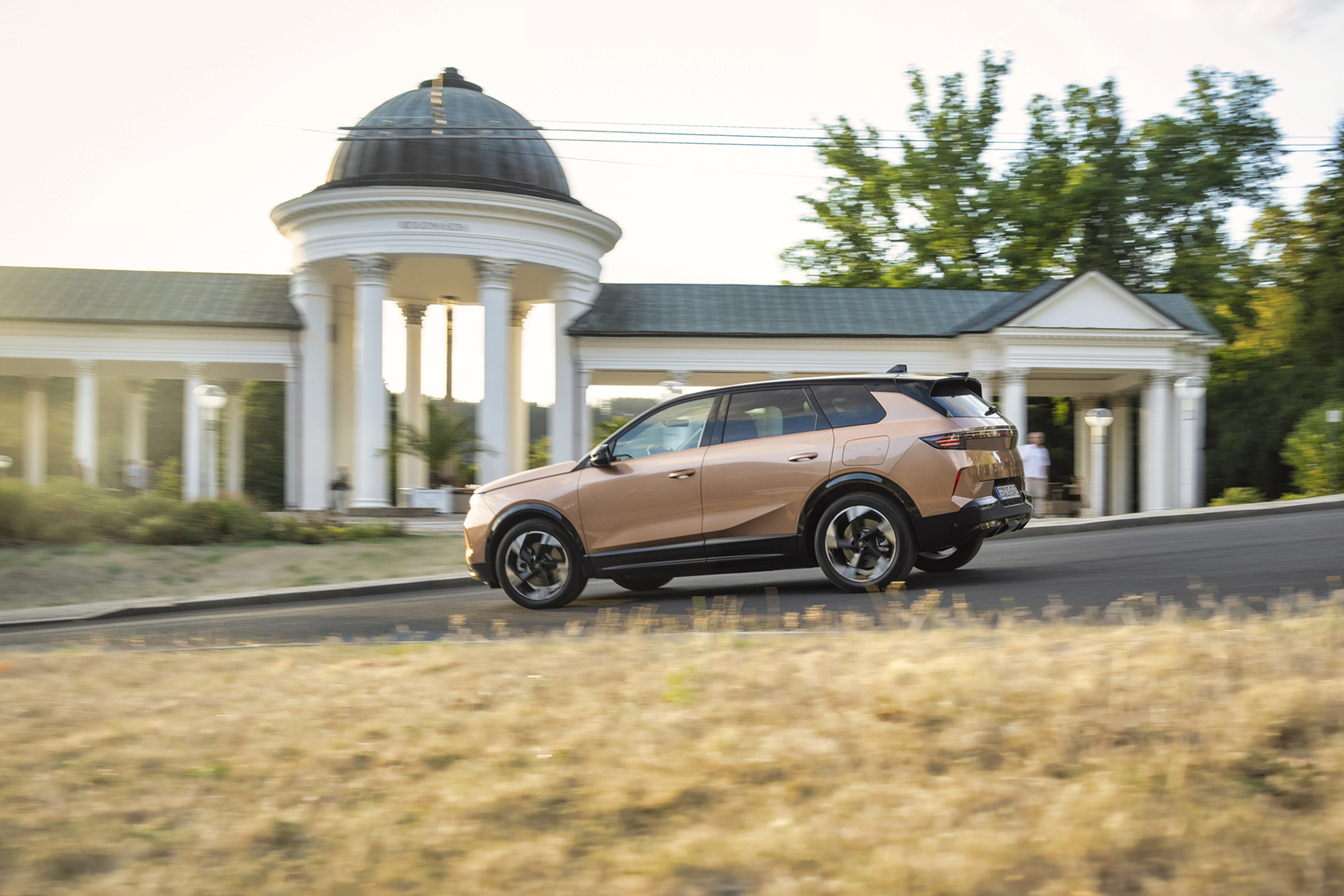
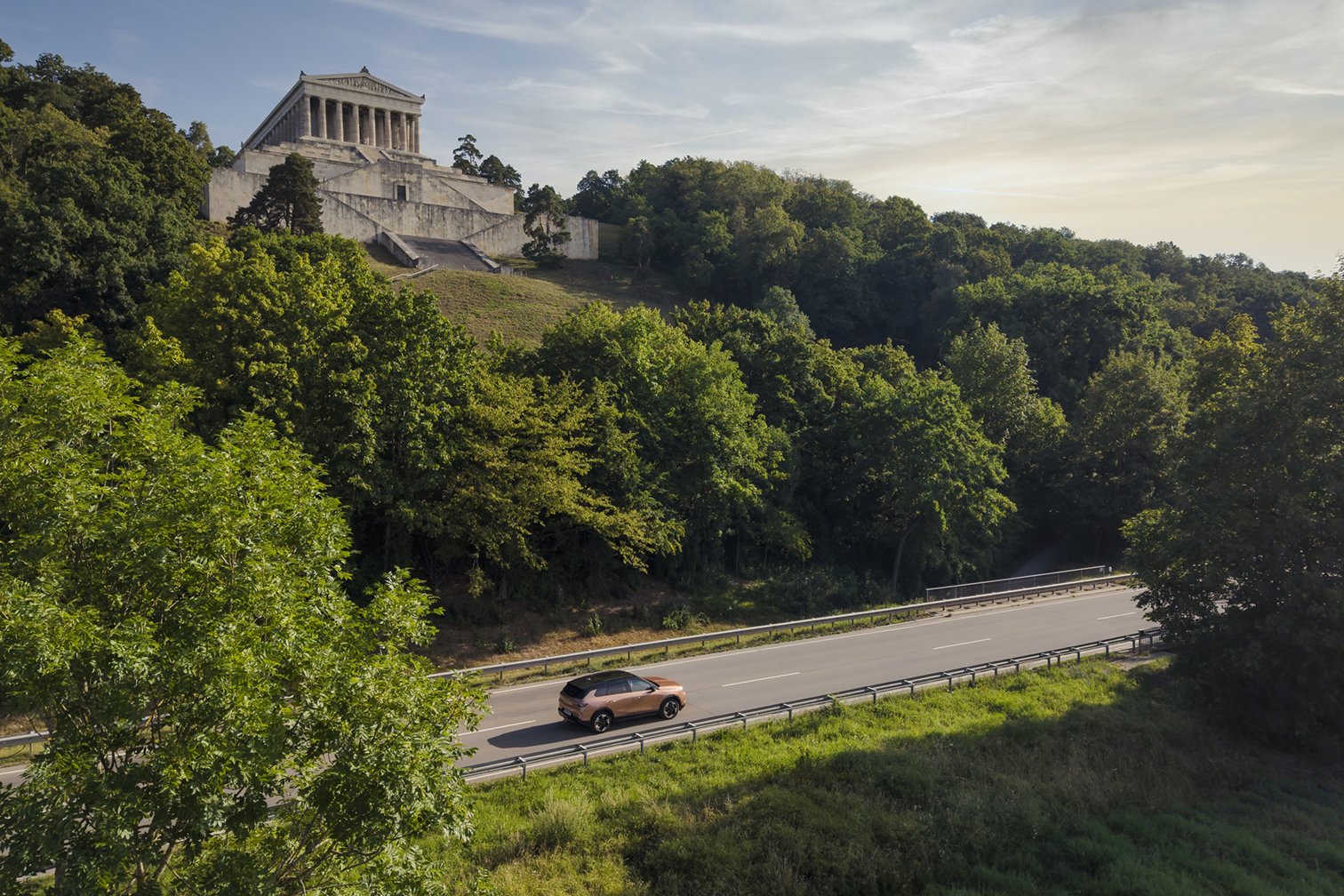
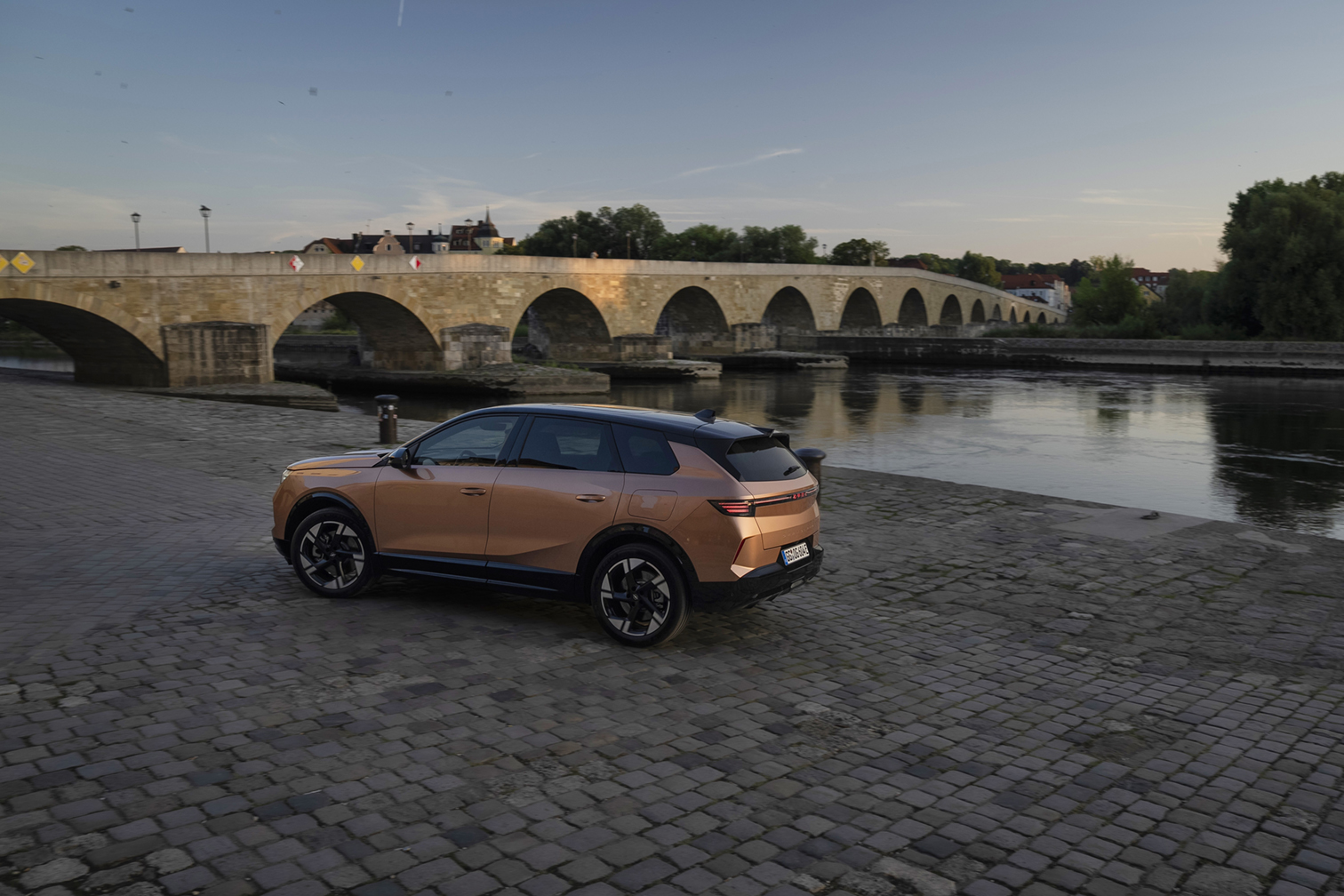
It’s about to get sophisticated. We include a small detour to Marienbad in the Czech Republic. The beautiful spa with its magnificent atmosphere seems to be from another time and marks a good point for a quick stop. A cool drink awaits in the spa gardens, then the Valhalla calls. The monumental building high above the Danube still impresses today – and incidentally ensures that the display for recuperation spreads joy. On the way south, there is a postcard picture in front of the Stone Bridge of Regensburg. Then the navigation system points in the direction of Munich. The battery? Half full. The consumption display? It says 16.1 kWh. It’s looking good.
Munich, Starnberg and the Alps
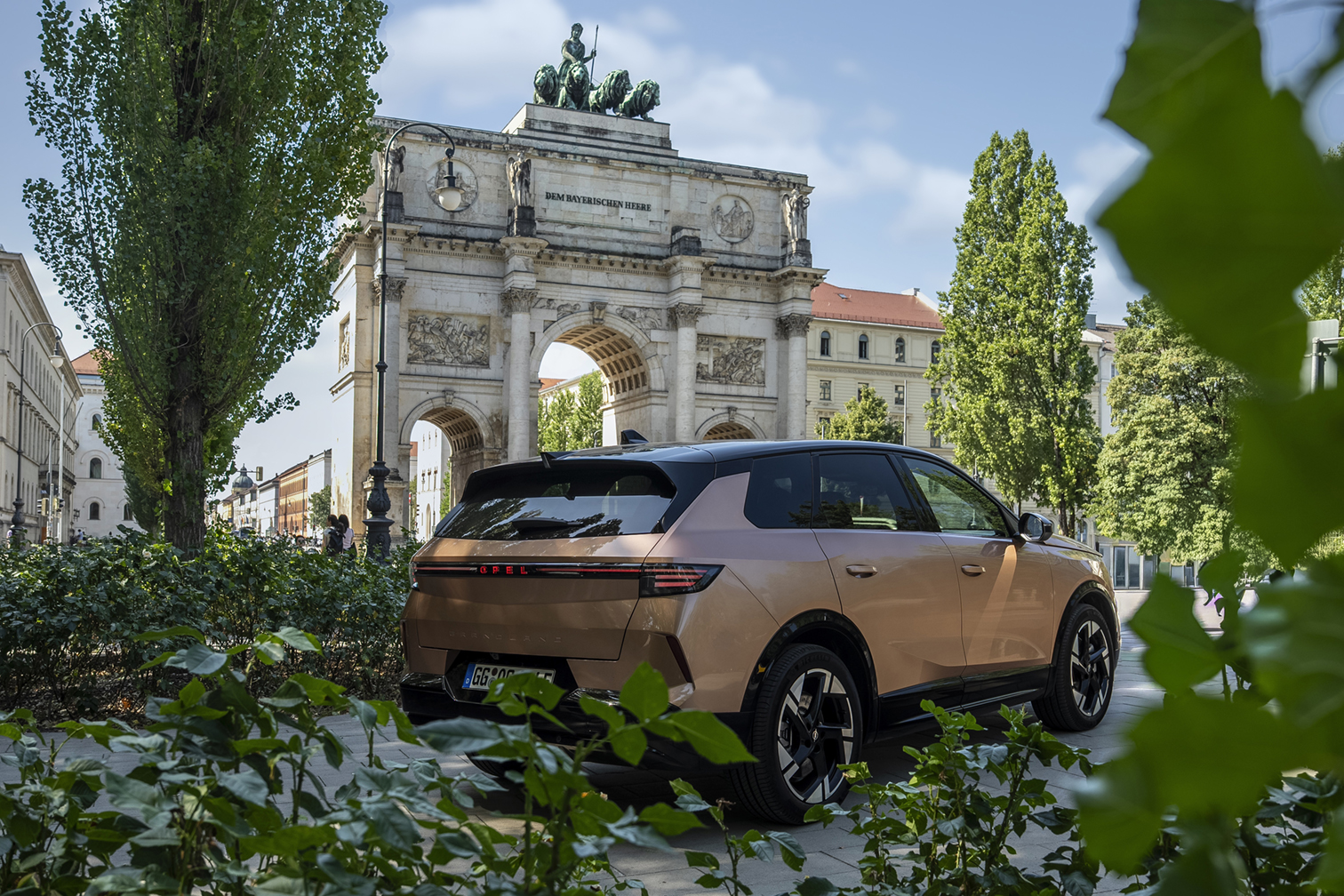
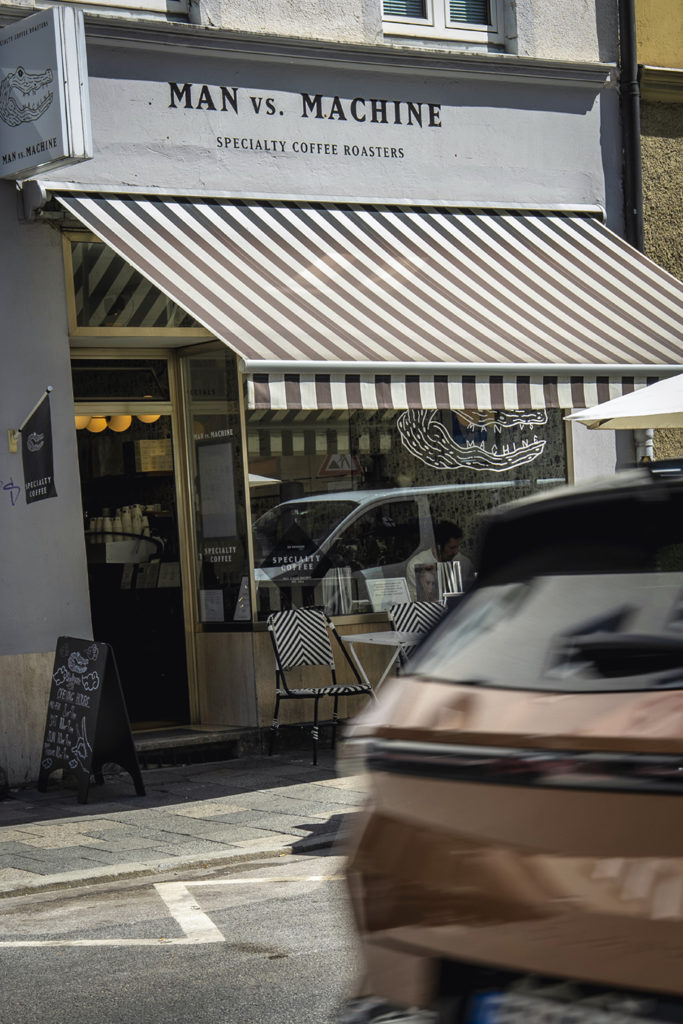
The heavy traffic in Munich does not increase consumption of the Grandland. On the contrary. It drops to less than 12 kWh according to the on-board computer. A picture in front of the Siegestor is a must, then the big city disappears again in the rear-view mirror. At Lake Starnberg, we spontaneously stop for a jump into the turquoise blue water. Then our gaze wanders back to the display: the distance we have covered is constantly growing but the remaining range drops to less than 100 kilometres. Will we make it?


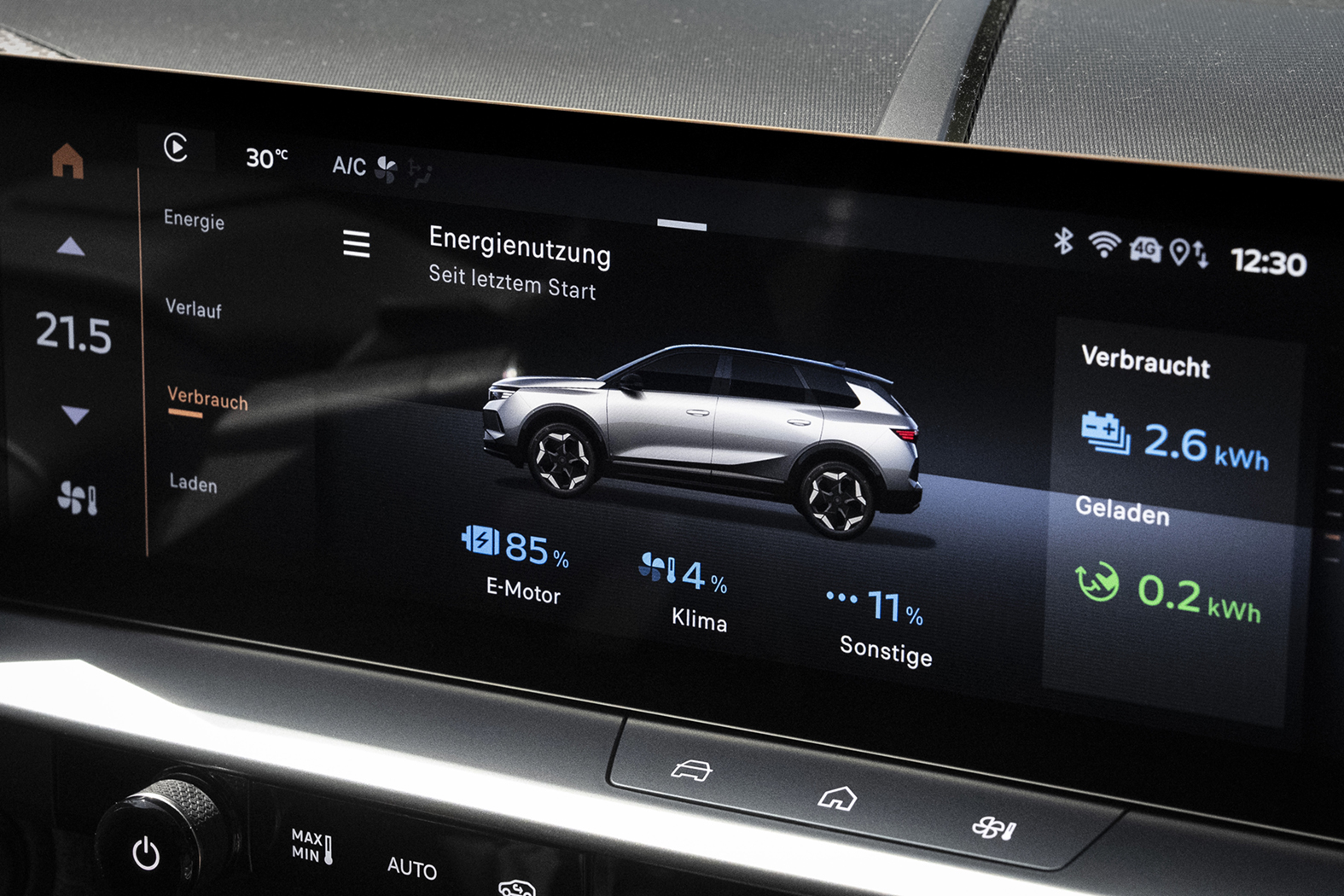
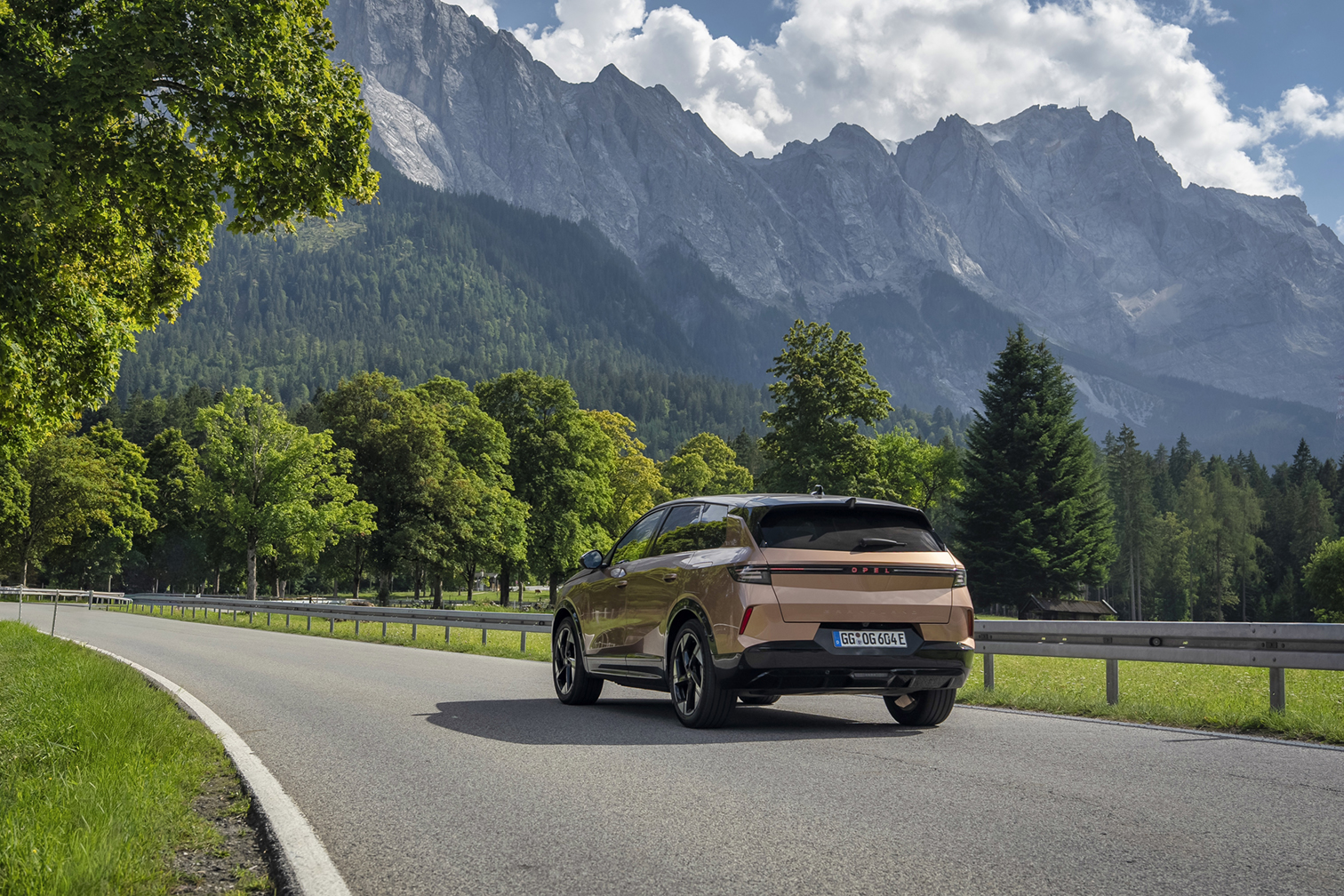
Shortly before Garmisch-Partenkirchen, the battery shows less than ten per cent. The Grandland warns us and presents five possible charging stations. We ignore its advice and head up the mountain road. Only 20 kilometres left. Consumption is now increasing steadily, the battery’s percentage display drops – to eight, seven, six – and finally five per cent. Phew. How far still?
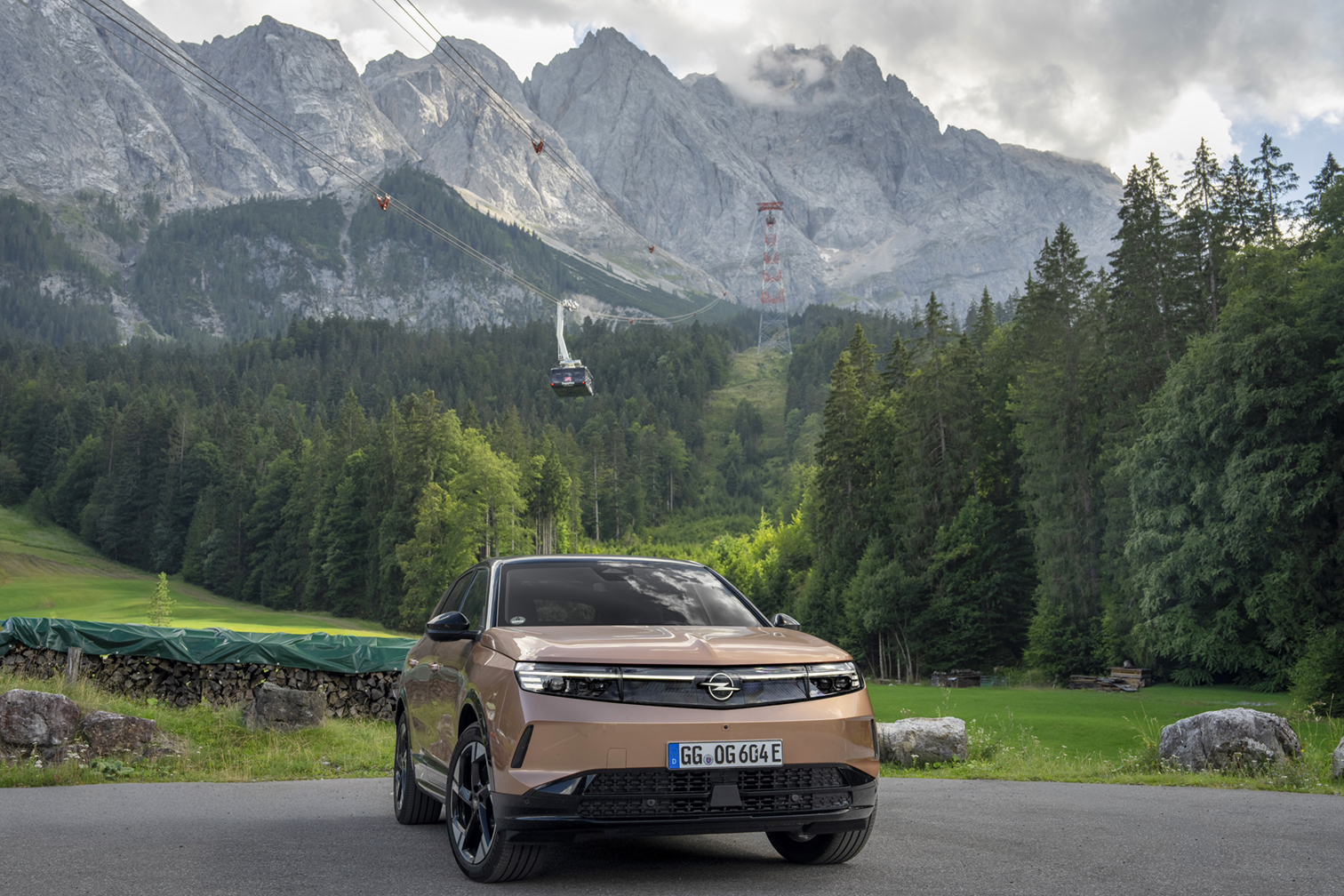
Three corners and a big climb. Then it’s done! We’ve reached our destination. Parking next to the Eibsee – below the Zugspitze. As the gondola floats over the Grandland, we read in the odometer: 714 kilometres! On a single charge. Wow!
Five tips for the best range
- Drive with foresight: Take your foot off the pedal early and take advantage of delays.
- Recuperation rocks: Especially when driving downhill, a lot of energy is recovered.
- Keep an eye on speed and choose a short route: High speeds drive up consumption significantly. Shorter distances help.
- Don’t run climate control at full capacity: Moderate temperatures save energy.
- Avoid unnecessary weight: Only take what you really need.
- In short: kW stands for power, kWh for energy. In the case of an electric car, consumption therefore shows how many kilowatt hours it needs per 100 kilometres – at times less than 12 kWh/100 km on this tour.
September 2026