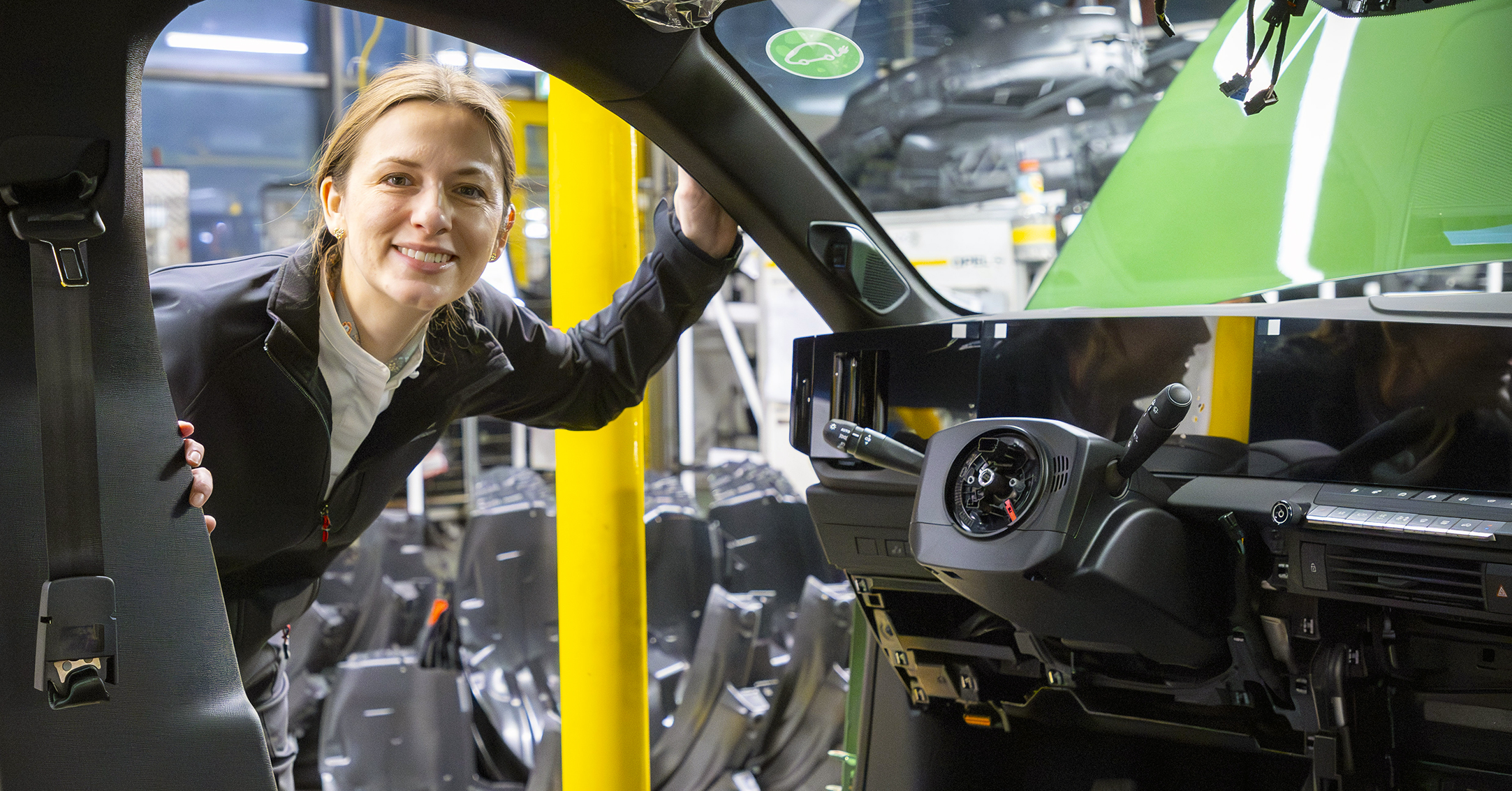
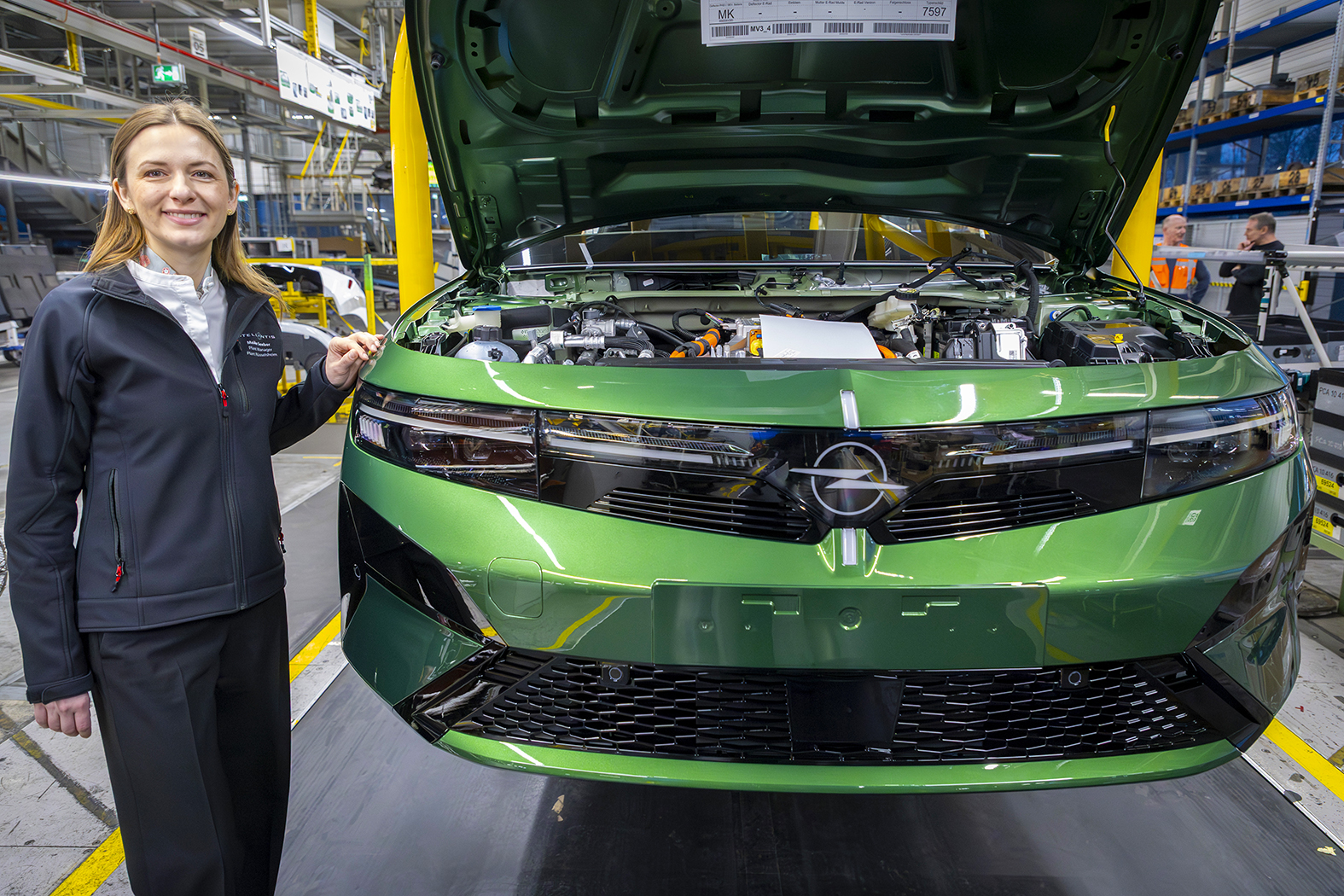
When a new plant manager takes over their first vehicle from their own production, it is more than a symbolic moment. For Maike Seeber, plant manager at the headquarters in Rüsselsheim since September, it stands for what fascinates her about the automotive industry: the interaction of people, processes and technology – and a vehicle that drives off the assembly line as the result. As her new company car, a battery-electric Astra Sports Tourer in Klover Green with a black roof, passes through the finishing and final assembly stations, the 42-year-old is present on the line as often as possible.
“To experience first-hand how design, technological innovations, industrial feasibility and the team spirit of the Rüsselsheim team come together – that’s something very special,” says Seeber. She is on site when the new Vizor with illuminated Blitz is mounted and as the advanced Intelli-Seats are installed. The components arrive at the line in a just-in time sequence – at exactly the right moment and in the right order. “This is precision work to the point,” she emphasises.
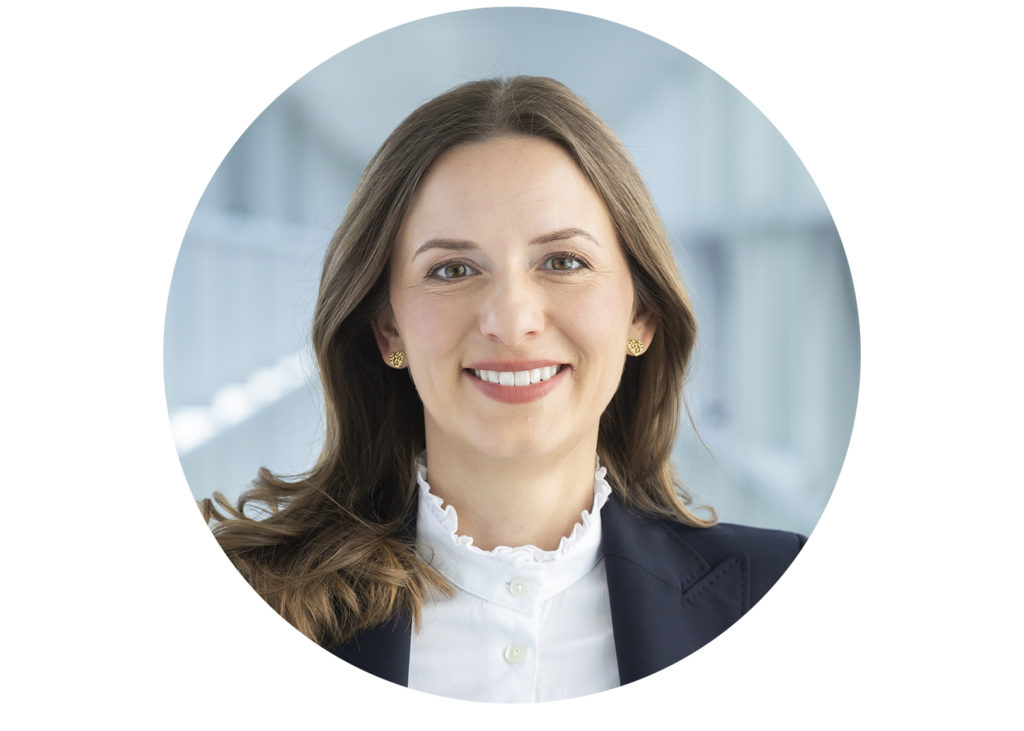
“We want to show what industrial value creation Made in Germany can achieve.”
– Maike Seeber, Plant Manager Rüsselsheim –
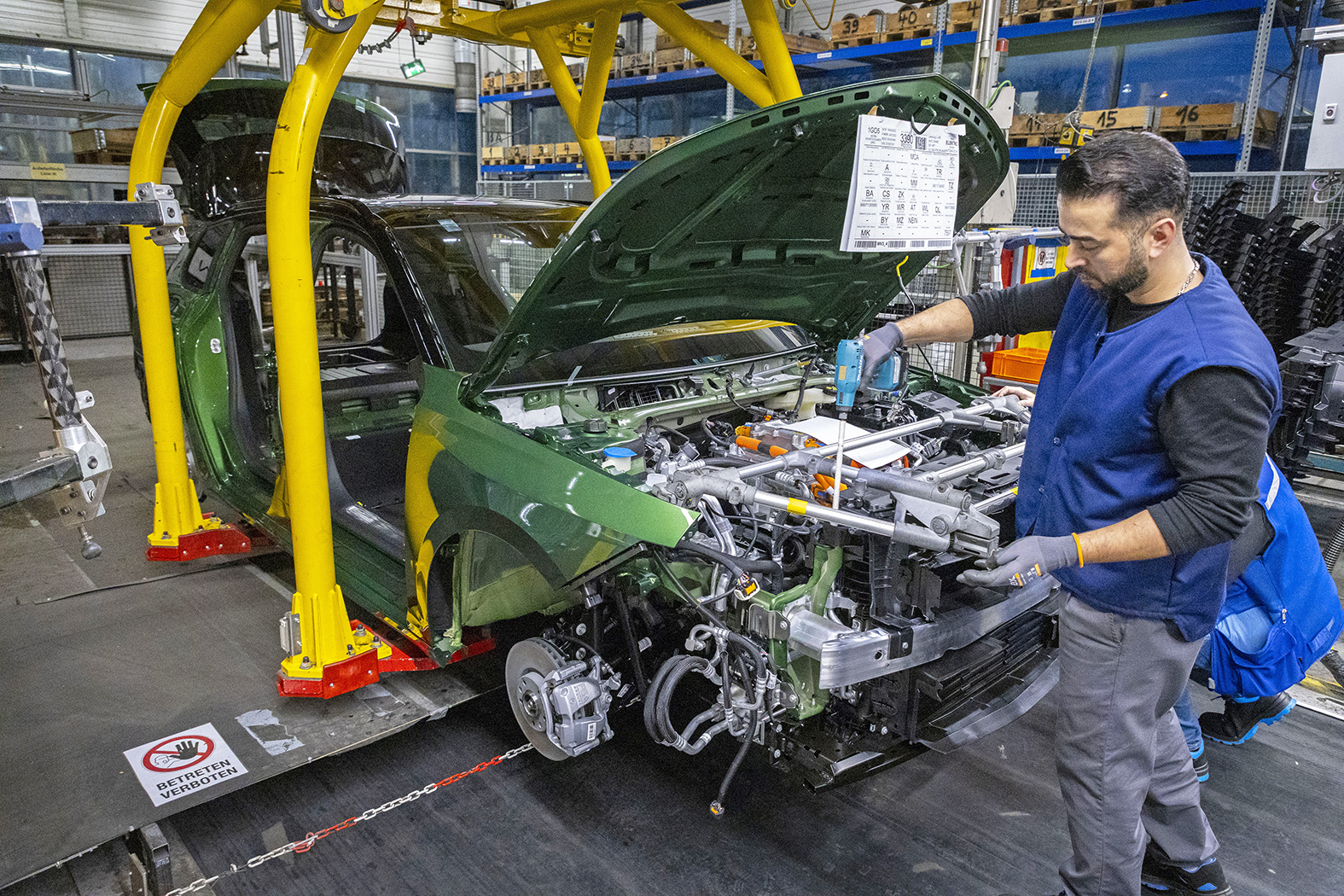
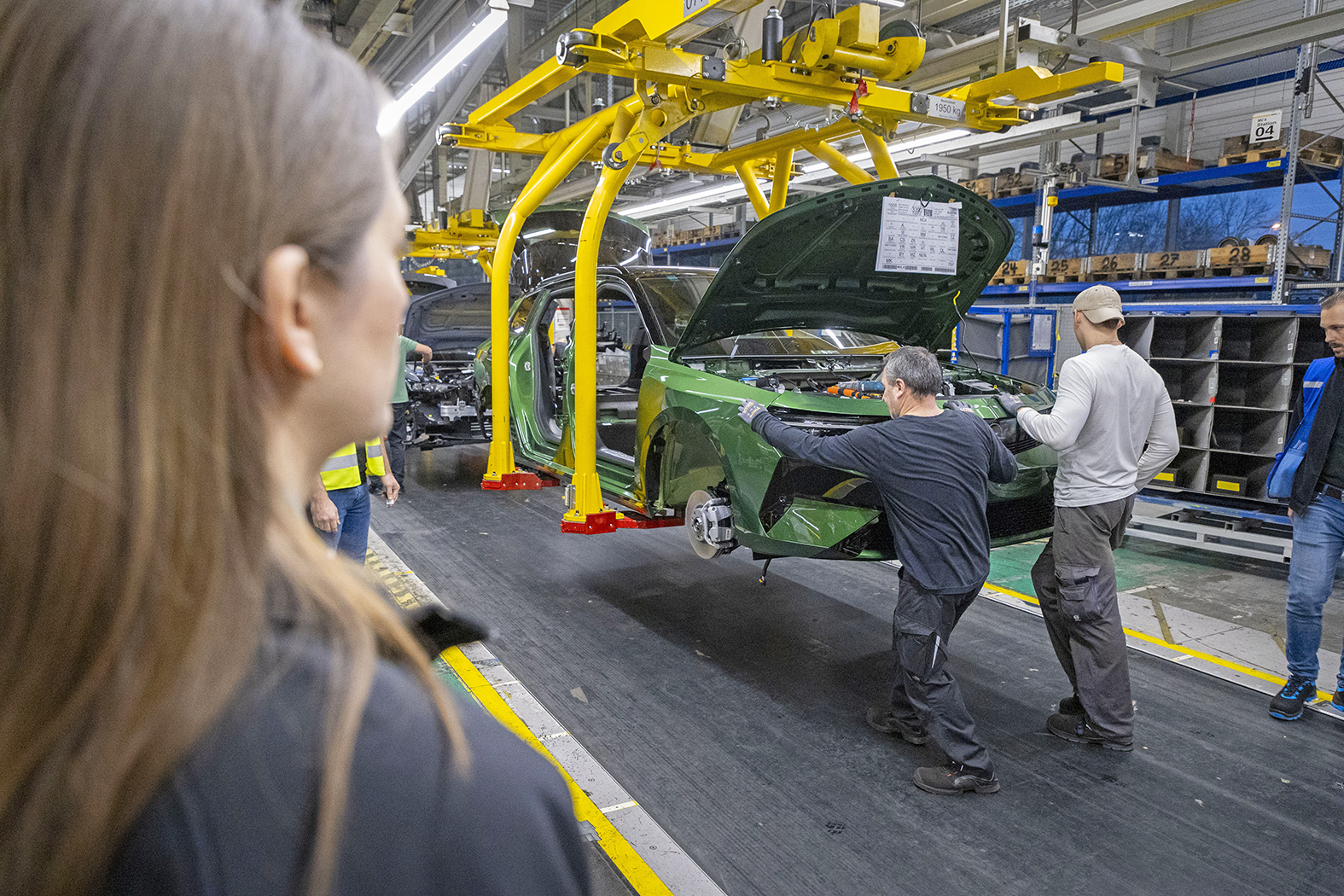
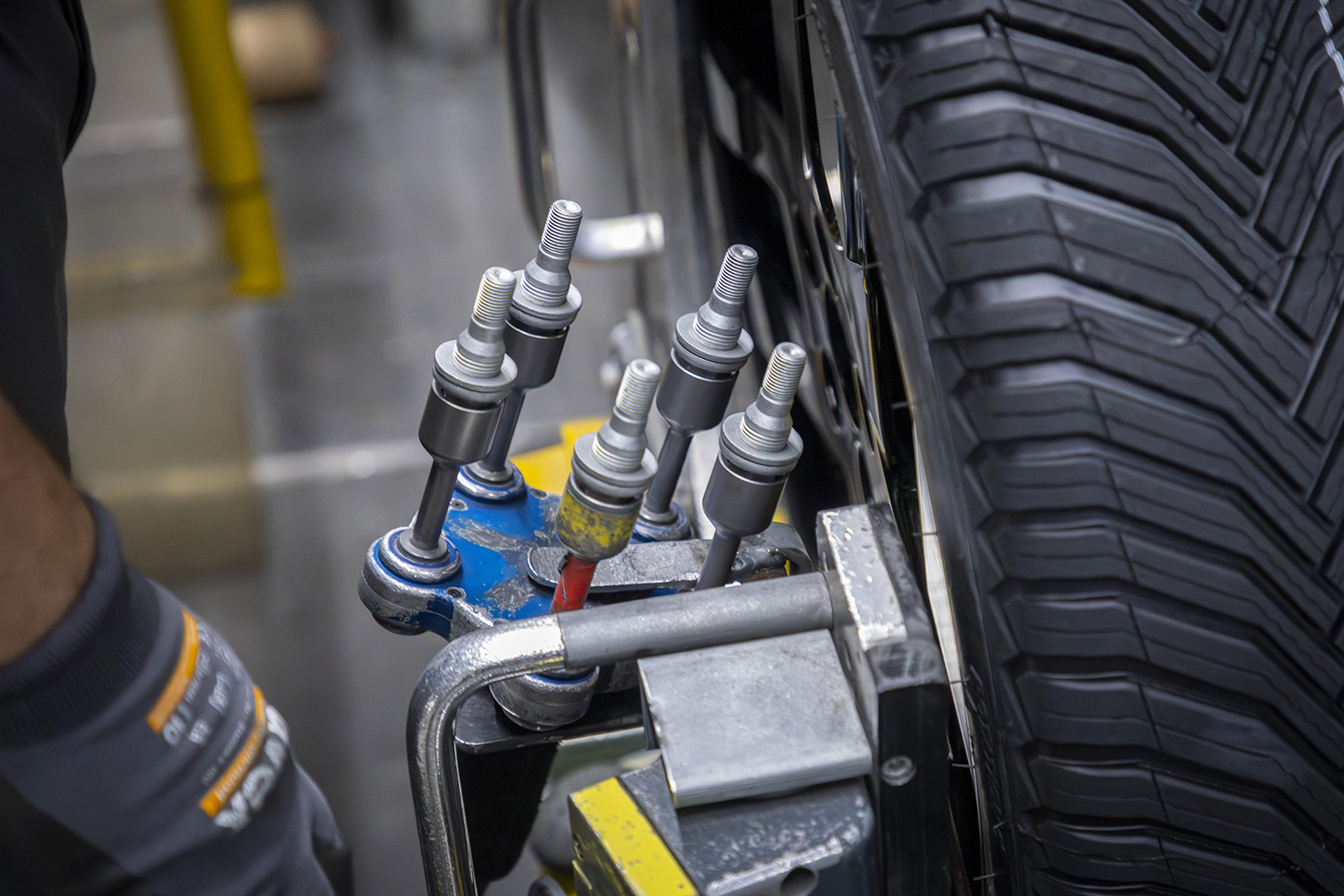
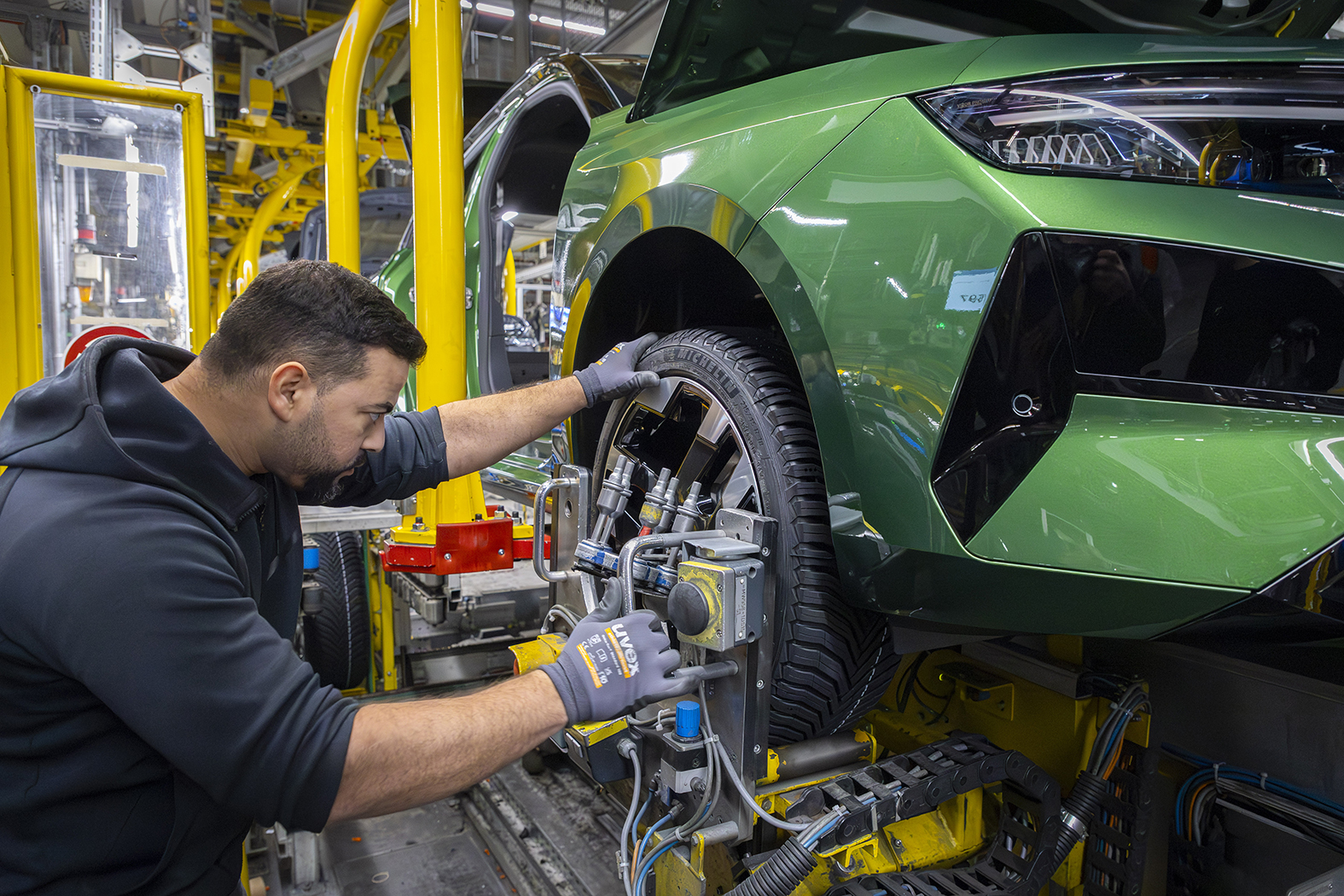
What is visible on the line also shapes the plant manager’s everyday work. The calendar is tightly scheduled, the topics diverse. The focus is on the ramp-up of the new Astra, with classic production topics determining everyday life – requirements for the supply chain, material availability and a wide range of variants. Logistics are particularly challenging. “Logistics used to be much more stable,” says Seeber. “Today it is one of the most volatile areas.” Global supply chains, geopolitical risks, long transport routes and unforeseeable events have fundamentally changed the requirements. Logistics has long since ceased to be a pure planning issue, but a continuous coordination task – with a high level of responsibility for all parties involved.
Flexible production and new competencies
The Rüsselsheim plant is flexibly positioned: vehicles with all-electric drives as well as hybrid and combustion models are produced here. At the same time, Opel is increasingly focusing on vertical integration, Seeber explains. Work that would previously have been carried out by external service providers now takes place directly in the factory. One example of this is the Battery Shop, where the final assembly of the high-voltage batteries for all-electric vehicles takes place. The Stellantis plant in Mulhouse, where Peugeot brand vehicles are manufactured, is also supplied from here.
“If production comes to a halt, scheduled meetings are secondary – then solving the problem is all that matters.”
– Maike Seeber –
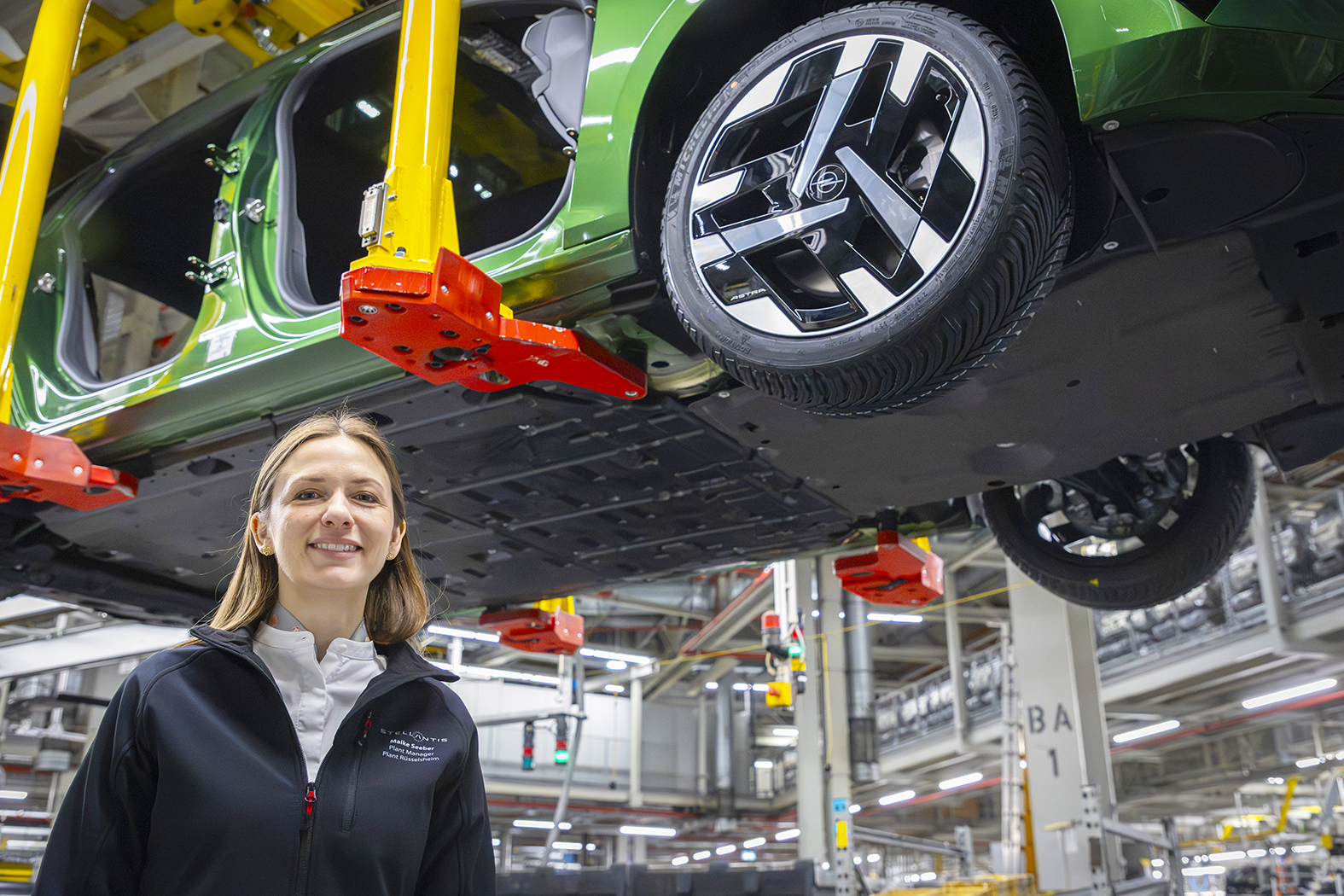
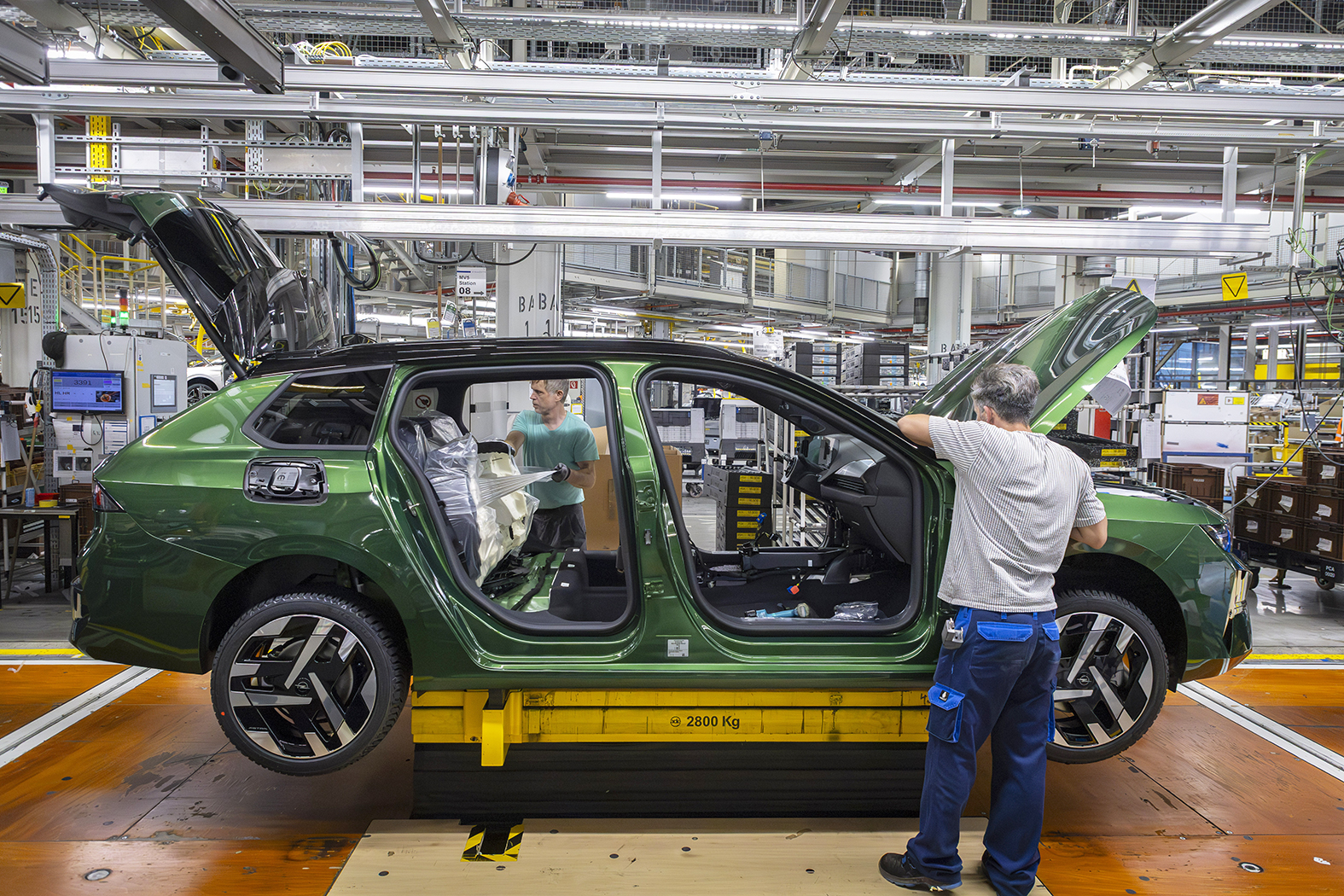
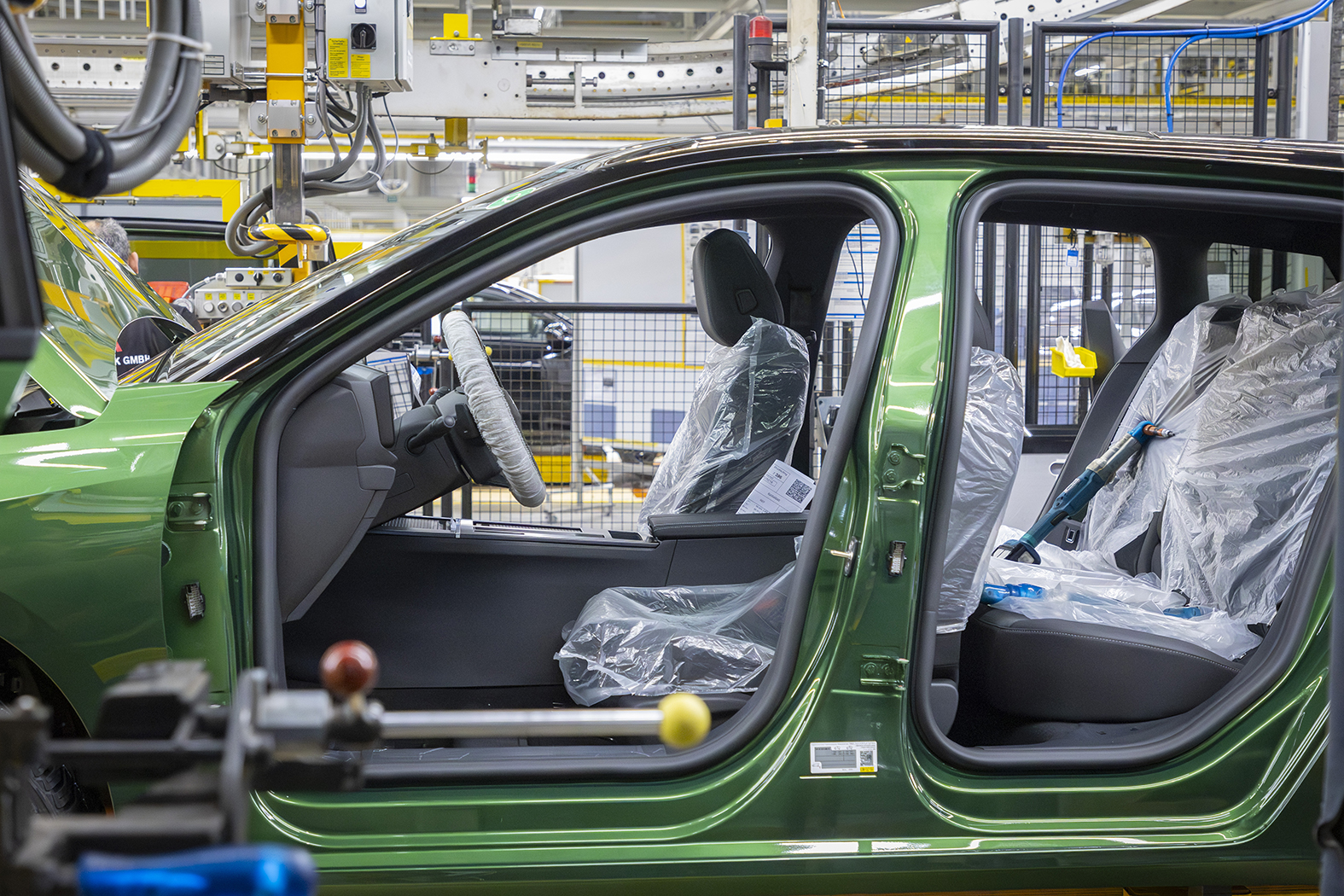
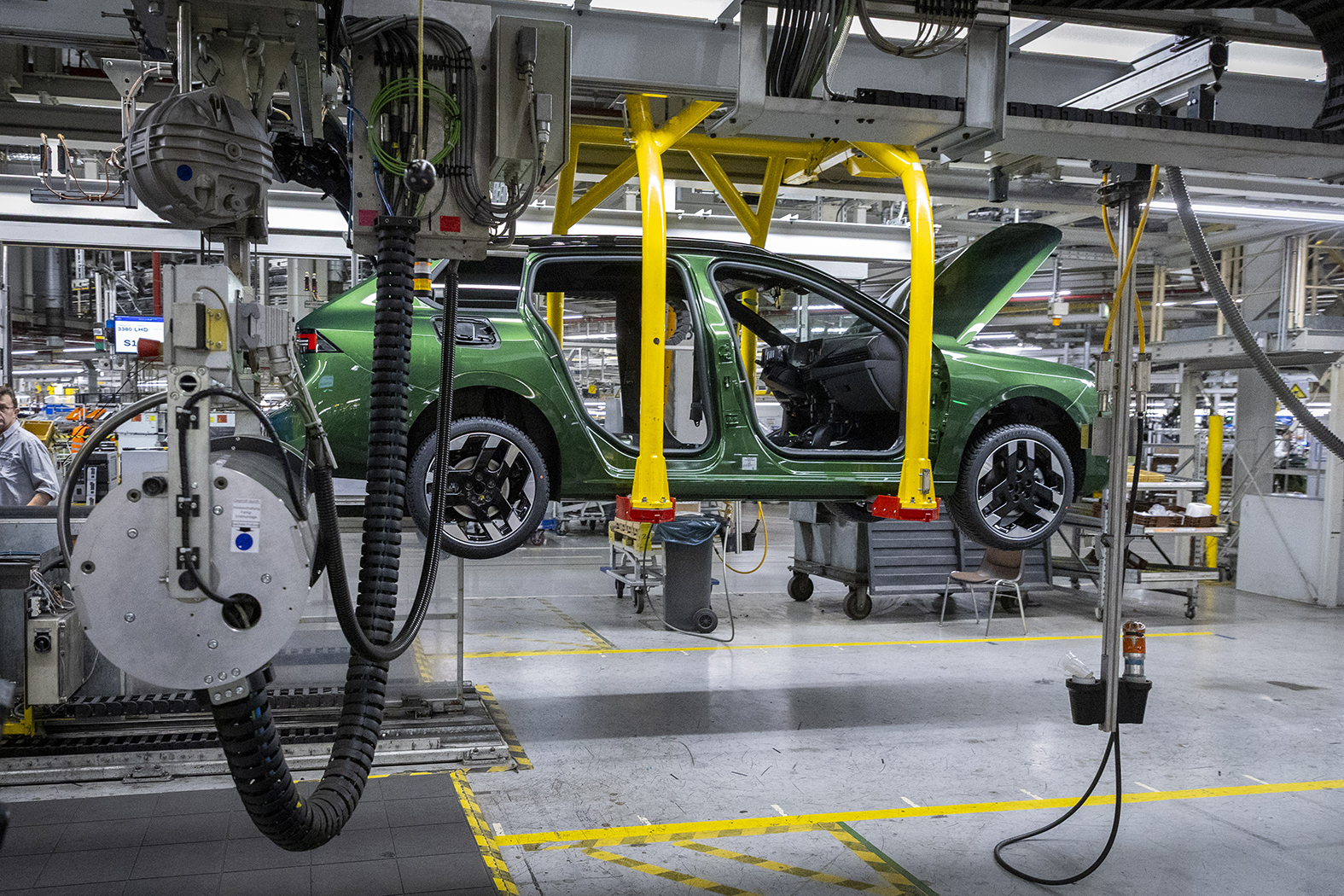
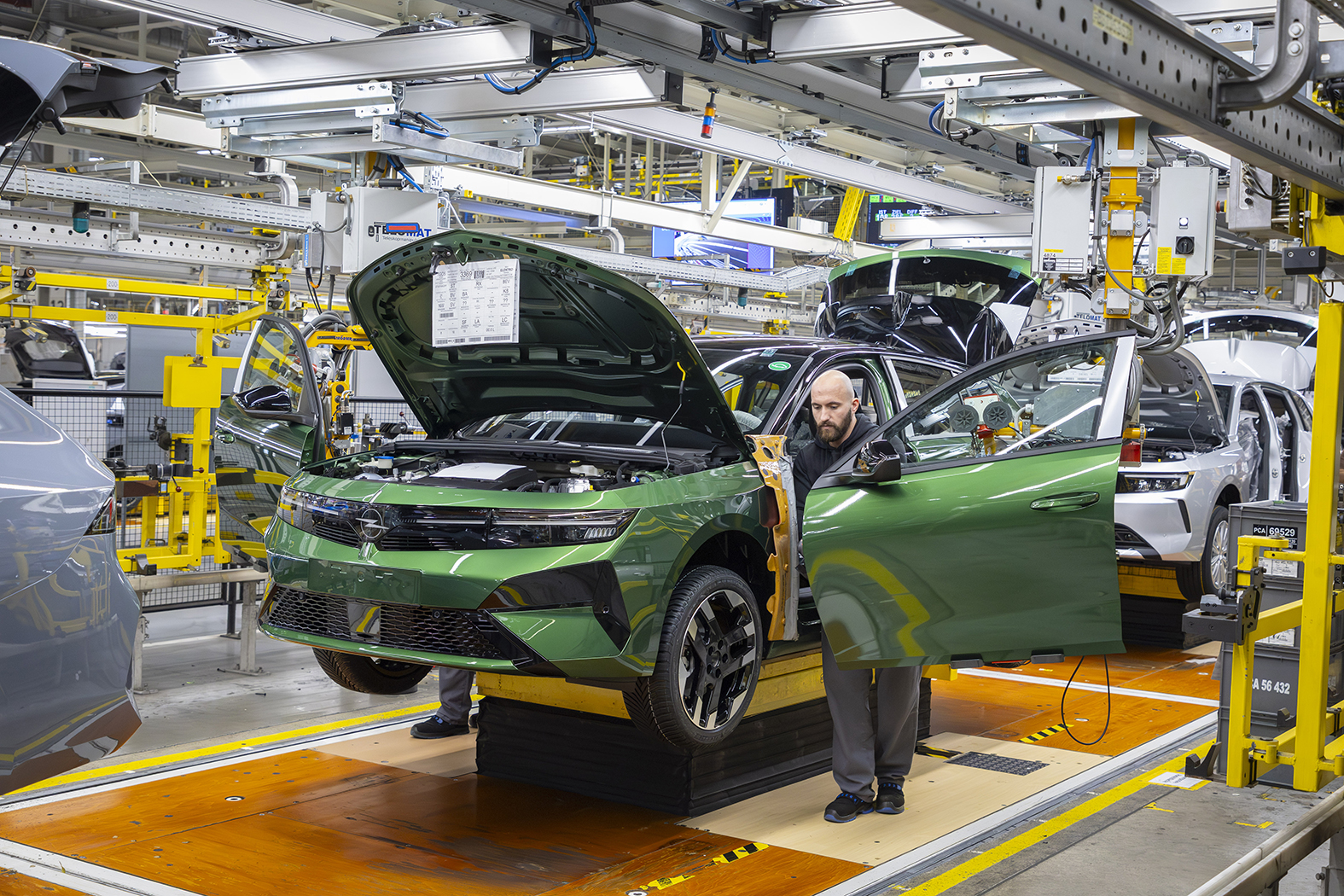
For Maike Seeber, one thing is clear: industrial value creation is generated where production takes place. Mobile work is the exception in the plant – the decisive factor is the presence on site. “You have to be close to the action,“ she emphasises. “If production comes to a halt or a part is missing, then scheduled meetings are secondary. Then solving the problem is the only thing that counts.” It is no coincidence that she exemplifies precisely this attitude. “I came to Rüsselsheim to take the opportunity to actively shape the future of production,“ says Seeber. For her, the location is an example of what „Made in Germany“ must stand for today: competitive, efficient and technologically leading production under demanding conditions. “Precisely because the conditions are challenging, we have to show what is possible here,” she says.
Roots in Palatinate, global experience
Maike Seeber has spent most of her professional career on the supplier side of the automotive industry. She gained her first insights directly after graduating from school during an internship at the US supplier Tenneco in Edenkoben, Rhineland-Palatinate – only a few kilometres from her hometown. She then completed the practical part of a dual business administration course with a focus on logistics and materials management; she studied theory at the University of Mannheim.
After graduating, Seeber took on responsibility in production at an early stage – also internationally. Stations have taken her to South Africa, the USA and Italy, among other places, always close to production and with a focus on processes, efficiency and operational implementation. This was followed by further tasks at Tenneco, a brief switch to medical technology and a return to the automotive industry. In Rastatt and Edenkoben, she managed Tenneco plants and was responsible for programmes for light commercial vehicles as a project manager.
Over more than two decades, Seeber has thus gained extensive management and industry experience – mainly on the supplier side. “I know the other side – that of the supplier – and I know what is possible and what is not,” she says. “That helps me to make clear decisions even under demanding conditions.”
“My job is to set the framework – not to take every decision myself.”
– Maike Seeber –
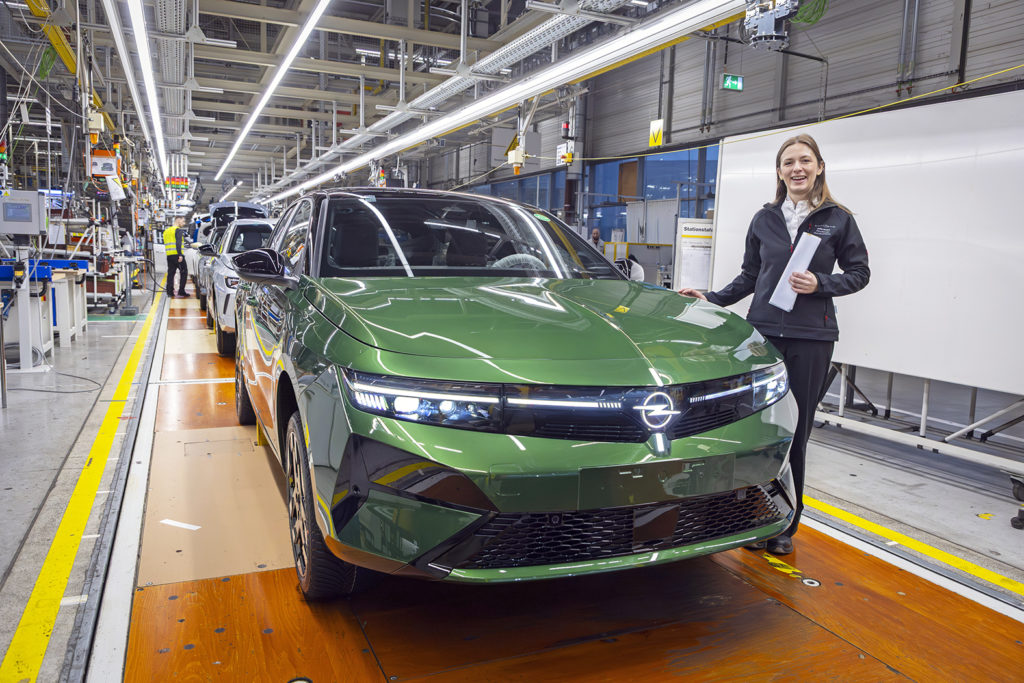
The first few weeks in the new role were anything but quiet. Right at the beginning there was a change in frequency. Adjusting the timing means, for example, redistributing work content and reorganising teams – always with an eye on quality, costs and efficiency. “These are processes that you hardly think about from the outside,” says Seeber. “But it is precisely these processes that determine how stable a plant is.” Maike Seeber describes her leadership style as cooperative. It focuses on empowerment instead of micromanagement. “I want the teams to develop solutions themselves. My job is to set the framework – not to take every decision myself.” Especially in a complex environment, it is crucial to transfer responsibility and create learning spaces.
Focus on young talents
„The Rüsselsheim team shines with a lot of commitment, heart and soul – it lives change,“ says Seeber. With a view to the future, the plant manager emphasises the importance of the next generation. Young employees contribute new skills – for example in the areas of artificial intelligence, 3D printing or process automation. Today, for example, the 3D printer is used in the plant to produce tools that would have been outsourced in the past. „This makes it all the more important to give young people confidence at an early age and to give them creative freedom,“ says Seeber.
In the short term, the focus is clearly on the successful ramp-up of the new Astra. The new addition is also visually evident – with the new Astra colours Klover Green or Kontour White, which can now be seen more and more often in the halls. “The challenges are manifold,” summarises Maike Seeber, “but that’s exactly what makes this task so exciting.”
January 2026