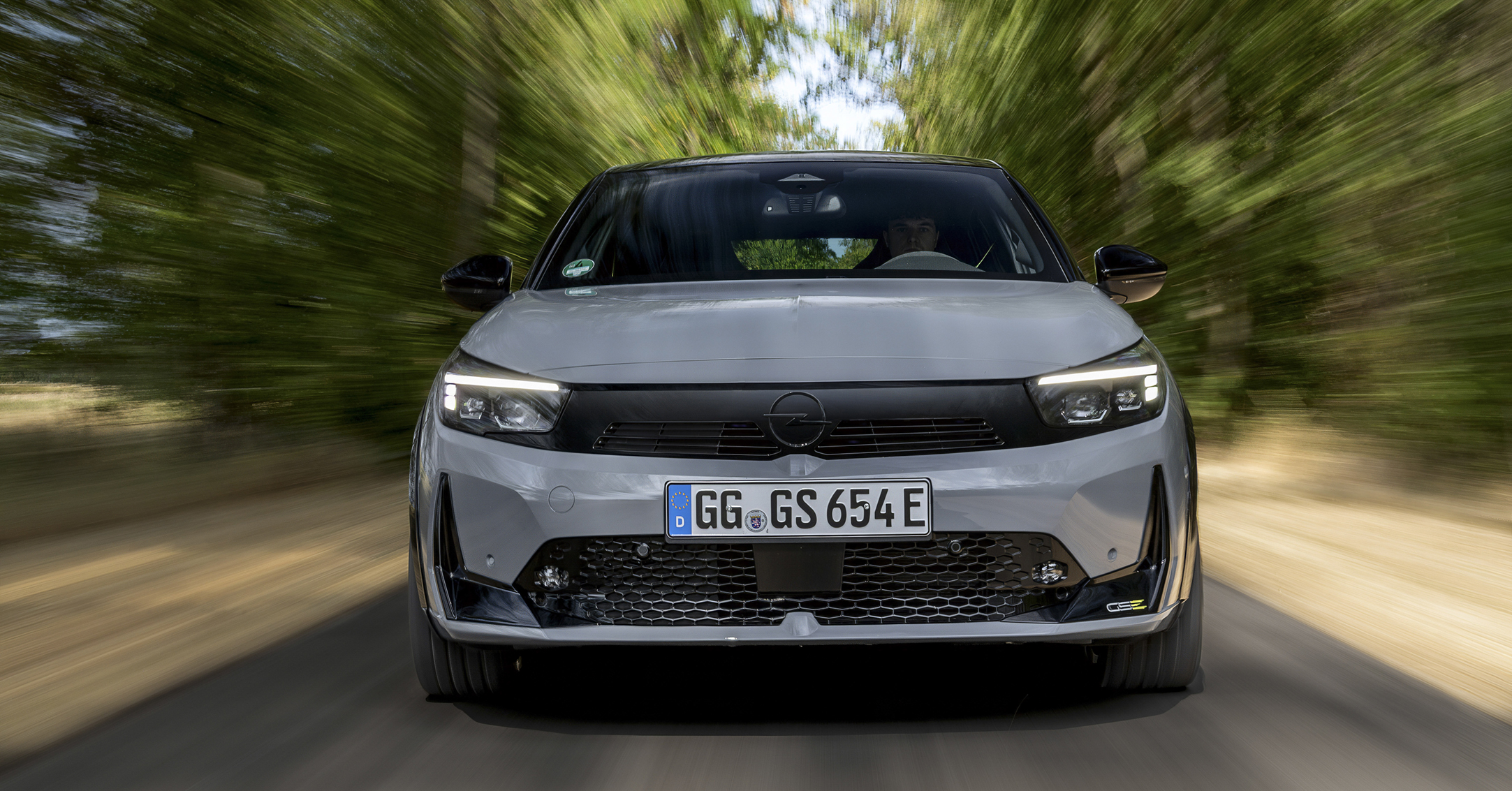
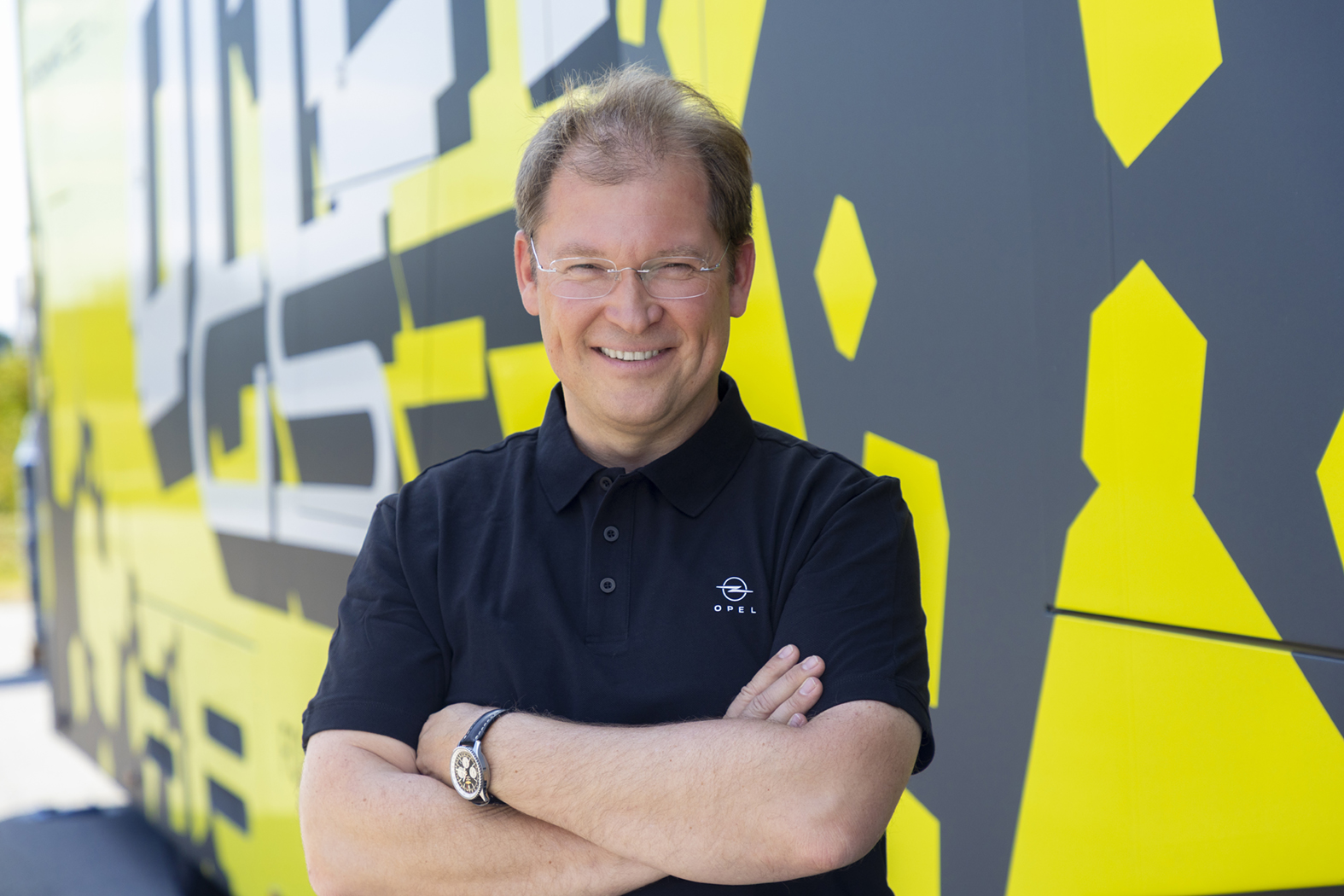
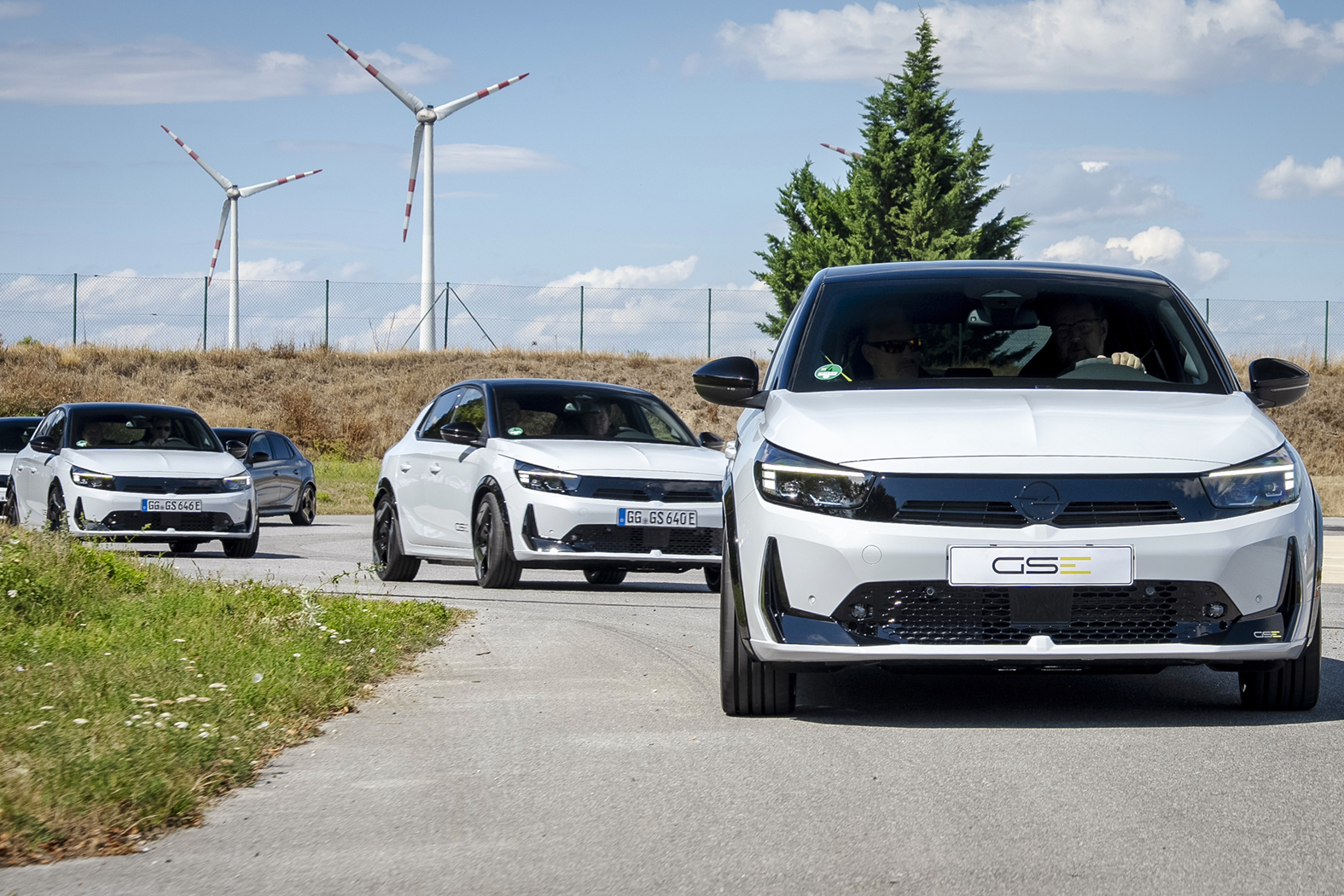
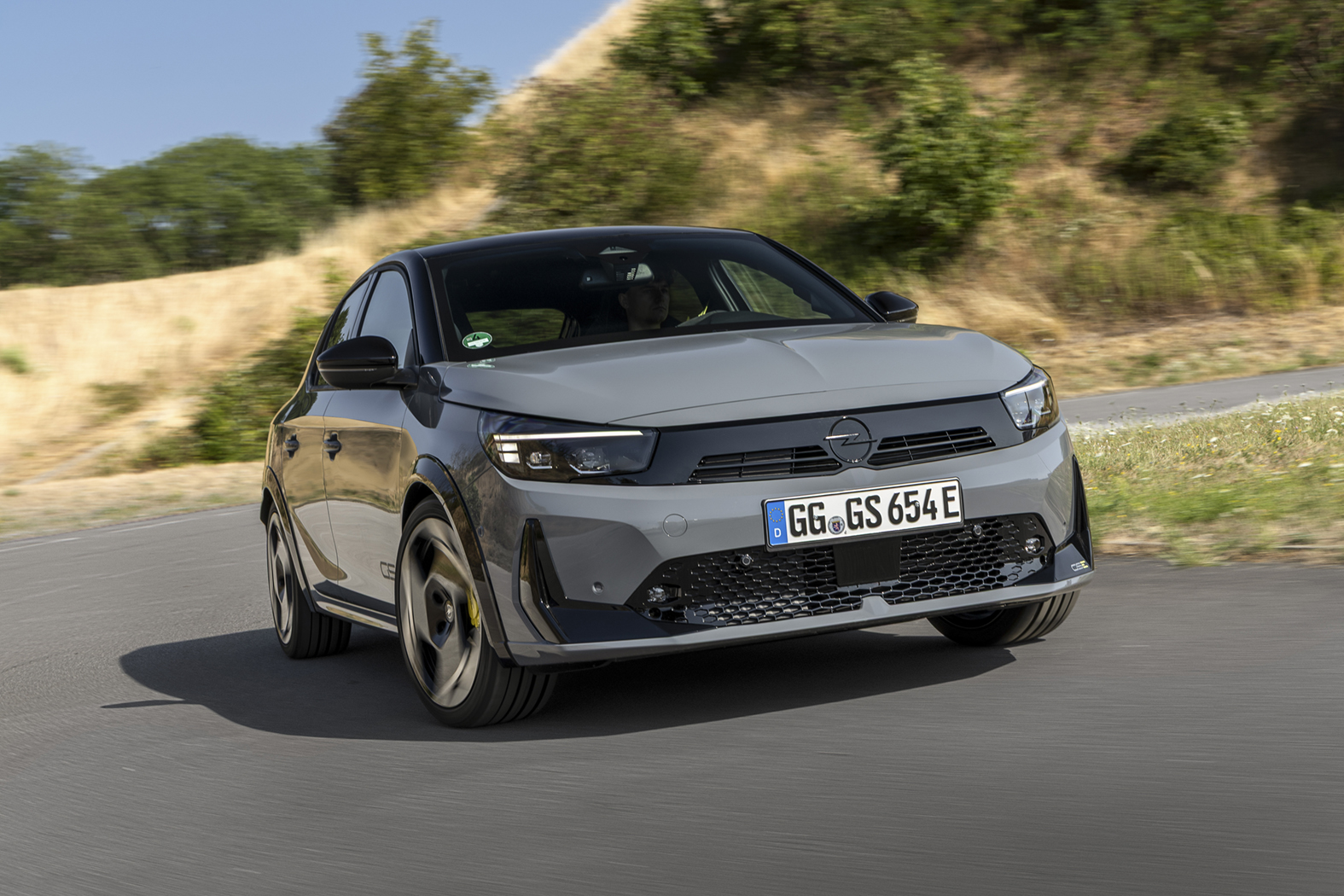
281 hp, a narrow pylon course – and the man in the passenger seat helped develop the chassis. Dr. Christian Hartweg points ahead. Head to the left, then sharp right. Accelerate, brake hard, turn in, accelerate again. “Be done with braking before the bend,” he advises. Almost 30 degrees, dry asphalt. Time to find out how much rally really is in the Corsa GSE. Hartweg is responsible for chassis and driving dynamics development at Opel. He has been working in Rüsselsheim since 2010, starting as a project engineer in advanced development. Today he heads the department for chassis and driving dynamics. So: switch the drive mode to sport, call up the performance gauges on the display – and off we go.
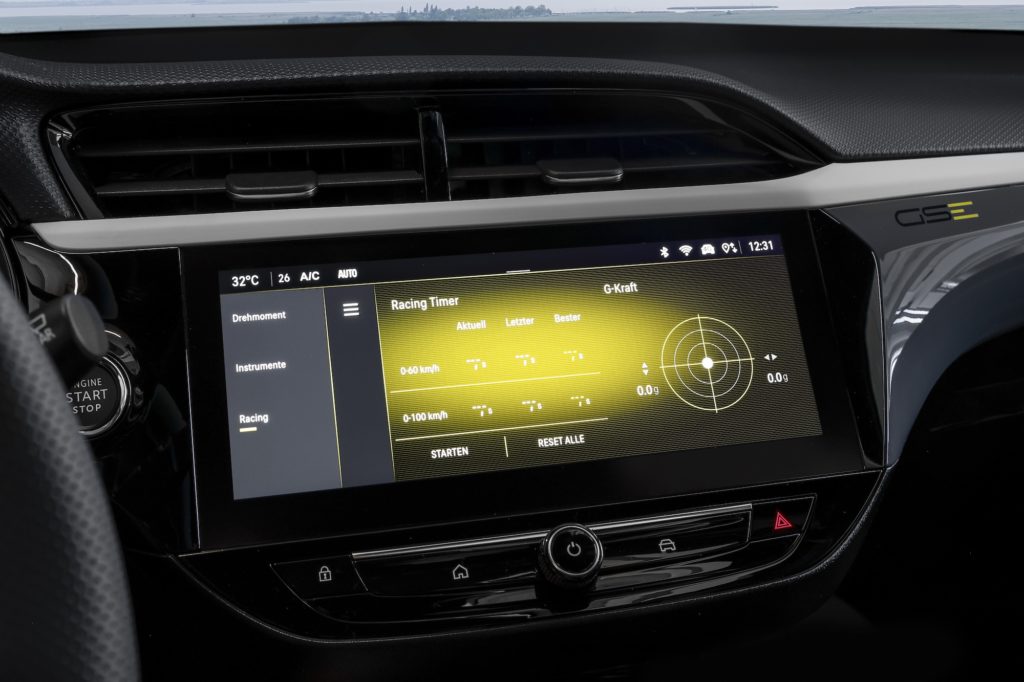
The aluminium sports pedal is pushed towards the floor. 345 Nm of torque hits the front axle. A lot of power for a small car that is only around four metres long. But instead of frantically tugging at the steering, the Corsa GSE eases itself cleanly out of the tight corner. “The heart of the system is the connection between the drive and the limited-slip differential,” explains Hartweg. The mechanical Torsen limited-slip differential distributes the power between the front wheels. If the driver accelerates at the exit of the curve, as little of it as possible should fizzle out in spinning wheels. Instead, it transfers the power to the road.
“Pretty emotional”
Auto Straßenverkehr
“Quite a lot of what the Corsa GSE does is fun, frenzied and close to fabulous”
TopGear
The next corner is fast approaching. In Sport mode, the GSE dispenses with the usual interaction of recuperation and mechanical braking in electric cars when the brake pedal is pressed. The four-piston performance brake system engages directly hydraulically. This ensures a clear, even pedal feel on the track. Brake. Get off the pedal. Turn in. “And now you can accelerate again.”
Suitable terrain
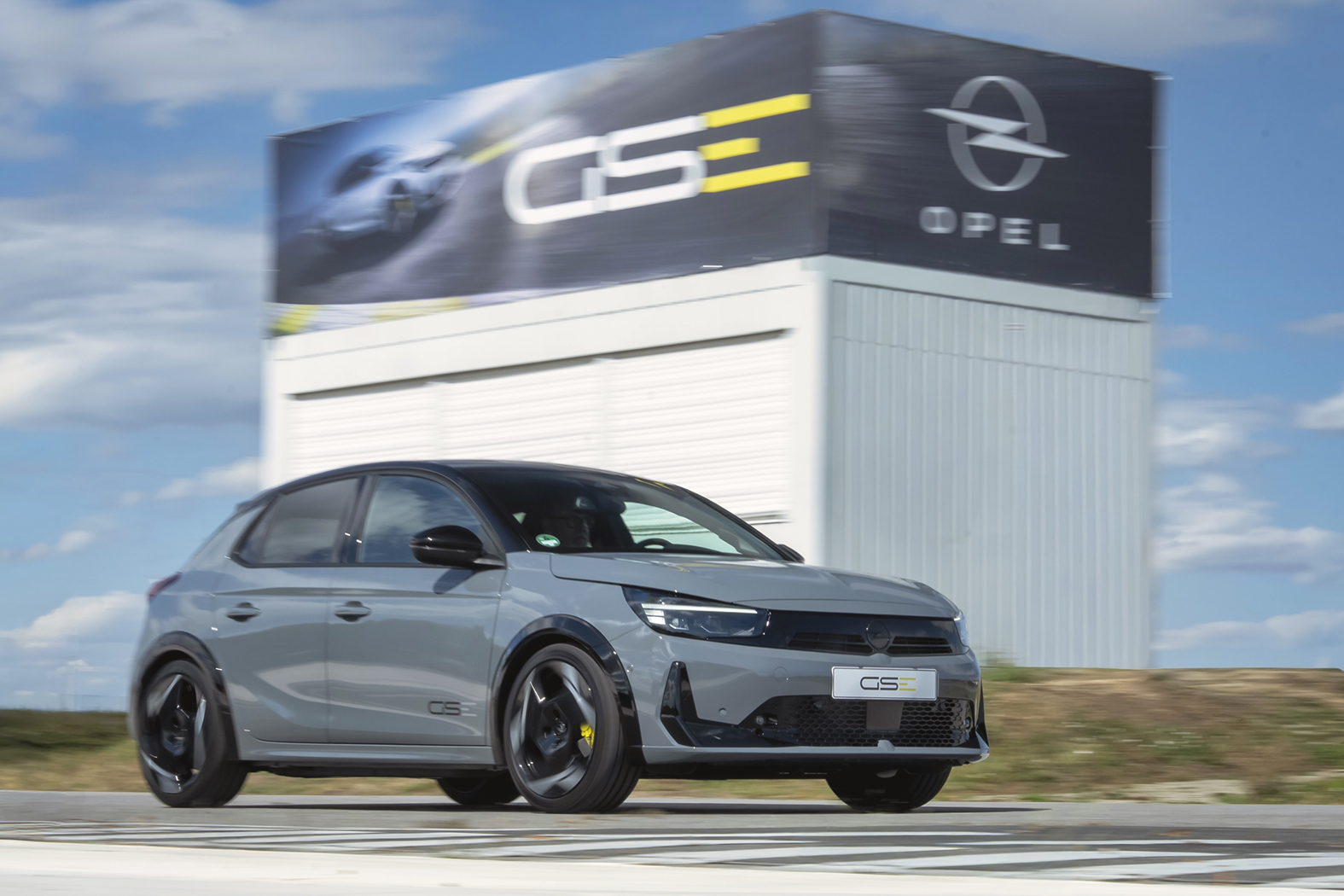
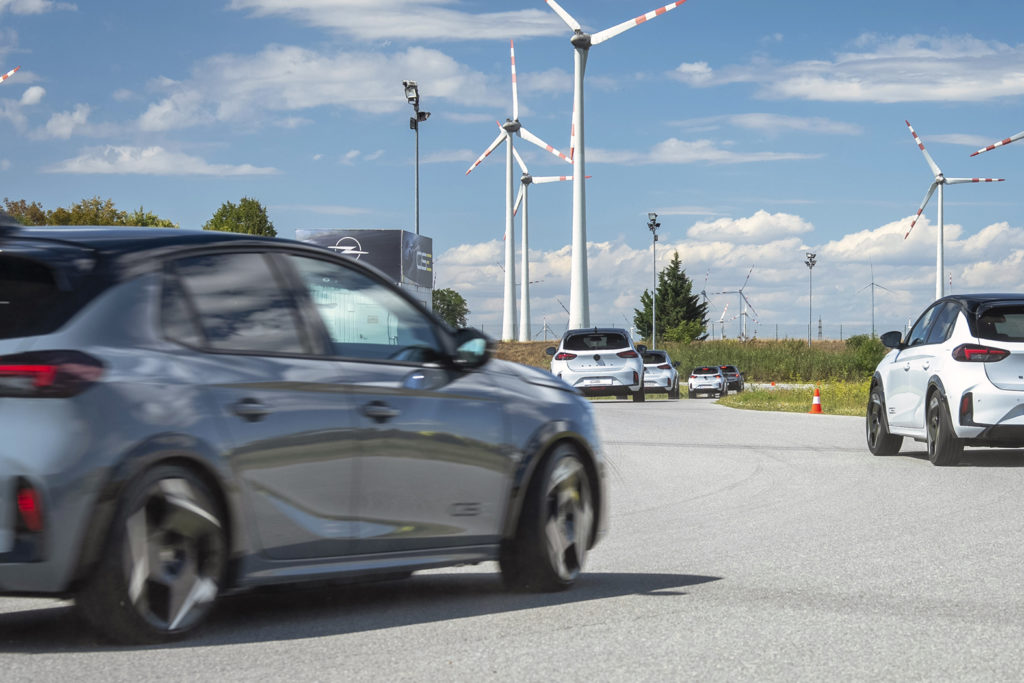
Pachfurth is more than a test track. Since 2026, the Driving Camp near Vienna has been part of rally driver Manfred Stohl’s Stohl Group. With STARD – Stohl Advanced Research and Development – the group develops high-performance vehicles and electric drives, among other things. Motorsport is therefore tangible everywhere.
This suits the Corsa GSE – and Opel: Stohl’s team works together with Opel Motorsport. Even the energy mix is right. Lower Austria and neighbouring Burgenland generate their electricity entirely from renewable sources, especially wind, water and sun.
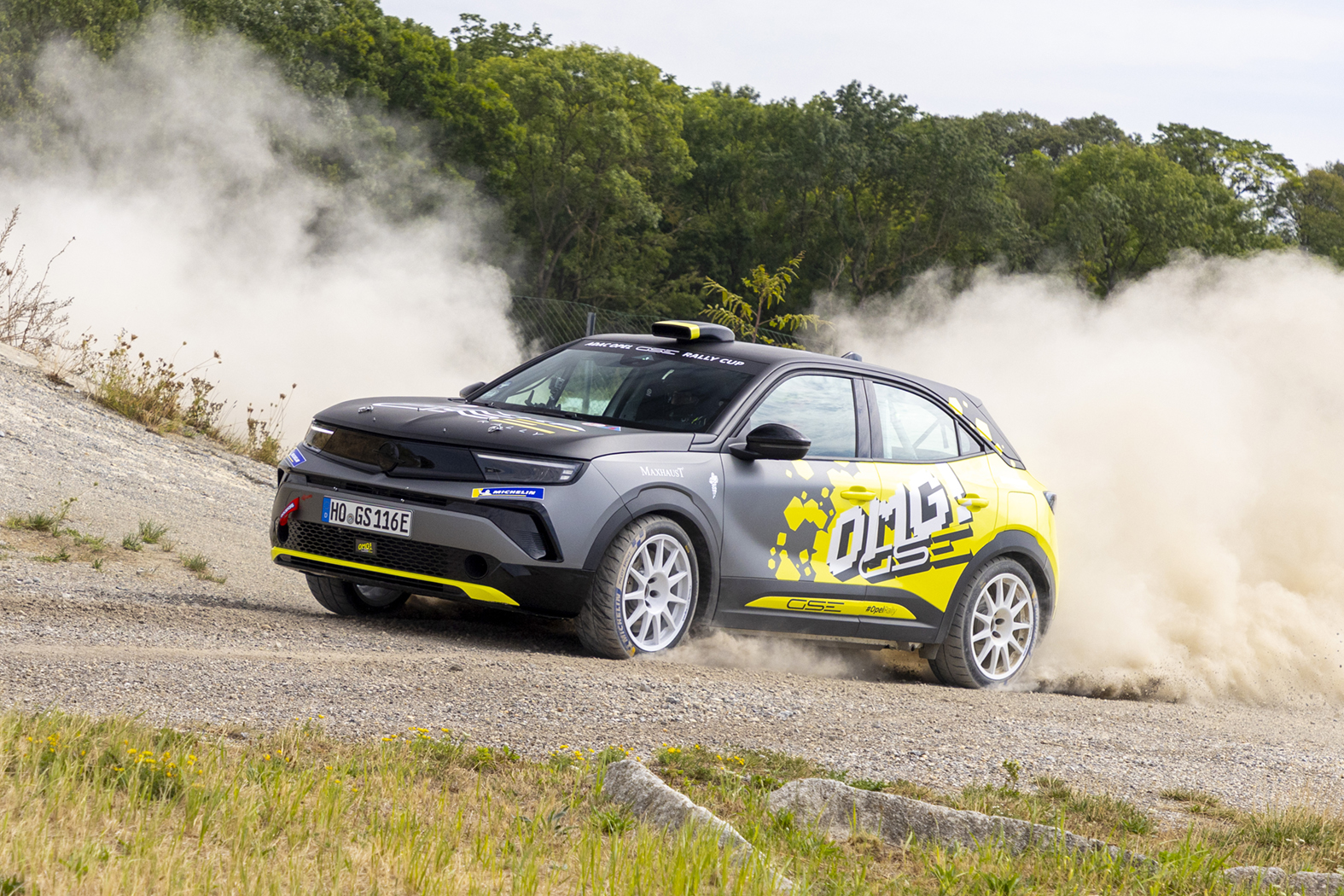
It is no coincidence that the GSE goes from corner to corner so naturally. Its history begins in motorsport. “The motor was developed for rallying,” says Hartweg. At some point, therefore, an obvious question arose: If this technology is already there – why don’t we put it on the road? This is how the story of the Mokka GSE and then the Corsa GSE started.
“GSE driving is fun”
ADAC
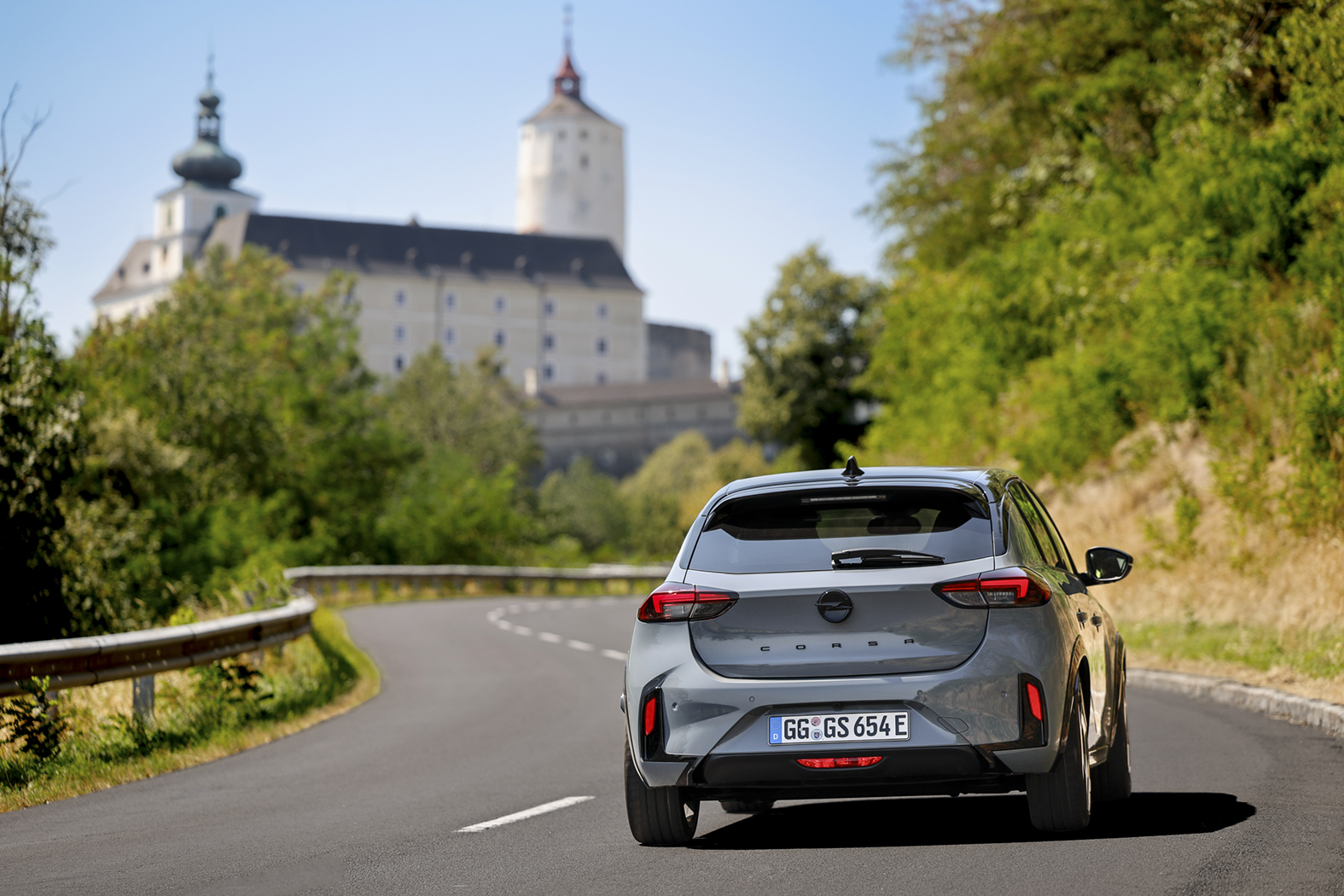
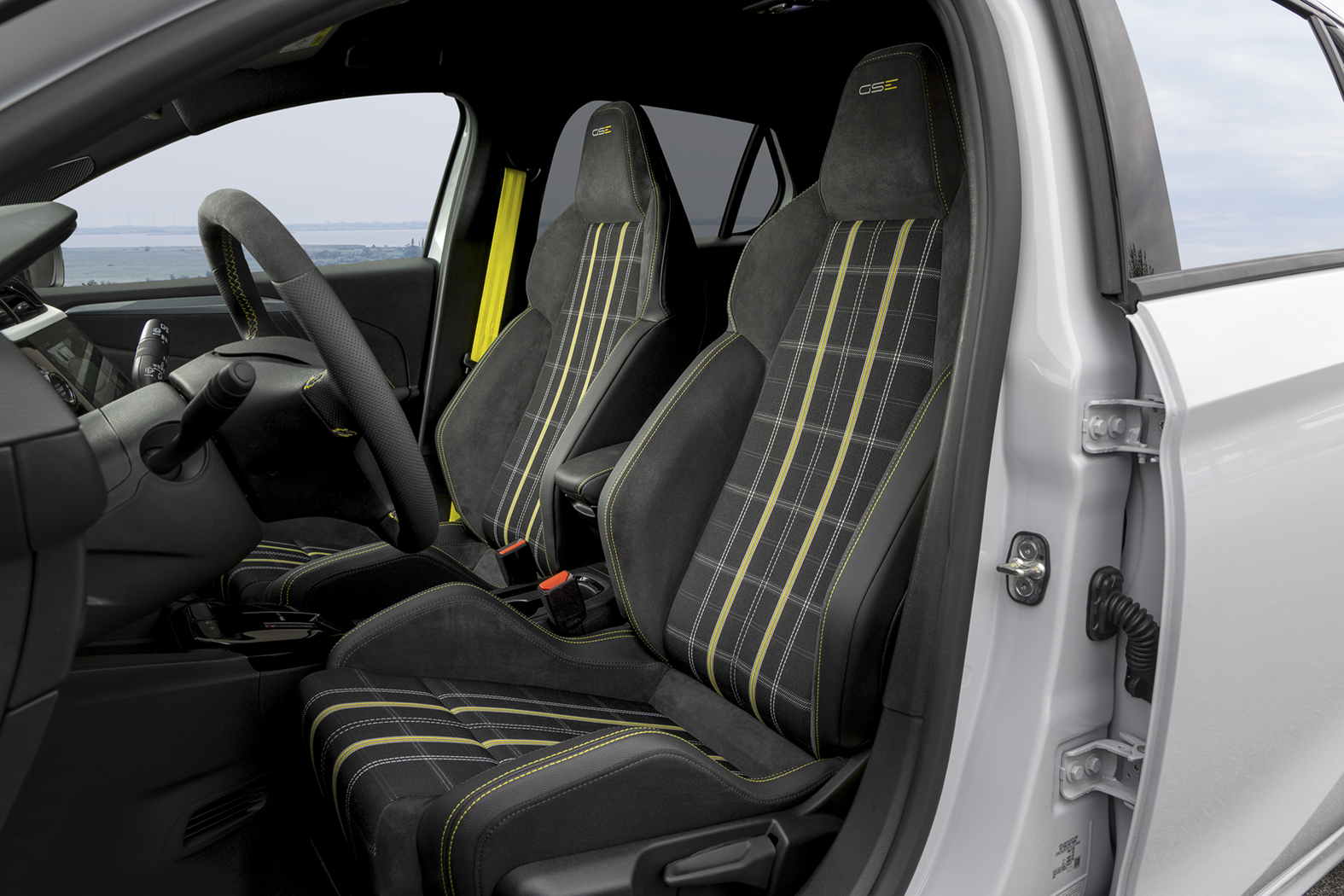
It didn’t stop with the drive alone. To turn a lot of power into a sports Corsa, the GSE was given special front and rear axles, a specific steering set-up, new stabilisers and hydraulic bump stops. The chassis is 25 millimetres lower than in the normal Corsa Electric and is much firmer. The ESP has also been retuned – in close cooperation between production development and motorsport. What this does can be better experienced than explained on the pylon course. Quick change of direction, hard braking, load changes: the Corsa remains stable. No unnecessary rolling, no long rebounding. “Nothing dances around,” comments Hartweg from the passenger seat.
“Wolf in sheep’s clothing”
Autocar
Perhaps the most exciting connection to rallying remains invisible when driving, Hartweg says. An electric car can draw on enormous power in the short term. It becomes more difficult when it has to do this again and again: accelerate, brake, accelerate – lap after lap. That’s why the thermal management of the Corsa GSE has also been adapted. The temperature of the battery and power electronics needs to be managed so that full power remains available even under high load. The Corsa Electric is not designed for such a continuous load. For the GSE, cooling and energy management were therefore specifically prepared for this. The car was tested on various test and race tracks – with special attention paid to how the battery behaves under high continuous loads.
“A real hot hatch for the electric age”
Autofilou
Enough explanations. Now Hartweg changes sides. He gets into the driver’s seat and fastens the seatbelt. Off we go. He knows every metre – and uses it. How often does a head of the vehicle dynamics department actually get to drive himself? Hartweg laughs. Working on the track is still part of his job. After all, he rubber stamps every Opel himself at the end. One more corner, braking hard again, turning in, accelerating. That’s what electric driving fun feels like. Then the lap is over. The grin remains. Hartweg sums it up succinctly: “That’s exactly what we developed it for.”
September 2026