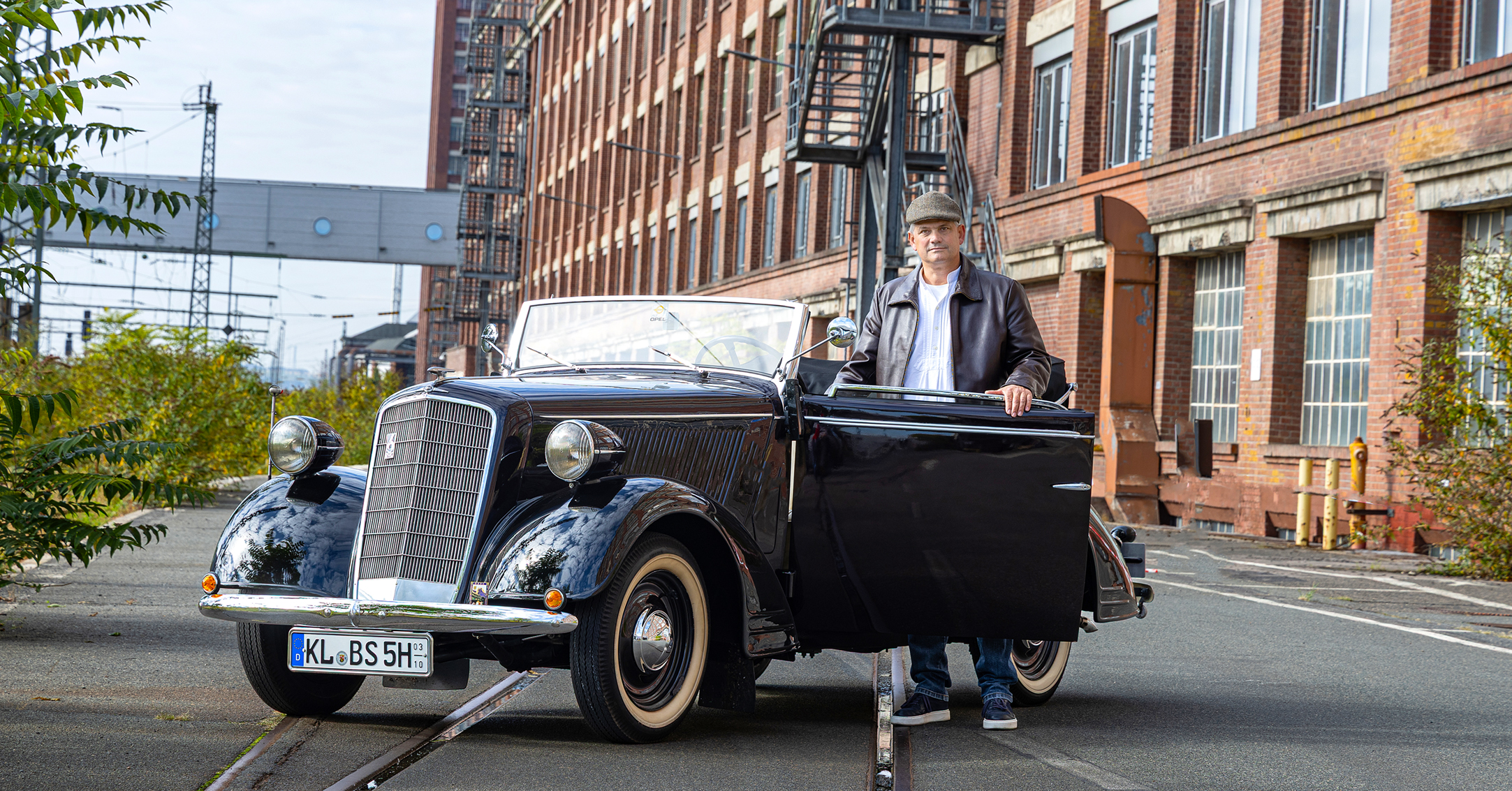
The trip starts at seven in the morning. From Niedermohr via Kusel and the B420 through the middle of the Palatinate: Wolfstein, Lauterecken, Alsenz, past Bad Kreuznach to Wörrstadt in Rhine-Hesse. The last few kilometres to Rüsselsheim can be covered on the motorway. Why not? 36 horsepower may not be much by today’s standards, but the two-litre engine still easily reaches the required minimum speed of 60 km/h. After all, ninety is no more than a number for an Opel, which is cherished and cared for by Sascha Bauer.
The toolmaker from Kaiserslautern undertakes the special trip to mark his car’s 90th birthday: back to the place where the stunning classic car rolled off the production line at the beginning of 1936. His father Werner, a retired Opel employee from Kaiserslautern, sits on the passenger seat. Neither of them has any concerns about their vintage Opel.
280 kilometres there and back. No problem for this 90-year-old Opel 6 Cabriolet.
Opel 6 at a glance
- Construction period: 1934–1937
- Production location: Rüsselsheim
- Engine: six-cylinder in-line engine, 1,932 cc
- Power: 36 hp (26.5 kW)
- Transmission: Four-speed manual transmission
- Drive: Rear-wheel drive
- Maximum speed: 100 km/h
- Consumption: around 12 litres per 100 kilometres
- Production: 52,594 vehicles of all body variants
As before every trip, Sascha Bauer has thoroughly checked the car. He also drives it regularly. “Just two weeks ago, I drove it at a colleague’s wedding,” says the 55-year-old. “Over the course of the day, we were on the road for about 100 kilometres. The 280 kilometres to Rüsselsheim and back won’t be a problem.”
The drive through the Palatinate in the morning is relaxed. There is hardly any traffic. The temperatures have dropped. The Opel 6 does not have a heater. When it was delivered in 1936, one must have been installed, Sascha Bauer suspects, “but at some point, it was probably removed”.
From Bornholm to the Palatinate
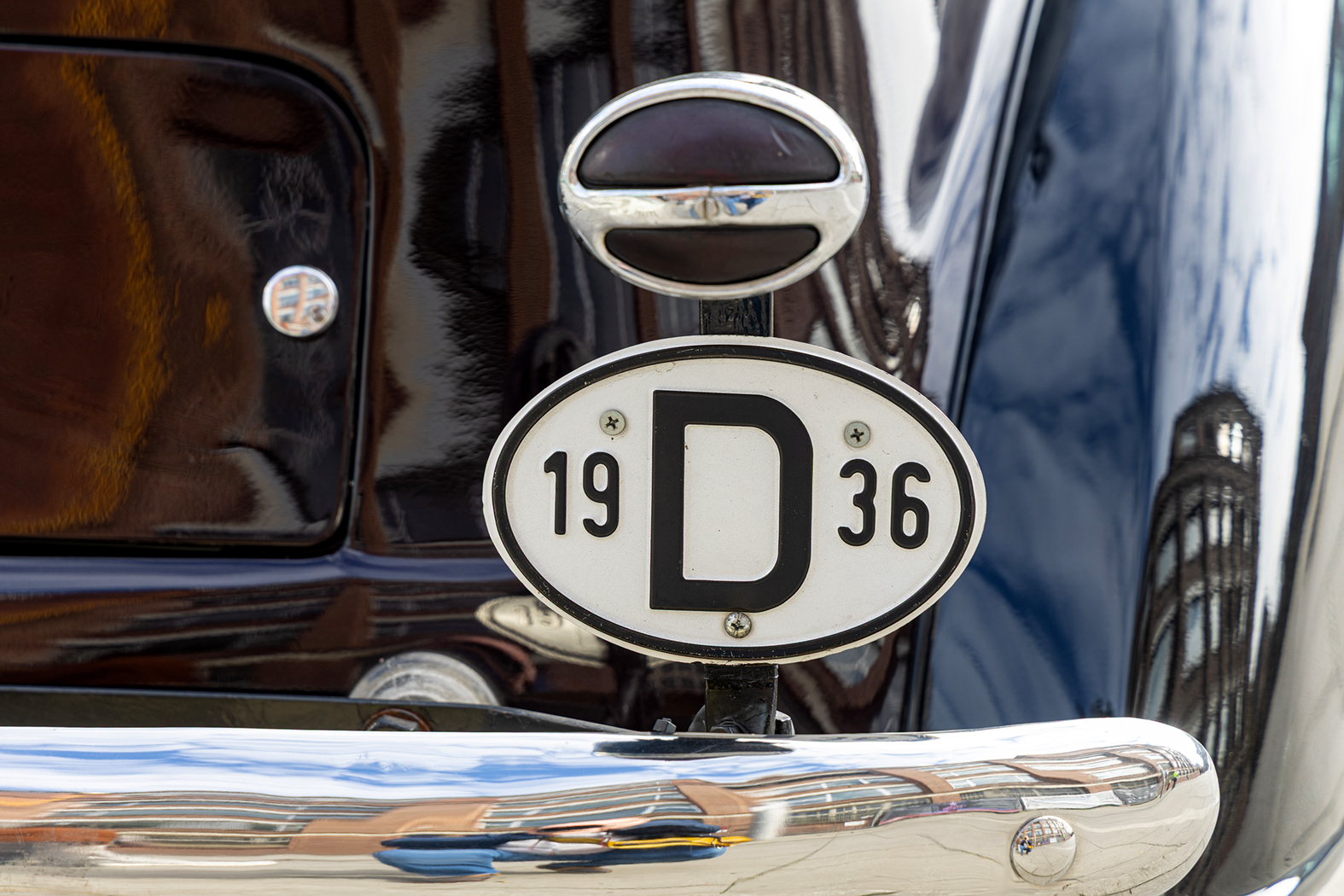
In Rüsselsheim, Jens Cooper from Opel Classic welcomes the two. Over coffee in the workshop of the Classic Collection, they dive into the history of the convertible. Its first owner was Erik Holm, a Dane from the island of Bornholm. This is proven by customs documents from 1936. It is possible that the car’s location on the island saved it during the Second World War: many vehicles of this type were confiscated by the military at the time. Bauer’s Opel 6 is a special rarity today: a so-called two-window convertible with a side window on the left and right. According to estimates from the Alt-Opel-IG, only two or three examples of this version could still be preserved.
Little is known about the next decades. In the 1990s, the convertible was extensively restored. A later owner even drove it across the Alps – until the engine gave up. A replacement was found in an unusual way: an original engine that the Polish explosive ordnance disposal service is said to have dug up.
Six cylinders, modern suspension, hydraulic brakes: The Opel 6 was ahead of its time.
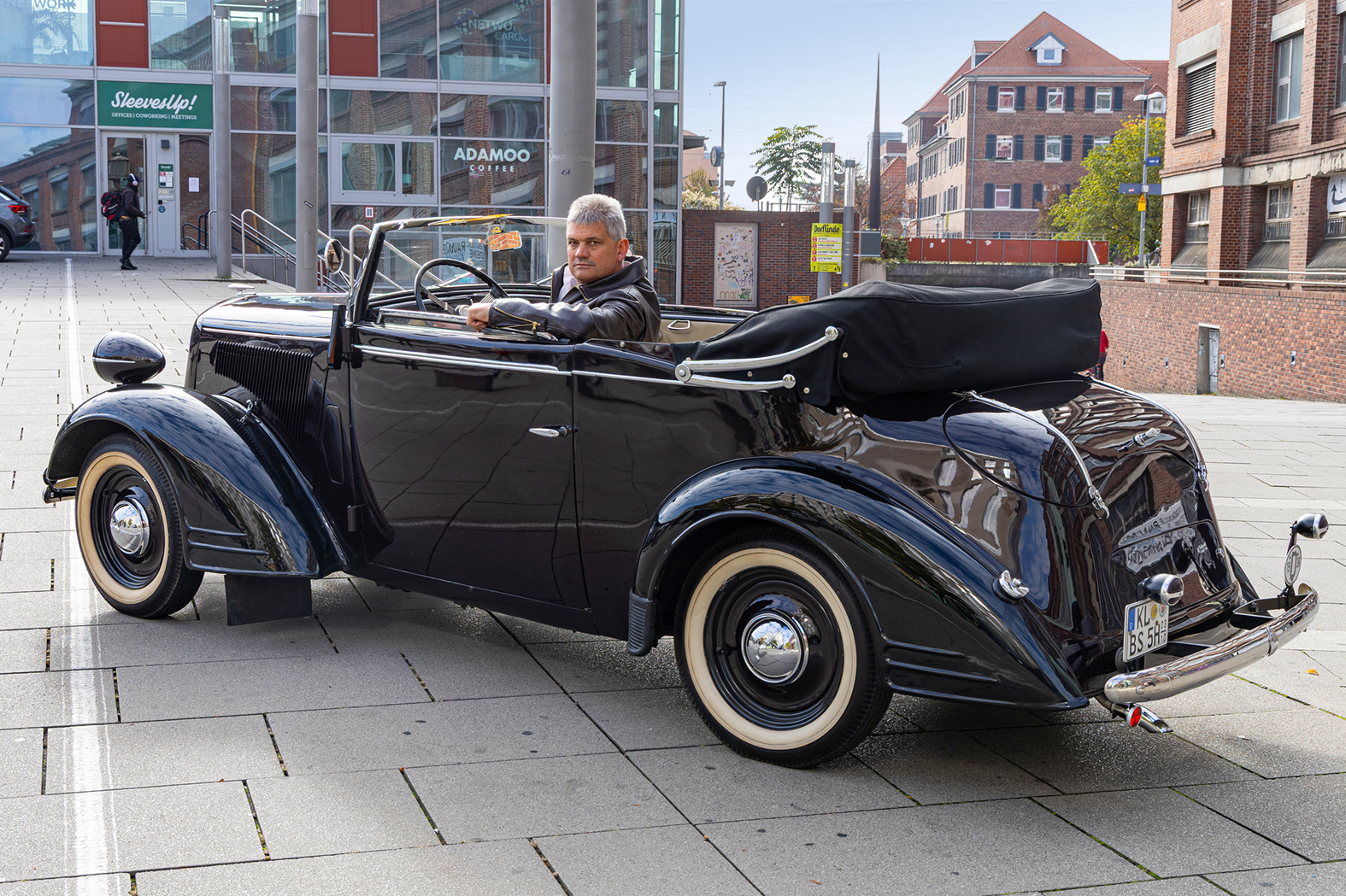
Finally, the convertible was offered for sale again. Rainer Wieler, type consultant of the Alt-Opel-IG, drew Sascha Bauer’s attention to this. The Palatinate native had previously owned an Opel P4, but was now looking for a convertible from the same era – for summer family trips with the top down. He pounced at the chance.
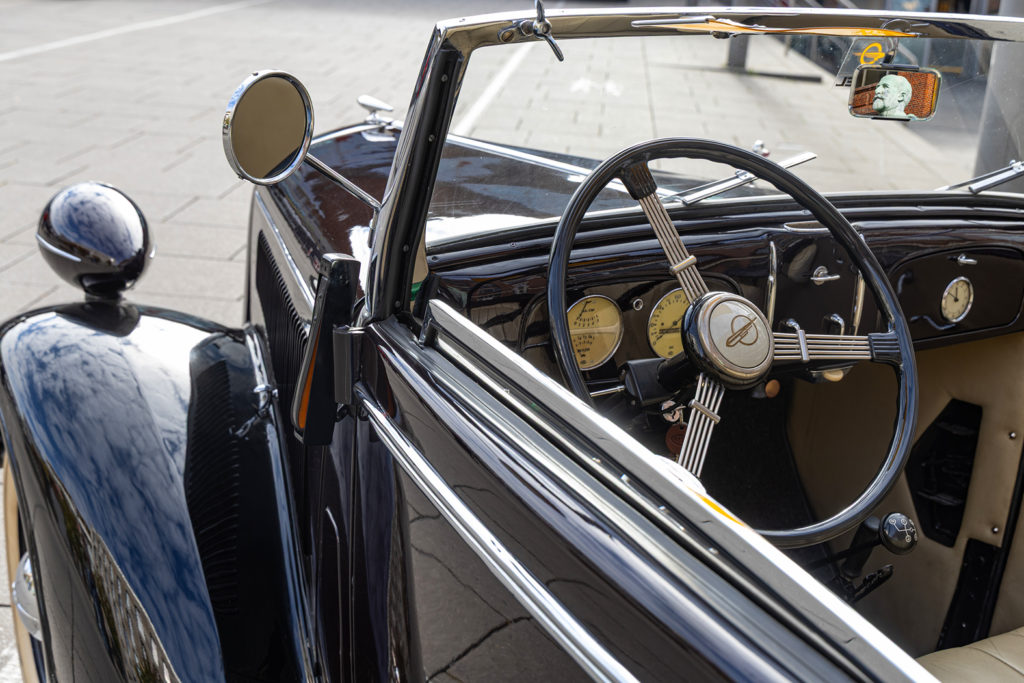
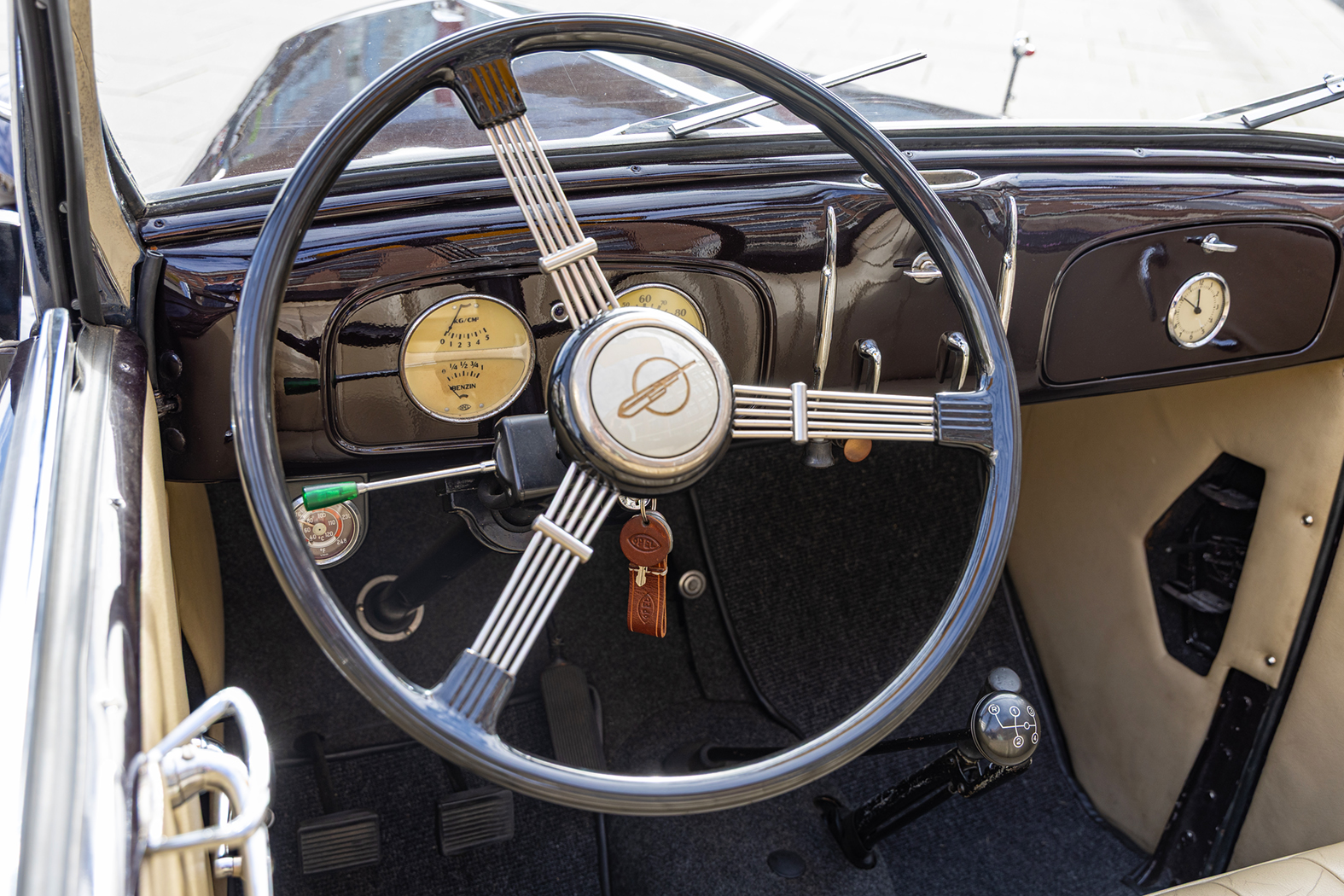
Since then, the Opel employee has been keeping the motorised piece of automotive history in good shape. His skills as a toolmaker help him as well as a network of classic car specialists. Through Rainer Wieler, for example, he received blueprints for tricky repairs, for example on the water pump. Most recently, the steering wheel had to be restored. For this, Bauer turned to the Cologne-based specialist Claudio Tescari. He dismantled the steering wheel, made new spokes and cast a new Bakelite wreath. So much manual work has its price: “It can cost a month’s salary.”
“Having the steering wheel restored? That’s a month’s salary.”
– Sascha Bauer –
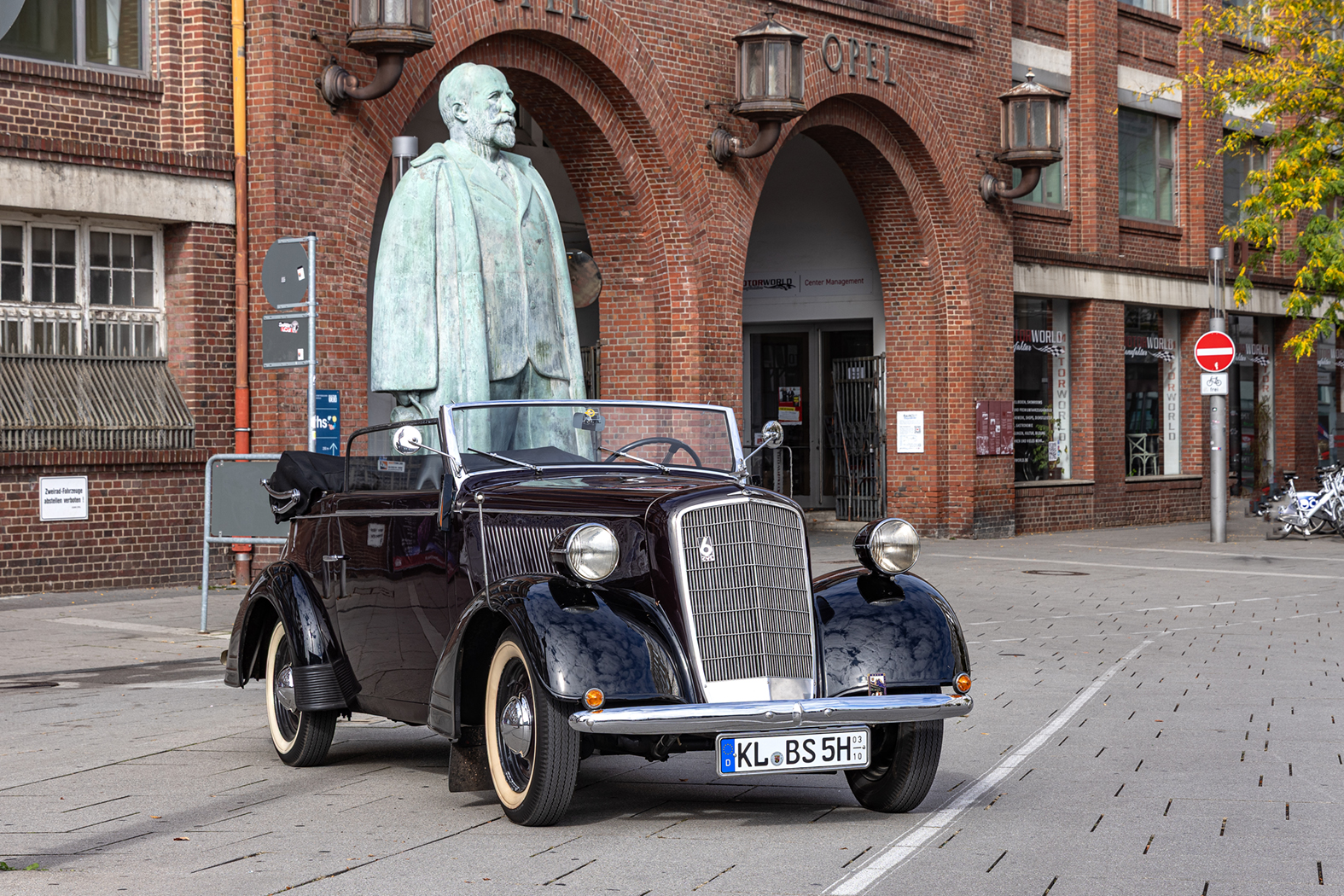
After talking shop, it’s off to the old main portal. Photo shoot at the Adam Opel monument – where else? In the meantime, the sun has ventured out and bathes the jubilarian in the best light. Finally, the Bauers can also open the roof. On the busy square between the main entrance and the train station, the classic car attracts plenty of attention. Passers-by pull out their mobile phones while Jens Cooper looks at the car calmly – and enthuses: “It was upper class in its time. Two-door convertibles were still totally rare back then. Reliable, technically robust, but also stylish.”
The design already bears the signature of the GM Group, to which Opel had belonged since 1929. When the Opel 6 came onto the market in 1934, its water-cooled six-cylinder engine with a displacement of just under two litres, hydraulic four-wheel brakes and Opel synchronous suspension on the front axle were state-of-the-art technology. The boot, which was accessible from the outside, was also unusual. By 1937, 52,594 vehicles had been built in various body variants. Then the Opel Super 6 took over.
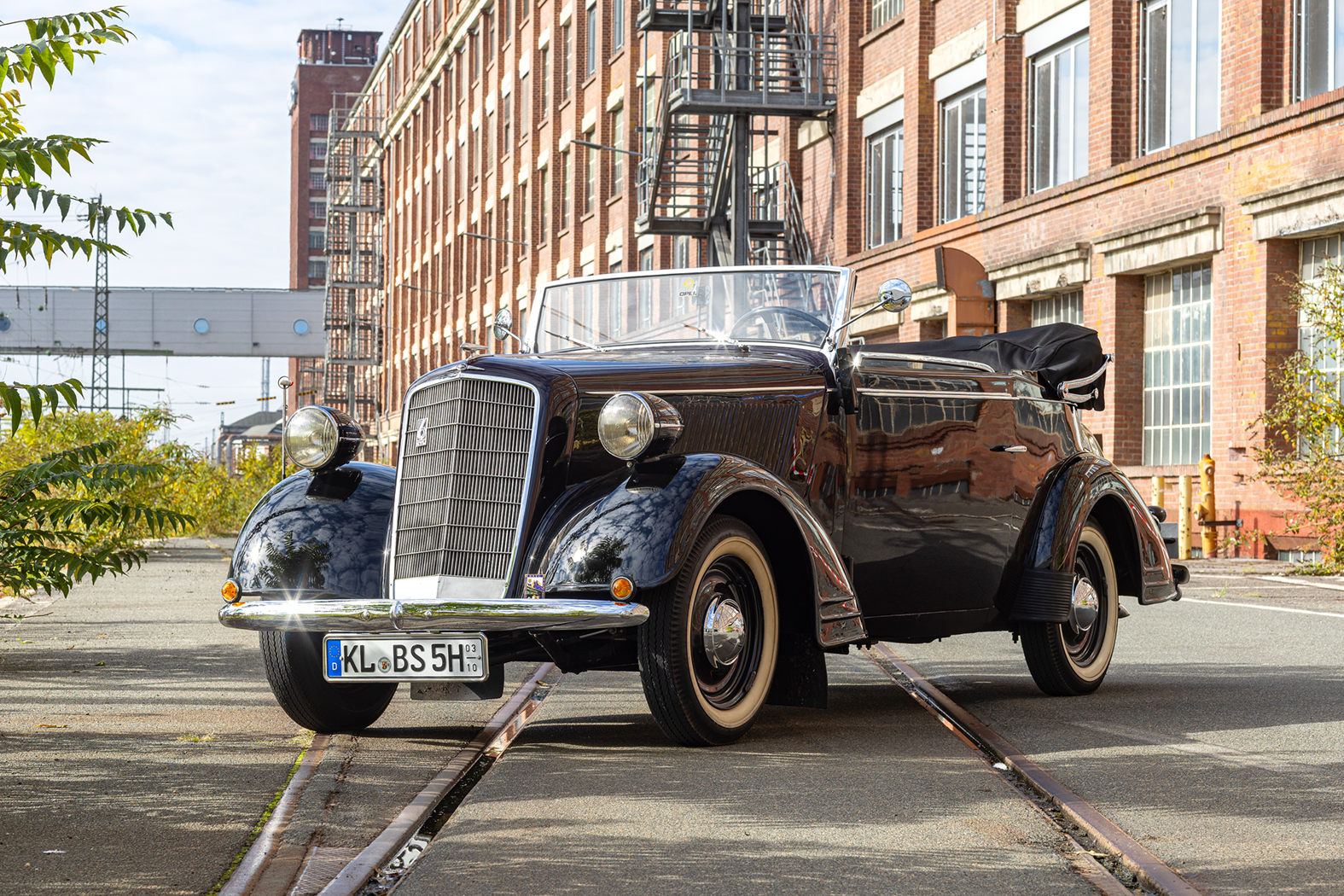
Finally, Sascha and Werner Bauer drive up to the old factory hall next to the Opel Tower for more souvenir photos. This is exactly where their convertible was assembled at the beginning of 1936. Ninety years later, it stands in front of the same walls again. Then it’s back to the Palatinate. This time with the top down. You can’t get more convertible feeling than that.
October 2026